
Before Memmo my notes were scattered across PDFs. Now a workspace pulls everything into one place — I see exactly what's still left to study.
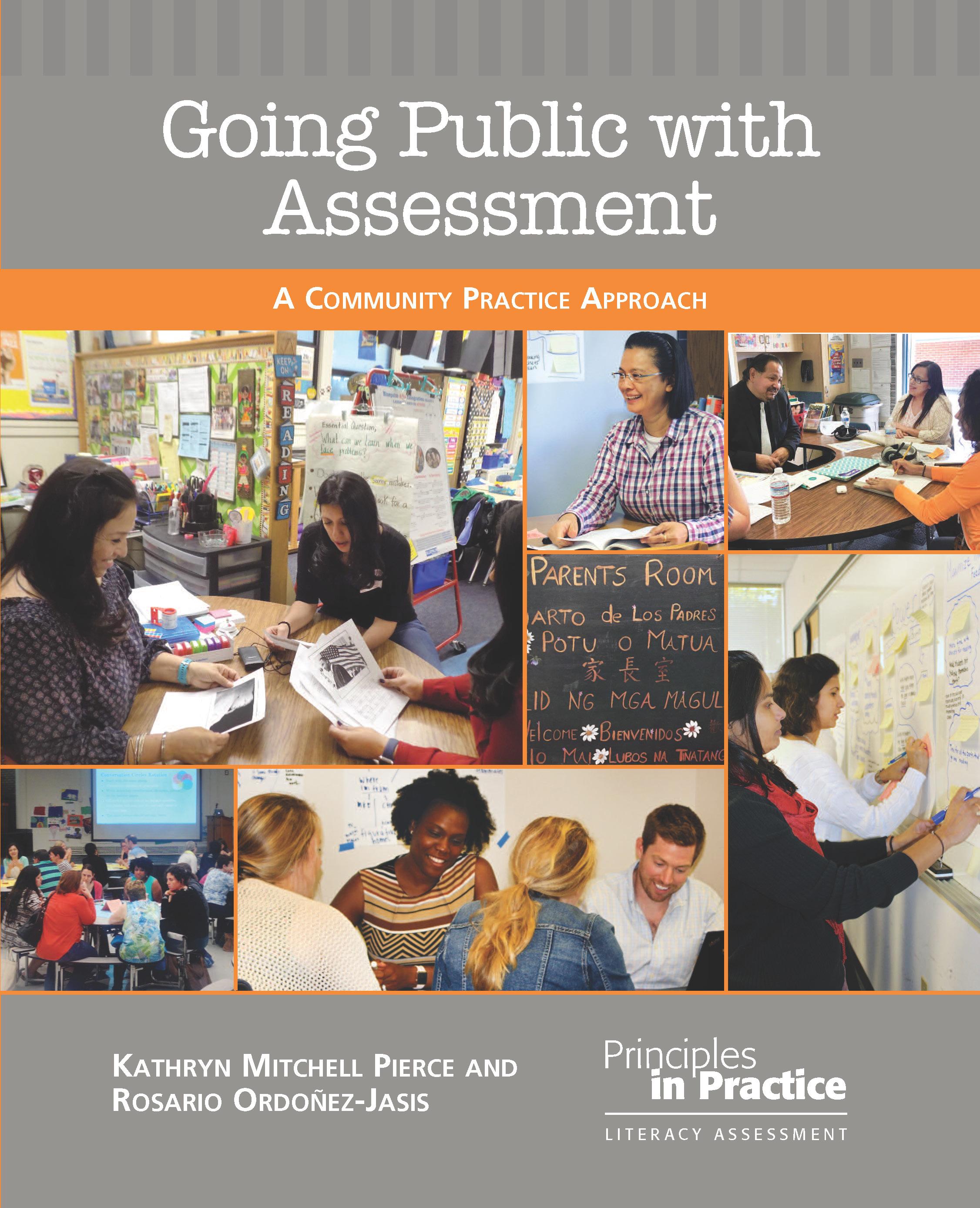
The authors share classroom vignettes, strategies, and resources for “going public” with literacy assessment through teacher collaboration with colleagues, with families, and with the community.
Teachers want assessment tools and strategies that inform instruction, engage students in the process, and invite families and community members to enter into the conversation about student learning and progress. When teachers work collaboratively with one another, they align beliefs and practices to generate new ideas that reflect the questions they are asking about literacy and learning. When students, families, and the community are invited to be active, engaged participants in these discussions, all stakeholders have an opportunity to create a shared vision for literacy learning and to construct assessment tools and strategies that help everyone answer the important questions: “How as teachers are we engaging with one another over our literacy assessment beliefs and practices?” and “How can we better bring families and communities into these conversations?”
In this volume of the Principles in Practice Literacy Assessment strand of books, veteran educators Kathryn Mitchell Pierce and Rosario Ordoñez-Jasis share classroom vignettes, strategies, and resources for “going public” with literacy assessment through teacher collaboration with colleagues, with families, and with the community. Drawing from the IRA–NCTE Standards for the Assessment of Reading and Writing, Revised Edition, and their own extensive experience, the authors have compiled a set of collaborative assessment principles, as well as a model for teacher professional development around assessment, to guide teachers from assessment theory to practical implementation in the classroom.
Teachers are at the heart of assessment conversations because they have up-close and personal experiences with how assessments impact their students. These experiences provide an invaluable perspective that is essential to all decision making about assessing student learning. But teachers don’t—or shouldn’t—stand alone. Their critical expertise is strengthened by the experiences and expertise of others invested in the success of our students—colleagues, families, communities, and students themselves.
Before Memmo my notes were scattered across PDFs. Now a workspace pulls everything into one place — I see exactly what's still left to study.
Memmo's summaries are gold before exams. I don't have to re-read 800 pages two weeks before — just the important parts.
The AI chat has saved me the night before an exam more than once. I just keep asking until I get it — no waiting on a study group to reply.
The quizzes hit exactly what I need to know. Memmo tracks what I get stuck on — so I only practice what's worth it.
Flashcards with spaced repetition are magic. Memmo knows when I'm about to forget something and brings it back.
The AI podcasts are my favorite. I listen on my way to school and get a recap without sitting at a computer.

Handbok i kvalitativa metoder
281 kr

Hållbar utveckling: en introduktion för ingenjörer och andra problemlösare
334 kr

Brymans Samhällsvetenskapliga metoder
390 kr

Projektledning
491 kr

Den orättvisa hälsan: om socioekonomiska skillnader i hälsa och livslängd
326 kr

Organizational Leadership
429 kr

Vetenskapsteori för nybörjare
196 kr

På väg mot läraryrket
172 kr

Det sociala livet i skolan: Socialpsykologiska perspektiv
253 kr

Betygsättningens didaktik
151 kr

Personality
402 kr

Studying Leadership
404 kr

Managing Innovation
477 kr

Introduktion till samhällsvetenskaplig metod
347 kr

The Psychology of Sex and Gender
698 kr

Evidens och kunskap för socialt arbete
207 kr

Introduction to Leadership
605 kr