
Before Memmo my notes were scattered across PDFs. Now a workspace pulls everything into one place — I see exactly what's still left to study.
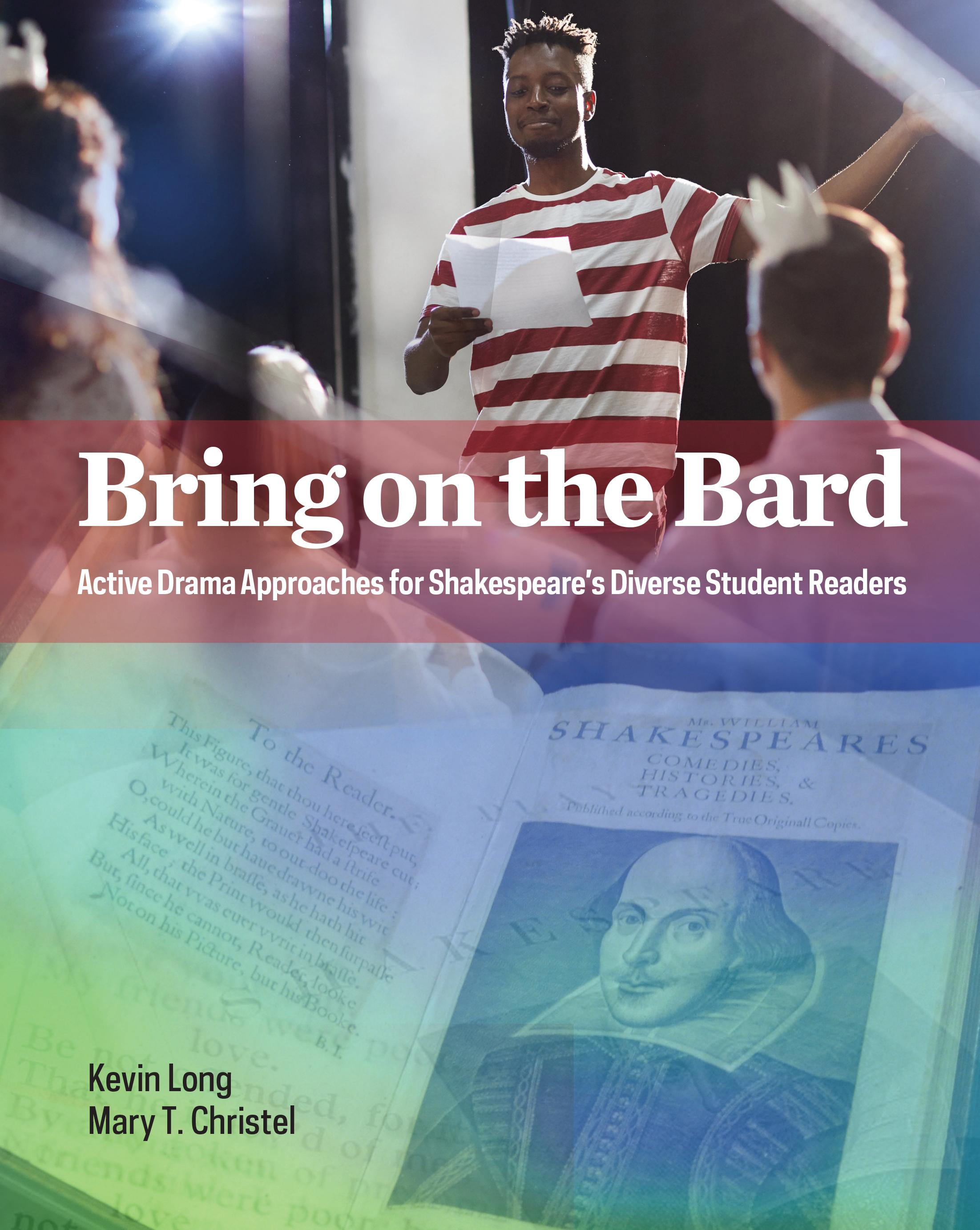
A deep dive into the rich resources available for teaching Shakespeare’s plays, Bring on the Bard is for every high school teacher—early career to veteran—looking for new, hands-on activities to draw students of all ability levels into the work and world of Shakespeare.
Shakespeare didn’t write his plays for readers; he wrote individual “cue scripts” for actors who hadn’t read the entire play but had to perform on the fly with almost no rehearsal. Those cue scripts have become the written form of his dramas, compiled originally in the First Folio of 1623. And the actors’ cues for meaning, emotion, and emphasis are still embedded in Shakespeare’s language, ripe for discovery by today’s students.
Shakespeare’s plays rightly remain a staple of the ELA curriculum, but evolving standards and youth culture itself challenge teachers to put students—not a text—at the center of a reading experience in order to support diverse readers and learners.
How can we do this?
Experienced educators Kevin Long and Mary T. Christel introduce us to the Folio technique, which builds on active drama approaches that position students to engage with a rich text through low-risk speaking and improvisation activities. Without requiring students to become actors, the Folio technique helps them to discover the clues the Bard built into his works that allow actors to efficiently understand their characters’ text, context, and subtext. Teachers can use excerpts from the First Folio along with a mass market paperback or digital edition of a play to help students get closer to Shakespeare’s intentions; understand the language, action, and emotions of the characters; and perhaps even explore the challenges the Bard’s modern editors face.
The book offers suggestions for using parallel text, graphic, and abridged editions of Shakespeare’s works, as well as activities using cue scripts and a variety of viewing experiences.
Before Memmo my notes were scattered across PDFs. Now a workspace pulls everything into one place — I see exactly what's still left to study.
Memmo's summaries are gold before exams. I don't have to re-read 800 pages two weeks before — just the important parts.
The AI chat has saved me the night before an exam more than once. I just keep asking until I get it — no waiting on a study group to reply.
The quizzes hit exactly what I need to know. Memmo tracks what I get stuck on — so I only practice what's worth it.
Flashcards with spaced repetition are magic. Memmo knows when I'm about to forget something and brings it back.
The AI podcasts are my favorite. I listen on my way to school and get a recap without sitting at a computer.

Handbok i kvalitativa metoder
281 kr

Hållbar utveckling: en introduktion för ingenjörer och andra problemlösare
334 kr

Brymans Samhällsvetenskapliga metoder
390 kr

Projektledning
491 kr

Den orättvisa hälsan: om socioekonomiska skillnader i hälsa och livslängd
326 kr

Organizational Leadership
429 kr

Vetenskapsteori för nybörjare
196 kr

På väg mot läraryrket
172 kr

Det sociala livet i skolan: Socialpsykologiska perspektiv
253 kr

Betygsättningens didaktik
151 kr

Personality
402 kr

Studying Leadership
404 kr

Managing Innovation
477 kr

Introduktion till samhällsvetenskaplig metod
347 kr

The Psychology of Sex and Gender
698 kr

Evidens och kunskap för socialt arbete
207 kr

Introduction to Leadership
605 kr