
Before Memmo my notes were scattered across PDFs. Now a workspace pulls everything into one place — I see exactly what's still left to study.
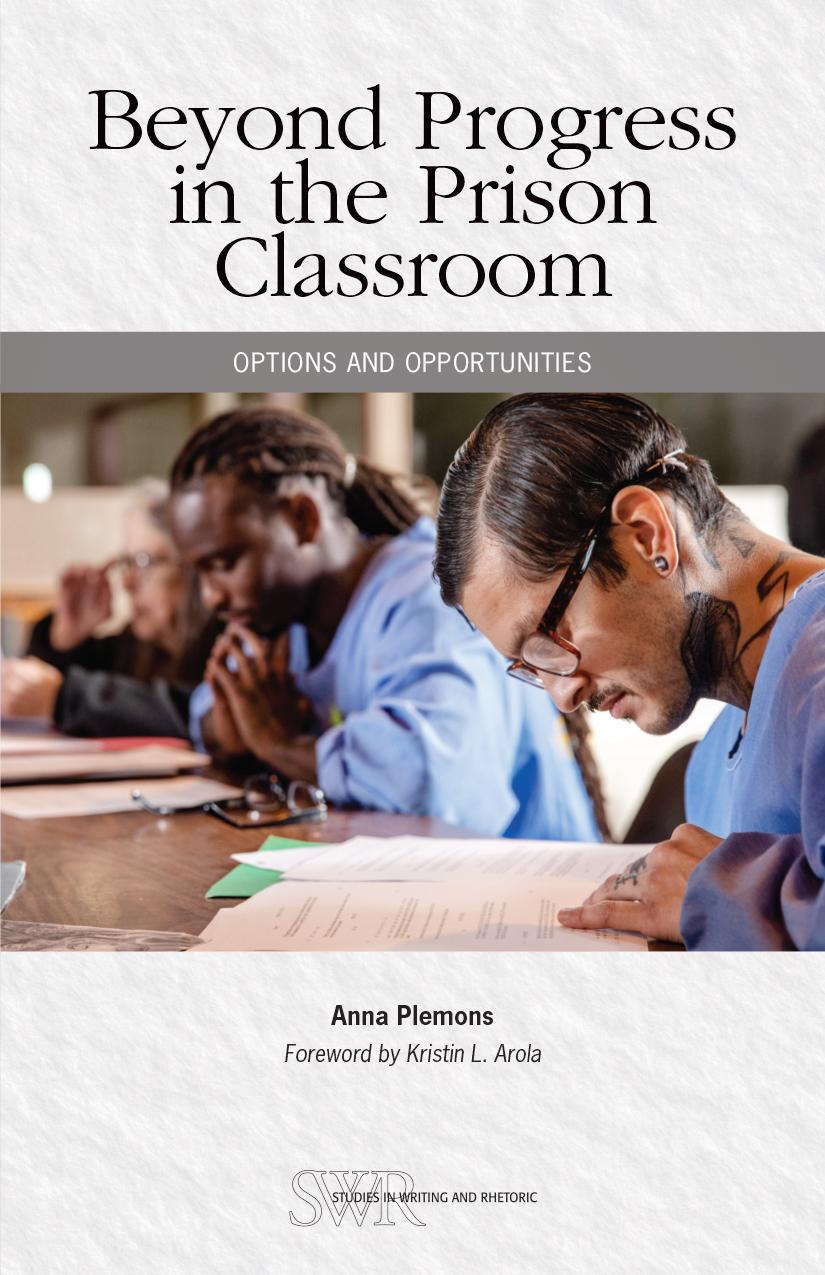
Through a mix of history, theory, and story, Anna Plemons explores the fate of the Arts in Corrections (AIC) program at New Folsom Prison in California in order to study prison education in general as well as the disciplinary goals of rhetoric and composition classrooms.
When viewed as a microcosm of the broader enterprise, the prison classroom highlights the way that composition and rhetoric as a discipline continues to make use of colonial ways of knowing and being that work against the decolonial intentions of the field. Plemons suggests that a truly decolonial turn in composition cannot be achieved as long as economic logics and rhetorics of individual transformation continue to be the default currency for ascribing value in prison writing programs specifically and in out-of-school writing communities more generally. Indigenous scholarship provides the theoretical basis for Plemons’s proposed intervention in the ways it both pushes back against individualized, economic assessments of value and describes design principles for research and pedagogy that are respectful, reciprocal, and relational.
Beyond Progress in the Prison Classroom includes narrative selections from the author and current and former AIC participants, inviting readers into the lives of incarcerated authors and demonstrating the effects of relationality on prison-scholars, ultimately upending the misconception that these writers and their teachers exist apart from the web of relations beyond the prison walls. With contributions from incarcerated prison-scholars Ken Blackburn, Bryson L. Cole, Harry B. Grant Jr., Adam Hinds, Hung-Linh "Ronnie" Hoang, Andrew Molino, Michael L. Owens, Wayne Vaka, and Martin Williams.
About the CCCC Studies in Writing & Rhetoric (SWR) Series
In this series, the methods of studies vary from the critical to historical to linguistic to ethnographic, and their authors draw on work in various fields that inform composition—including rhetoric, communication, education, discourse analysis, psychology, cultural studies, and literature. Their focuses are similarly diverse—ranging from individual writers and teachers, to classrooms and communities and curricula, to analyses of the social, political, and material contexts of writing and its teaching.
Before Memmo my notes were scattered across PDFs. Now a workspace pulls everything into one place — I see exactly what's still left to study.
Memmo's summaries are gold before exams. I don't have to re-read 800 pages two weeks before — just the important parts.
The AI chat has saved me the night before an exam more than once. I just keep asking until I get it — no waiting on a study group to reply.
The quizzes hit exactly what I need to know. Memmo tracks what I get stuck on — so I only practice what's worth it.
Flashcards with spaced repetition are magic. Memmo knows when I'm about to forget something and brings it back.
The AI podcasts are my favorite. I listen on my way to school and get a recap without sitting at a computer.

Handbok i kvalitativa metoder
281 kr

Hållbar utveckling: en introduktion för ingenjörer och andra problemlösare
334 kr

Brymans Samhällsvetenskapliga metoder
390 kr

Projektledning
491 kr

Den orättvisa hälsan: om socioekonomiska skillnader i hälsa och livslängd
326 kr

Organizational Leadership
429 kr

Vetenskapsteori för nybörjare
196 kr

På väg mot läraryrket
172 kr

Det sociala livet i skolan: Socialpsykologiska perspektiv
253 kr

Betygsättningens didaktik
151 kr

Personality
402 kr

Studying Leadership
404 kr

Managing Innovation
477 kr

Introduktion till samhällsvetenskaplig metod
347 kr

The Psychology of Sex and Gender
698 kr

Evidens och kunskap för socialt arbete
207 kr

Introduction to Leadership
605 kr