
Before Memmo my notes were scattered across PDFs. Now a workspace pulls everything into one place — I see exactly what's still left to study.
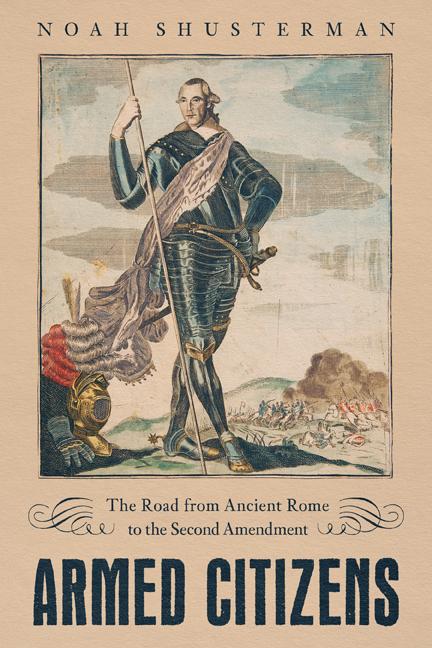
Although much has changed in the United States since the eighteenth century, our framework for gun laws still largely relies on the Second Amendment and the patterns that emerged in the colonial era. America has long been a heavily armed, and racially divided, society, yet few citizens understand either why militias appealed to the founding fathers or the role that militias played in North American rebellions, in which they often functioned as repressive—and racist—domestic forces.
In Armed Citizens, Noah Shusterman explains for a general reader what eighteenth-century militias were and why the authors of the Constitution believed them to be necessary to the security of a free state. Suggesting that the question was never whether there was a right to bear arms, but rather, who had the right to bear arms, Shusterman begins with the lessons that the founding generation took from the history of Ancient Rome and Machiavelli’s reinterpretation of those myths during the Renaissance. He then turns to the rise of France’s professional army during seventeenth-century Europe and the fear that it inspired in England. Shusterman shows how this fear led British writers to begin praising citizens’ militias, at the same time that colonial America had come to rely on those militias as a means of defense and as a system to police enslaved peoples. Thus the start of the Revolution allowed Americans to portray their struggle as a war of citizens against professional soldiers, leading the authors of the Constitution to place their trust in citizen soldiers and a "well-regulated militia," an idea that persists to this day.
Before Memmo my notes were scattered across PDFs. Now a workspace pulls everything into one place — I see exactly what's still left to study.
Memmo's summaries are gold before exams. I don't have to re-read 800 pages two weeks before — just the important parts.
The AI chat has saved me the night before an exam more than once. I just keep asking until I get it — no waiting on a study group to reply.
The quizzes hit exactly what I need to know. Memmo tracks what I get stuck on — so I only practice what's worth it.
Flashcards with spaced repetition are magic. Memmo knows when I'm about to forget something and brings it back.
The AI podcasts are my favorite. I listen on my way to school and get a recap without sitting at a computer.

Handbok i kvalitativa metoder
281 kr

Hållbar utveckling: en introduktion för ingenjörer och andra problemlösare
334 kr

Brymans Samhällsvetenskapliga metoder
390 kr

Projektledning
491 kr

Den orättvisa hälsan: om socioekonomiska skillnader i hälsa och livslängd
326 kr

Organizational Leadership
429 kr

Vetenskapsteori för nybörjare
196 kr

På väg mot läraryrket
172 kr

Det sociala livet i skolan: Socialpsykologiska perspektiv
253 kr

Betygsättningens didaktik
151 kr

Personality
402 kr

Studying Leadership
404 kr

Managing Innovation
477 kr

Introduktion till samhällsvetenskaplig metod
347 kr

The Psychology of Sex and Gender
698 kr

Evidens och kunskap för socialt arbete
207 kr

Introduction to Leadership
605 kr