
Before Memmo my notes were scattered across PDFs. Now a workspace pulls everything into one place — I see exactly what's still left to study.
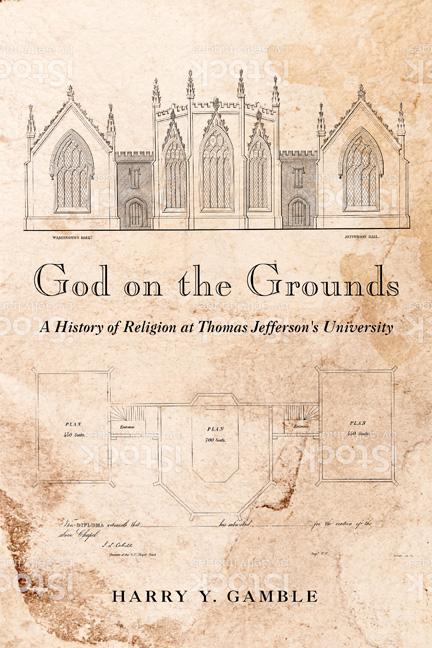
Free-thinking Thomas Jefferson established the University of Virginia as a secular institution and stipulated that the University should not provide any instruction in religion. Yet over the course of the nineteenth century and into the early twentieth, religion came to have a prominent place in the University, which today maintains the largest department of religious studies of any public university in America. Given his intentions, how did Jefferson's university undergo such remarkable transformations?
In God on the Grounds, esteemed religious studies scholar Harry Gamble offers the first history of religion’s remarkably large role—both in practice and in study—at UVA. Jefferson’s own reputation as a religious skeptic and infidel was a heavy liability to the University, which was widely regarded as injurious to the faith and morals of its students. Consequently, the faculty and Board of Visitors were eager throughout the nineteenth century to make the University more religious. Gamble narrates the early, rapid, and ongoing introduction of religion into the University’s life through the piety of professors, the creation of the chaplaincy, the growth of the YMCA, the multiplication of religious services and meetings, the building of a chapel, and the establishment of a Bible lectureship and a School of Biblical History and Literature. He then looks at how—only in the mid-twentieth century—the University began to retreat from its religious entanglements and reclaim its secular character as a public institution. A vital contribution to the institutional history of UVA, God on the Grounds sheds light on the history of higher education in the United States, American religious history, and the development of religious studies as an academic discipline.
Before Memmo my notes were scattered across PDFs. Now a workspace pulls everything into one place — I see exactly what's still left to study.
Memmo's summaries are gold before exams. I don't have to re-read 800 pages two weeks before — just the important parts.
The AI chat has saved me the night before an exam more than once. I just keep asking until I get it — no waiting on a study group to reply.
The quizzes hit exactly what I need to know. Memmo tracks what I get stuck on — so I only practice what's worth it.
Flashcards with spaced repetition are magic. Memmo knows when I'm about to forget something and brings it back.
The AI podcasts are my favorite. I listen on my way to school and get a recap without sitting at a computer.

Handbok i kvalitativa metoder
281 kr

Hållbar utveckling: en introduktion för ingenjörer och andra problemlösare
334 kr

Brymans Samhällsvetenskapliga metoder
390 kr

Projektledning
491 kr

Den orättvisa hälsan: om socioekonomiska skillnader i hälsa och livslängd
326 kr

Organizational Leadership
429 kr

Vetenskapsteori för nybörjare
196 kr

På väg mot läraryrket
172 kr

Det sociala livet i skolan: Socialpsykologiska perspektiv
253 kr

Betygsättningens didaktik
151 kr

Personality
402 kr

Studying Leadership
404 kr

Managing Innovation
477 kr

Introduktion till samhällsvetenskaplig metod
347 kr

The Psychology of Sex and Gender
698 kr

Evidens och kunskap för socialt arbete
207 kr

Introduction to Leadership
605 kr