
Before Memmo my notes were scattered across PDFs. Now a workspace pulls everything into one place — I see exactly what's still left to study.
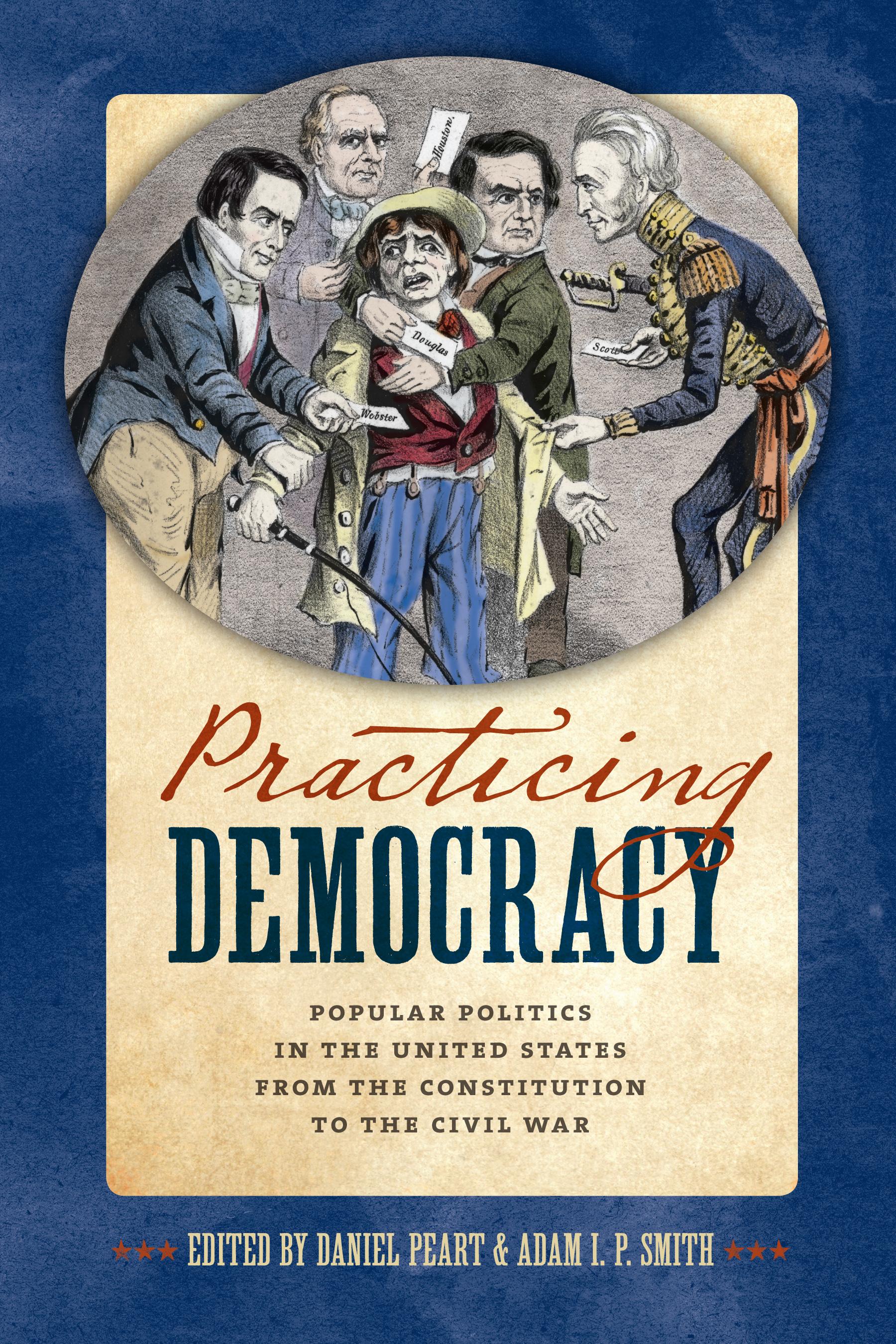
In Practicing Democracy, eleven historians challenge conventional narratives of democratization in the early United States, offering new perspectives on the period between the ratification of the Constitution and the outbreak of the Civil War. The essays in this collection address critical themes such as the origins, evolution, and disintegration of party competition, the relationship between political parties and popular participation, and the place that parties occupied within the wider world of United States politics.
In recent years, historians of the early republic have demolished old assumptions about low rates of political participation and shallow popular partisanship in the age of Jefferson—raising the question of how, if at all, Jacksonian politics departed from earlier norms. This book reaffirms the significance of a transition in political practices during the 1820s and 1830s but casts the transformation in a new light. Whereas the traditional narrative is one of a party-driven democratic awakening, the contributors to this volume challenge the correlation of party with democracy. They both critique constricting definitions of legitimate democratic practices in the decades following the ratification of the Constitution and emphasize the proliferation of competing public voices in the buildup to the Civil War. Taken together, these essays offer a new way of thinking about American politics across the traditional dividing line of 1828 and suggest a novel approach to the long-standing question of what it meant to be part of "We the People."
Contributors:Tyler Anbinder, George Washington University · Douglas Bradburn, Fred W. Smith National Library for the Study of George Washington at Mount Vernon · John L. Brooke, The Ohio State University · Andrew Heath, University of Sheffield · Reeve Huston, Duke University · Johann N. Neem, Western Washington University · Kenneth Owen, University of Illinois, Springfield · Graham A. Peck, Saint Xavier University · Andrew W. Robertson, Graduate Center of the City University of New York and Lehman College, CUNY
Before Memmo my notes were scattered across PDFs. Now a workspace pulls everything into one place — I see exactly what's still left to study.
Memmo's summaries are gold before exams. I don't have to re-read 800 pages two weeks before — just the important parts.
The AI chat has saved me the night before an exam more than once. I just keep asking until I get it — no waiting on a study group to reply.
The quizzes hit exactly what I need to know. Memmo tracks what I get stuck on — so I only practice what's worth it.
Flashcards with spaced repetition are magic. Memmo knows when I'm about to forget something and brings it back.
The AI podcasts are my favorite. I listen on my way to school and get a recap without sitting at a computer.

Handbok i kvalitativa metoder
281 kr

Hållbar utveckling: en introduktion för ingenjörer och andra problemlösare
334 kr

Brymans Samhällsvetenskapliga metoder
390 kr

Projektledning
491 kr

Den orättvisa hälsan: om socioekonomiska skillnader i hälsa och livslängd
326 kr

Vetenskapsteori för nybörjare
196 kr

Organizational Leadership
429 kr

På väg mot läraryrket
172 kr

Det sociala livet i skolan: Socialpsykologiska perspektiv
253 kr

Betygsättningens didaktik
151 kr

Personality
402 kr

Studying Leadership
404 kr

Managing Innovation
477 kr

Introduktion till samhällsvetenskaplig metod
347 kr

The Psychology of Sex and Gender
698 kr

Evidens och kunskap för socialt arbete
207 kr

Introduction to Leadership
605 kr