
Before Memmo my notes were scattered across PDFs. Now a workspace pulls everything into one place — I see exactly what's still left to study.
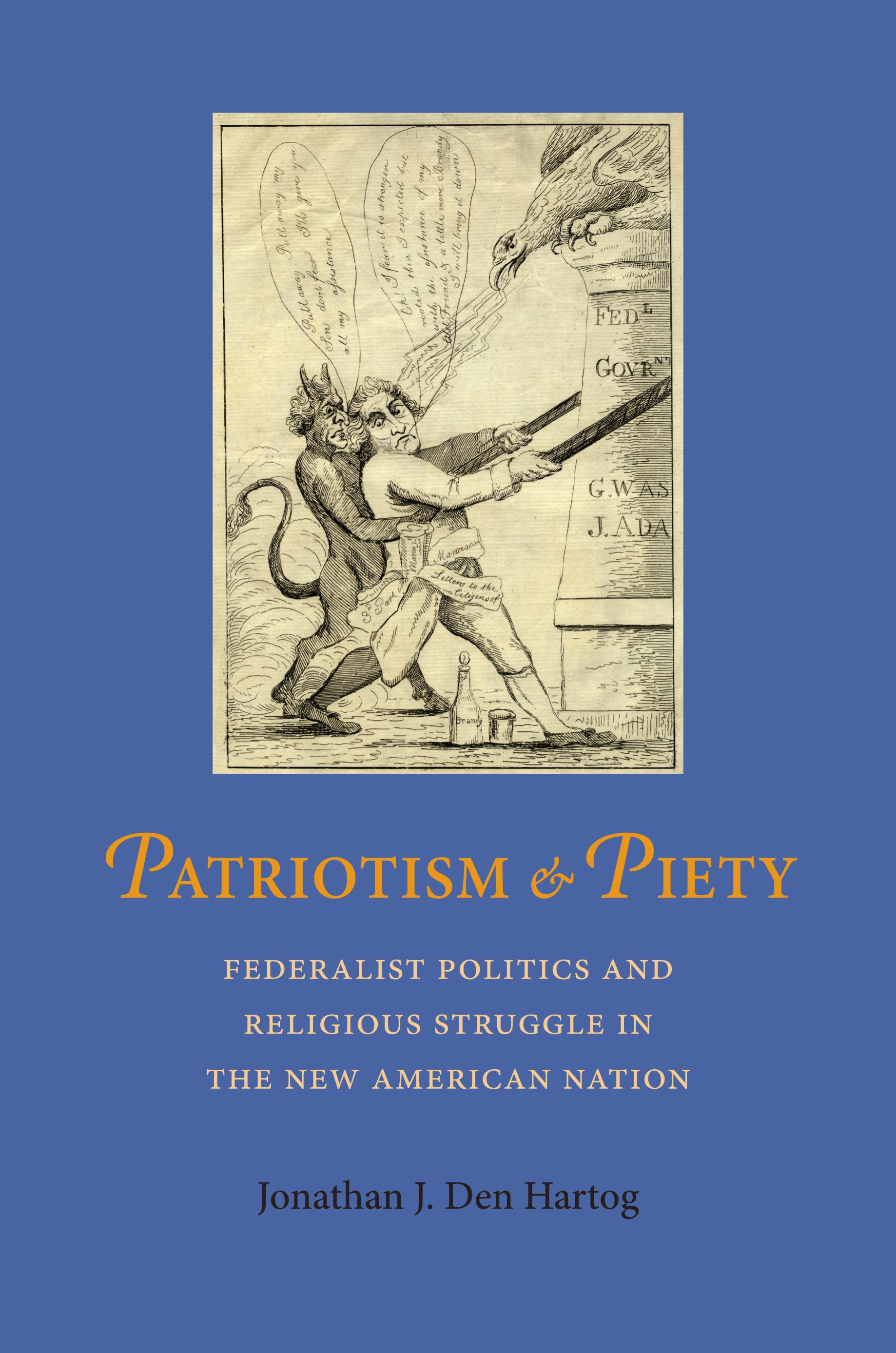
In Patriotism and Piety, Jonathan Den Hartog argues that the question of how religion would function in American society was decided in the decades after the Constitution and First Amendment established a legal framework. Den Hartog shows that among the wide array of politicians and public figures struggling to define religion’s place in the new nation, Federalists stood out—evolving religious attitudes were central to Federalism, and the encounter with Federalism strongly shaped American Christianity.
Den Hartog describes the Federalist appropriations of religion as passing through three stages: a "republican" phase of easy cooperation inherited from the experience of the American Revolution; a "combative" phase, forged during the political battles of the 1790s–1800s, when the destiny of the republic was hotly contested; and a "voluntarist" phase that grew in importance after 1800. Faith became more individualistic and issue-oriented as a result of the actions of religious Federalists.
Religious impulses fueled party activism and informed governance, but the redirection of religious energies into voluntary societies sapped party momentum, and religious differences led to intraparty splits. These developments altered not only the Federalist Party but also the practice and perception of religion in America, as Federalist insights helped to create voluntary, national organizations in which Americans could practice their faith in interdenominational settings.
Patriotism and Pietyfocuses on the experiences and challenges confronted by a number of Federalists, from well-known leaders such as John Adams, John Jay, Charles Cotesworth Pinckney, and Timothy Dwight to lesser-known but still important figures such as Caleb Strong, Elias Boudinot, and William Jay.
Before Memmo my notes were scattered across PDFs. Now a workspace pulls everything into one place — I see exactly what's still left to study.
Memmo's summaries are gold before exams. I don't have to re-read 800 pages two weeks before — just the important parts.
The AI chat has saved me the night before an exam more than once. I just keep asking until I get it — no waiting on a study group to reply.
The quizzes hit exactly what I need to know. Memmo tracks what I get stuck on — so I only practice what's worth it.
Flashcards with spaced repetition are magic. Memmo knows when I'm about to forget something and brings it back.
The AI podcasts are my favorite. I listen on my way to school and get a recap without sitting at a computer.

Handbok i kvalitativa metoder
281 kr

Hållbar utveckling: en introduktion för ingenjörer och andra problemlösare
334 kr

Brymans Samhällsvetenskapliga metoder
390 kr

Projektledning
491 kr

Den orättvisa hälsan: om socioekonomiska skillnader i hälsa och livslängd
326 kr

Vetenskapsteori för nybörjare
196 kr

Organizational Leadership
429 kr

På väg mot läraryrket
172 kr

Det sociala livet i skolan: Socialpsykologiska perspektiv
253 kr

Betygsättningens didaktik
151 kr

Personality
402 kr

Studying Leadership
404 kr

Managing Innovation
477 kr

Introduktion till samhällsvetenskaplig metod
347 kr

The Psychology of Sex and Gender
698 kr

Evidens och kunskap för socialt arbete
207 kr

Introduction to Leadership
605 kr