
Before Memmo my notes were scattered across PDFs. Now a workspace pulls everything into one place — I see exactly what's still left to study.
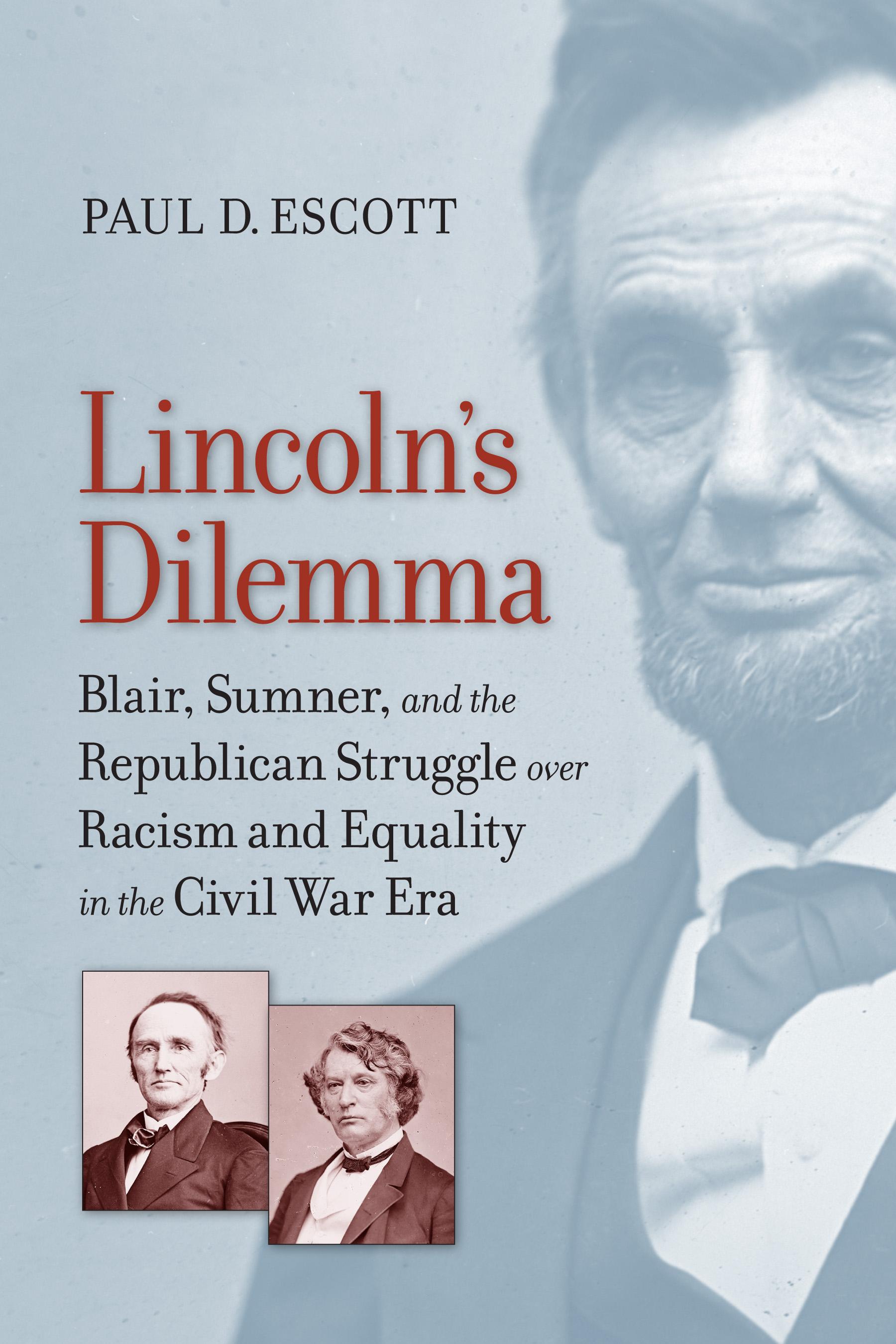
The Civil War forced America finally to confront the contradiction between its founding values and human slavery. At the center of this historic confrontation was Abraham Lincoln. By the time this Illinois politician had risen to the office of president, the dilemma of slavery had expanded to the question of all African Americans’ future. In this fascinating new book Paul Escott considers the evolution of the president’s thoughts on race in relation to three other, powerful--and often conflicting--voices.
Lincoln’s fellow Republicans Charles Sumner and Montgomery Blair played crucial roles in the shaping of their party. While both Sumner and Blair were opposed to slavery, their motivations reflected profoundly different approaches to the issue. Blair’s antislavery stance stemmed from a racist dedication to remove African Americans from the country altogether. Sumner, in contrast, opposed slavery as a crusader for racial equality and a passionate abolitionist. Lincoln maintained close personal relationships with both men as he wrestled with the slavery question. In addition to these antislavery voices, Escott also weaves into his narrative the other extreme, of which Lincoln was politically aware: the virulent racism and hierarchical values that motivated not only the Confederates but surprisingly many Northerners and which were embodied by the president’s eventual assassin, John Wilkes Booth.
Sumner, Blair, and violent racists like Booth each represent forces with which Lincoln had to contend as he presided over a brutal civil war and faced the issues of slavery and equality lying at its root. Other books and films have provided glimpses of the atmosphere in which the president created his Emancipation Proclamation. Lincoln’s Dilemma evokes more fully and brings to life the men Lincoln worked with, and against, as he moved racial equality forward.
A Nation Divided: Studies in the Civil War Era
Before Memmo my notes were scattered across PDFs. Now a workspace pulls everything into one place — I see exactly what's still left to study.
Memmo's summaries are gold before exams. I don't have to re-read 800 pages two weeks before — just the important parts.
The AI chat has saved me the night before an exam more than once. I just keep asking until I get it — no waiting on a study group to reply.
The quizzes hit exactly what I need to know. Memmo tracks what I get stuck on — so I only practice what's worth it.
Flashcards with spaced repetition are magic. Memmo knows when I'm about to forget something and brings it back.
The AI podcasts are my favorite. I listen on my way to school and get a recap without sitting at a computer.

Handbok i kvalitativa metoder
281 kr

Hållbar utveckling: en introduktion för ingenjörer och andra problemlösare
334 kr

Brymans Samhällsvetenskapliga metoder
390 kr

Projektledning
491 kr

Den orättvisa hälsan: om socioekonomiska skillnader i hälsa och livslängd
326 kr

Vetenskapsteori för nybörjare
196 kr

Organizational Leadership
429 kr

På väg mot läraryrket
172 kr

Det sociala livet i skolan: Socialpsykologiska perspektiv
253 kr

Betygsättningens didaktik
151 kr

Personality
402 kr

Studying Leadership
404 kr

Managing Innovation
477 kr

Introduktion till samhällsvetenskaplig metod
347 kr

The Psychology of Sex and Gender
698 kr

Evidens och kunskap för socialt arbete
207 kr

Introduction to Leadership
605 kr