
Before Memmo my notes were scattered across PDFs. Now a workspace pulls everything into one place — I see exactly what's still left to study.
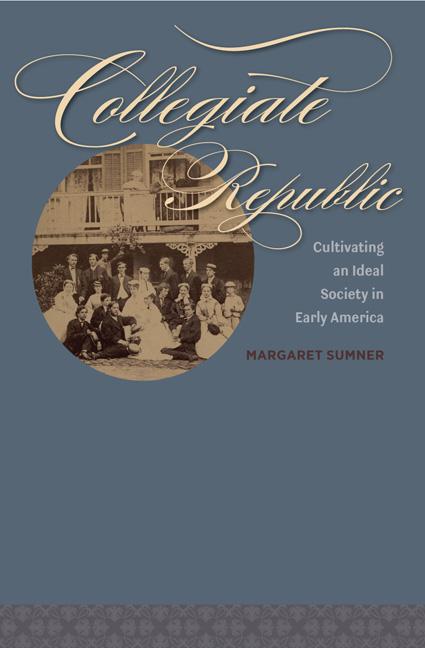
Collegiate Republic offers a compellingly different view of the first generation of college communities founded after the American Revolution. Such histories have usually taken the form of the institutional tale, charting the growth of a single institution and the male minds within it. Focusing on the published and private writings of the families who founded and ran new colleges in antebellum America--including Bowdoin College, Washington College (later Washington and Lee), and Franklin College in Georgia--Margaret Sumner argues that these institutions not only trained white male elites for professions and leadership positions but also were part of a wider interregional network of social laboratories for the new nation. Colleges, and the educational enterprise flourishing around them, provided crucial cultural construction sites where early Americans explored organizing elements of gender, race, and class as they attempted to shape a model society and citizenry fit for a new republic.
Within this experimental world, a diverse group of inhabitants--men and women, white and "colored," free and unfree--debated, defined, and promoted social and intellectual standards that were adopted by many living in an expanding nation in need of organizing principles. Priding themselves on the enlightened and purified state of their small communities, the leaders of this world regularly promoted their own minds, behaviors, and communities as authoritative templates for national emulation. Tracking these key figures as they circulate through college structures, professorial parlors, female academies, Liberian settlements, legislative halls, and main streets, achieving some of their cultural goals and failing at many others, Sumner's book shows formative American educational principles in action, tracing the interplay between the construction and dissemination of early national knowledge and the creation of cultural standards and social conventions.
Before Memmo my notes were scattered across PDFs. Now a workspace pulls everything into one place — I see exactly what's still left to study.
Memmo's summaries are gold before exams. I don't have to re-read 800 pages two weeks before — just the important parts.
The AI chat has saved me the night before an exam more than once. I just keep asking until I get it — no waiting on a study group to reply.
The quizzes hit exactly what I need to know. Memmo tracks what I get stuck on — so I only practice what's worth it.
Flashcards with spaced repetition are magic. Memmo knows when I'm about to forget something and brings it back.
The AI podcasts are my favorite. I listen on my way to school and get a recap without sitting at a computer.

Handbok i kvalitativa metoder
281 kr

Hållbar utveckling: en introduktion för ingenjörer och andra problemlösare
334 kr

Brymans Samhällsvetenskapliga metoder
390 kr

Projektledning
491 kr

Den orättvisa hälsan: om socioekonomiska skillnader i hälsa och livslängd
326 kr

Organizational Leadership
429 kr

Vetenskapsteori för nybörjare
196 kr

På väg mot läraryrket
172 kr

Det sociala livet i skolan: Socialpsykologiska perspektiv
253 kr

Betygsättningens didaktik
151 kr

Personality
402 kr

Studying Leadership
404 kr

Managing Innovation
477 kr

Introduktion till samhällsvetenskaplig metod
347 kr

The Psychology of Sex and Gender
698 kr

Evidens och kunskap för socialt arbete
207 kr

Introduction to Leadership
605 kr