
Before Memmo my notes were scattered across PDFs. Now a workspace pulls everything into one place — I see exactly what's still left to study.
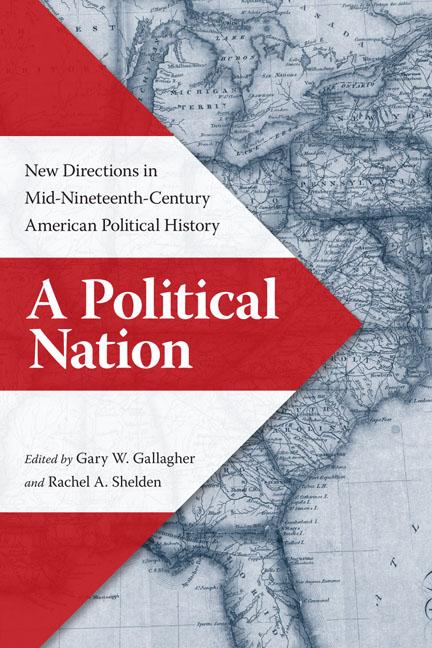
This impressive collection joins the recent outpouring of exciting new work on American politics and political actors in the mid-nineteenth century. For several generations, much of the scholarship on the political history of the period from 1840 to 1877 has carried a theme of failure; after all, politicians in the antebellum years failed to prevent war, and those of the Civil War and Reconstruction failed to take advantage of opportunities to remake the nation. Moving beyond these older debates, the essays in this volume ask new questions about mid-nineteenth-century American politics and politicians.
In A Political Nation, the contributors address the dynamics of political parties and factions, illuminate the presence of consensus and conflict in American political life, and analyze elections, voters, and issues. In addition to examining the structures of the United States Congress, state and local governments, and other political organizations, this collection emphasizes political leaders—those who made policy, ran for office, influenced elections, and helped to shape American life from the early years of the Second Party System to the turbulent period of Reconstruction.
The book moves chronologically, beginning with an antebellum focus on how political actors behaved within their cultural surroundings. The authors then use the critical role of language, rhetoric, and ideology in mid-nineteenth-century political culture as a lens through which to reevaluate the secession crisis. The collection closes with an examination of cultural and institutional influences on politicians in the Civil War and Reconstruction years. Stressing the role of federalism in understanding American political behavior, A Political Nation underscores the vitality of scholarship on mid-nineteenth-century American politics.
Contributors:
Erik B. Alexander, University of Tennessee, Knoxville · Jean Harvey Baker, Goucher College · William J. Cooper, Louisiana State University · Daniel W. Crofts, The College of New Jersey · William W. Freehling, Virginia Foundation for the Humanities · Gary W. Gallagher, University of Virginia · Sean Nalty, University of Virginia · Mark E. Neely Jr., Pennsylvania State University · Rachel A. Shelden, Georgia College and State University · Brooks D. Simpson, Arizona State University · J. Mills Thornton, University of Michigan, Ann Arbor
Before Memmo my notes were scattered across PDFs. Now a workspace pulls everything into one place — I see exactly what's still left to study.
Memmo's summaries are gold before exams. I don't have to re-read 800 pages two weeks before — just the important parts.
The AI chat has saved me the night before an exam more than once. I just keep asking until I get it — no waiting on a study group to reply.
The quizzes hit exactly what I need to know. Memmo tracks what I get stuck on — so I only practice what's worth it.
Flashcards with spaced repetition are magic. Memmo knows when I'm about to forget something and brings it back.
The AI podcasts are my favorite. I listen on my way to school and get a recap without sitting at a computer.

Handbok i kvalitativa metoder
281 kr

Hållbar utveckling: en introduktion för ingenjörer och andra problemlösare
334 kr

Brymans Samhällsvetenskapliga metoder
390 kr

Projektledning
491 kr

Den orättvisa hälsan: om socioekonomiska skillnader i hälsa och livslängd
326 kr

Vetenskapsteori för nybörjare
196 kr

Organizational Leadership
429 kr

På väg mot läraryrket
172 kr

Det sociala livet i skolan: Socialpsykologiska perspektiv
253 kr

Betygsättningens didaktik
151 kr

Personality
402 kr

Studying Leadership
404 kr

Managing Innovation
477 kr

Introduktion till samhällsvetenskaplig metod
347 kr

The Psychology of Sex and Gender
698 kr

Evidens och kunskap för socialt arbete
207 kr

Introduction to Leadership
605 kr