
Before Memmo my notes were scattered across PDFs. Now a workspace pulls everything into one place — I see exactly what's still left to study.
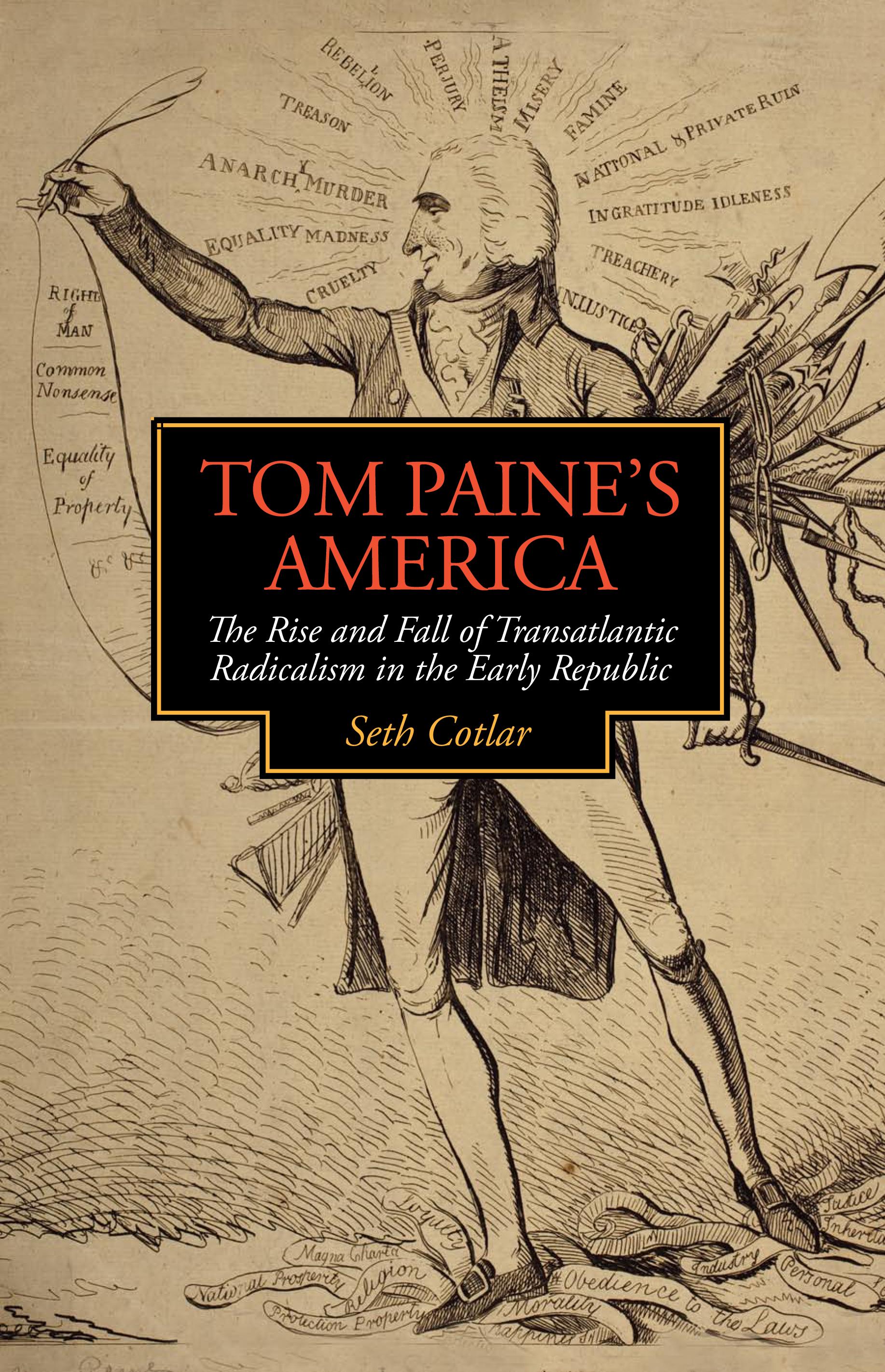
Tom Paine’s America explores the vibrant, transatlantic traffic in people, ideas, and texts that profoundly shaped American political debate in the 1790s. In 1789, when the Federal Constitution was ratified, "democracy" was a controversial term that very few Americans used to describe their new political system. That changed when the French Revolution—and the wave of democratic radicalism that it touched off around the Atlantic World—inspired a growing number of Americans to imagine and advocate for a wide range of political and social reforms that they proudly called "democratic."
One of the figureheads of this new international movement was Tom Paine, the author of Common Sense. Although Paine spent the 1790s in Europe, his increasingly radical political writings from that decade were wildly popular in America. A cohort of democratic printers, newspaper editors, and booksellers stoked the fires of American politics by importing a flood of information and ideas from revolutionary Europe. Inspired by what they were learning from their contemporaries around the world, the evolving democratic opposition in America pushed their fellow citizens to consider a wide range of radical ideas regarding racial equality, economic justice, cosmopolitan conceptions of citizenship, and the construction of more literally democratic polities.
In Europe such ideas quickly fell victim to a counter-Revolutionary backlash that defined Painite democracy as dangerous Jacobinism, and the story was much the same in America’s late 1790s. The Democratic Party that won the national election of 1800 was, ironically, the beneficiary of this backlash; for they were able to position themselves as the advocates of a more moderate, safe vision of democracy that differentiated itself from the supposedly aristocratic Federalists to their right and the dangerously democratic Painite Jacobins to their left.
Before Memmo my notes were scattered across PDFs. Now a workspace pulls everything into one place — I see exactly what's still left to study.
Memmo's summaries are gold before exams. I don't have to re-read 800 pages two weeks before — just the important parts.
The AI chat has saved me the night before an exam more than once. I just keep asking until I get it — no waiting on a study group to reply.
The quizzes hit exactly what I need to know. Memmo tracks what I get stuck on — so I only practice what's worth it.
Flashcards with spaced repetition are magic. Memmo knows when I'm about to forget something and brings it back.
The AI podcasts are my favorite. I listen on my way to school and get a recap without sitting at a computer.

Handbok i kvalitativa metoder
281 kr

Hållbar utveckling: en introduktion för ingenjörer och andra problemlösare
334 kr

Brymans Samhällsvetenskapliga metoder
390 kr

Projektledning
491 kr

Den orättvisa hälsan: om socioekonomiska skillnader i hälsa och livslängd
326 kr

Vetenskapsteori för nybörjare
196 kr

Organizational Leadership
429 kr

På väg mot läraryrket
172 kr

Det sociala livet i skolan: Socialpsykologiska perspektiv
253 kr

Betygsättningens didaktik
151 kr

Personality
402 kr

Studying Leadership
404 kr

Managing Innovation
477 kr

Introduktion till samhällsvetenskaplig metod
347 kr

The Psychology of Sex and Gender
698 kr

Evidens och kunskap för socialt arbete
207 kr

Introduction to Leadership
605 kr