
Before Memmo my notes were scattered across PDFs. Now a workspace pulls everything into one place — I see exactly what's still left to study.
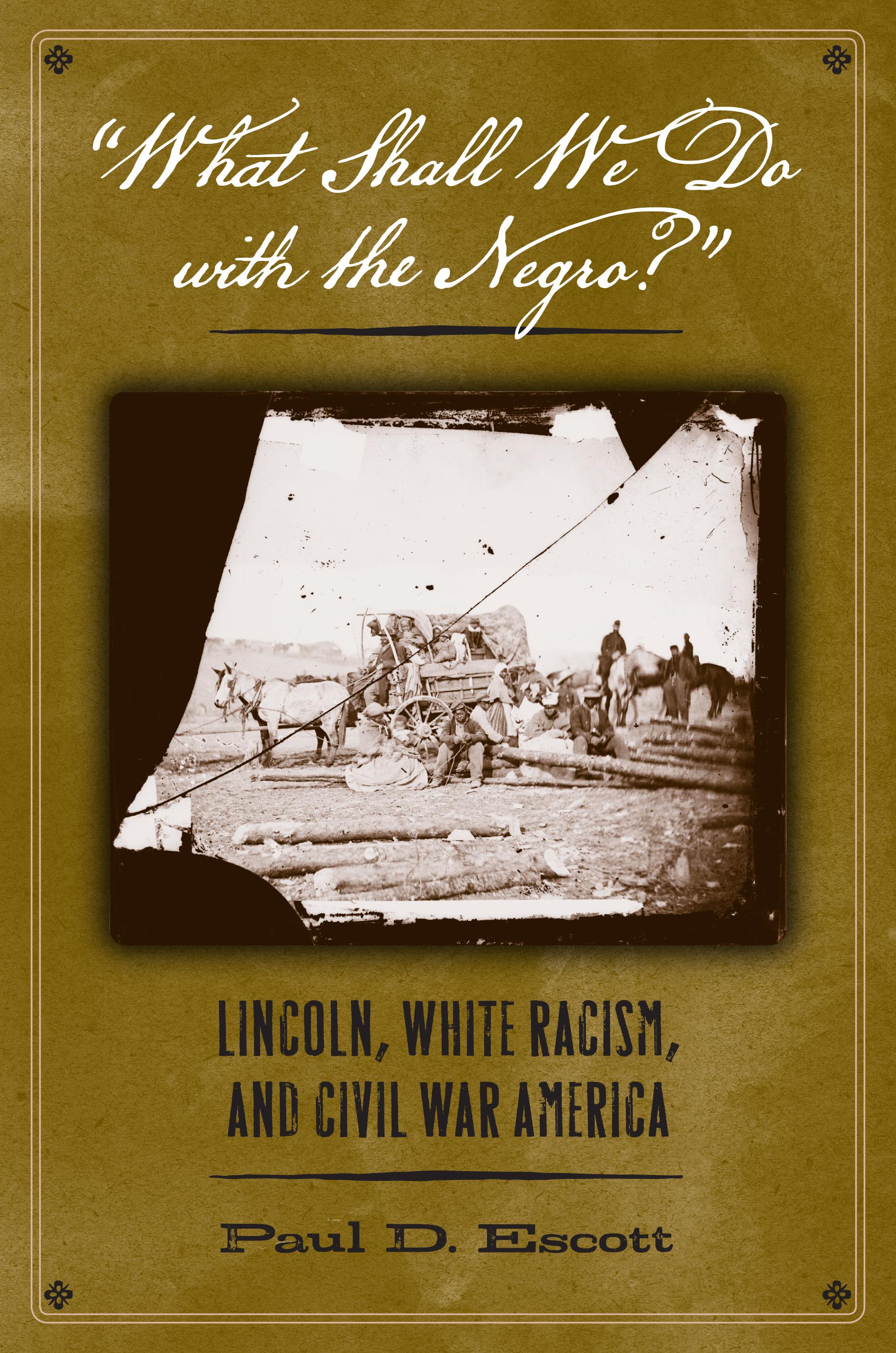
Throughout the Civil War, newspaper headlines and stories repeatedly asked some variation of the question posed by the New York Times in 1862, "What shall we do with the negro?" The future status of African Americans was a pressing issue for those in both the North and in the South. Consulting a broad range of contemporary newspapers, magazines, books, army records, government documents, publications of citizens’ organizations, letters, diaries, and other sources, Paul D. Escott examines the attitudes and actions of Northerners and Southerners regarding the future of African Americans after the end of slavery. "What Shall We Do with the Negro?" demonstrates how historians together with our larger national popular culture have wrenched the history of this period from its context in order to portray key figures as heroes or exemplars of national virtue.
Escott gives especial critical attention to Abraham Lincoln. Since the civil rights movement, many popular books have treated Lincoln as an icon, a mythical leader with thoroughly modern views on all aspects of race. But, focusing on Lincoln’s policies rather than attempting to divine Lincoln’s intentions from his often ambiguous or cryptic statements, Escott reveals a president who placed a higher priority on reunion than on emancipation, who showed an enduring respect for states’ rights, who assumed that the social status of African Americans would change very slowly in freedom, and who offered major incentives to white Southerners at the expense of the interests of blacks.Escott’s approach reveals the depth of slavery’s influence on society and the pervasiveness of assumptions of white supremacy. "What Shall We Do with the Negro?" serves as a corrective in offering a more realistic, more nuanced, and less celebratory approach to understanding this crucial period in American history.
Before Memmo my notes were scattered across PDFs. Now a workspace pulls everything into one place — I see exactly what's still left to study.
Memmo's summaries are gold before exams. I don't have to re-read 800 pages two weeks before — just the important parts.
The AI chat has saved me the night before an exam more than once. I just keep asking until I get it — no waiting on a study group to reply.
The quizzes hit exactly what I need to know. Memmo tracks what I get stuck on — so I only practice what's worth it.
Flashcards with spaced repetition are magic. Memmo knows when I'm about to forget something and brings it back.
The AI podcasts are my favorite. I listen on my way to school and get a recap without sitting at a computer.

Handbok i kvalitativa metoder
281 kr

Hållbar utveckling: en introduktion för ingenjörer och andra problemlösare
334 kr

Brymans Samhällsvetenskapliga metoder
390 kr

Projektledning
491 kr

Den orättvisa hälsan: om socioekonomiska skillnader i hälsa och livslängd
326 kr

Organizational Leadership
429 kr

Vetenskapsteori för nybörjare
196 kr

På väg mot läraryrket
172 kr

Det sociala livet i skolan: Socialpsykologiska perspektiv
253 kr

Betygsättningens didaktik
151 kr

Personality
402 kr

Studying Leadership
404 kr

Managing Innovation
477 kr

Introduktion till samhällsvetenskaplig metod
347 kr

The Psychology of Sex and Gender
698 kr

Evidens och kunskap för socialt arbete
207 kr

Introduction to Leadership
605 kr