
Before Memmo my notes were scattered across PDFs. Now a workspace pulls everything into one place — I see exactly what's still left to study.
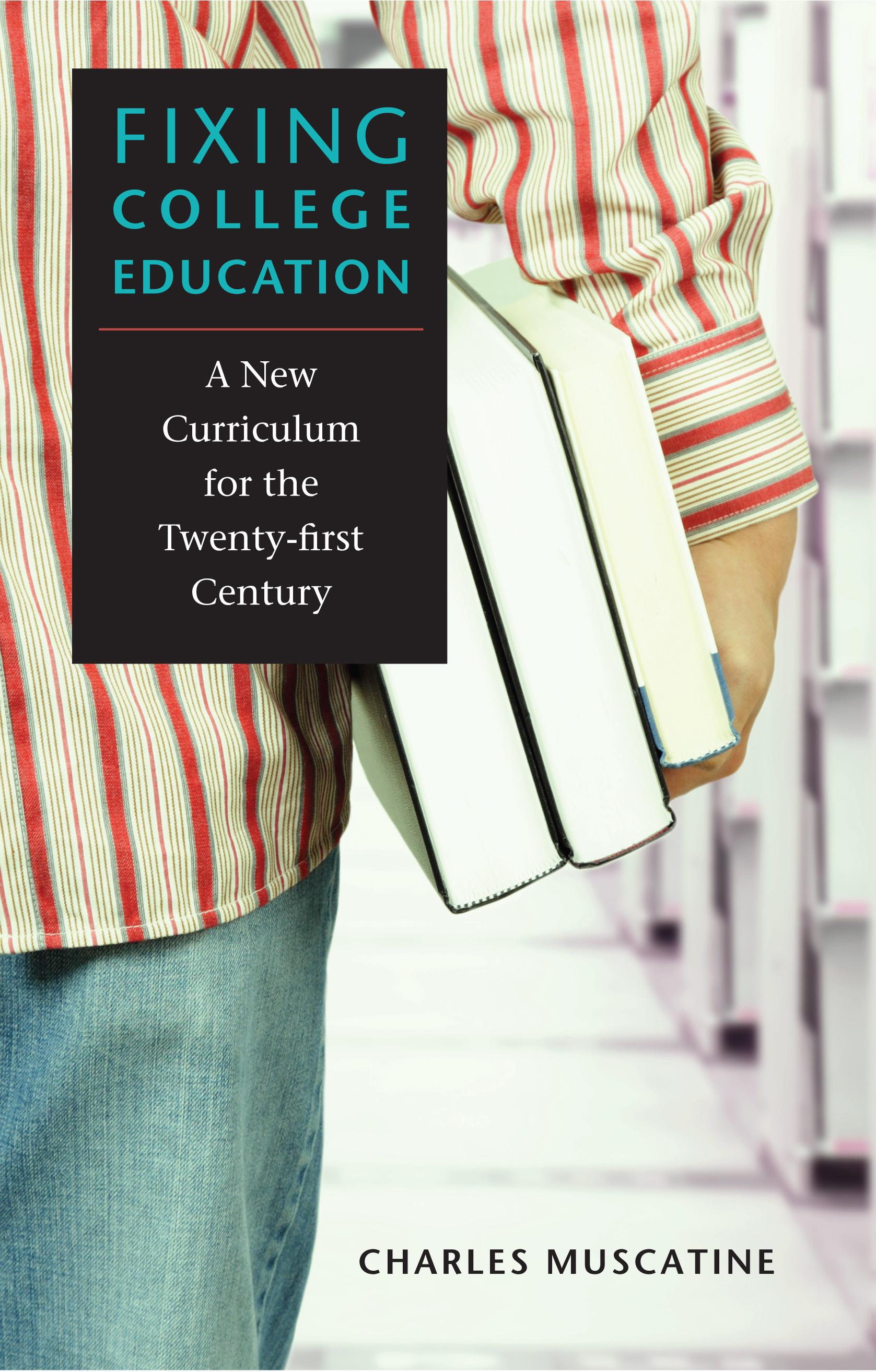
Since his early days at the University of California, Berkeley, when he was fired for refusing to sign a loyalty oath during the Red Scare, Charles Muscatine has been a dedicated teacher and higher education reformer. Upon his reinstatement at Berkeley, he founded "Strawberry Creek College," a six-year experiment using full professors and small classes to teach lower-division students. Drawing on this belief in undergraduate teaching, Muscatine’s new book now offers a radical new design for American college education.
Muscatine begins with the observation that the mediocre undergraduate curriculum offered by most colleges and universities today is based on outdated ideas of what should be taught and what constitutes good teaching. Although Muscatine is himself a well-established research scholar, he contends that the publish-or-perish "research religion" of college and university faculties has seriously damaged undergraduate education. He offers a clear distinction between publishable research and the scholarship necessary for good teaching. Furthermore, he recommends major changes in the education of professors, including reconsidering both the requirement of the book-length dissertation and the current organization of graduate departments.
Fixing College Education predicts new roles for students and faculty, redefines educational breadth and depth, and calls for deeper assessment of learning and teaching. Muscatine highlights the outstanding colleges and universities, including Harvard, Boston University’s University Professor’s Program, Evergreen State College, and Fairhaven College at Western Washington University, that have already remade their curricula successfully or adopted features like the ones he proposes. Muscatine argues that the new curriculum is better able than the old to produce good scholars and good citizens for the twenty-first century.
Before Memmo my notes were scattered across PDFs. Now a workspace pulls everything into one place — I see exactly what's still left to study.
Memmo's summaries are gold before exams. I don't have to re-read 800 pages two weeks before — just the important parts.
The AI chat has saved me the night before an exam more than once. I just keep asking until I get it — no waiting on a study group to reply.
The quizzes hit exactly what I need to know. Memmo tracks what I get stuck on — so I only practice what's worth it.
Flashcards with spaced repetition are magic. Memmo knows when I'm about to forget something and brings it back.
The AI podcasts are my favorite. I listen on my way to school and get a recap without sitting at a computer.

Handbok i kvalitativa metoder
281 kr

Hållbar utveckling: en introduktion för ingenjörer och andra problemlösare
334 kr

Brymans Samhällsvetenskapliga metoder
390 kr

Projektledning
491 kr

Den orättvisa hälsan: om socioekonomiska skillnader i hälsa och livslängd
326 kr

Organizational Leadership
429 kr

Vetenskapsteori för nybörjare
196 kr

På väg mot läraryrket
172 kr

Det sociala livet i skolan: Socialpsykologiska perspektiv
253 kr

Betygsättningens didaktik
151 kr

Personality
402 kr

Studying Leadership
404 kr

Managing Innovation
477 kr

Introduktion till samhällsvetenskaplig metod
347 kr

The Psychology of Sex and Gender
698 kr

Evidens och kunskap för socialt arbete
207 kr

Introduction to Leadership
605 kr