
Before Memmo my notes were scattered across PDFs. Now a workspace pulls everything into one place — I see exactly what's still left to study.
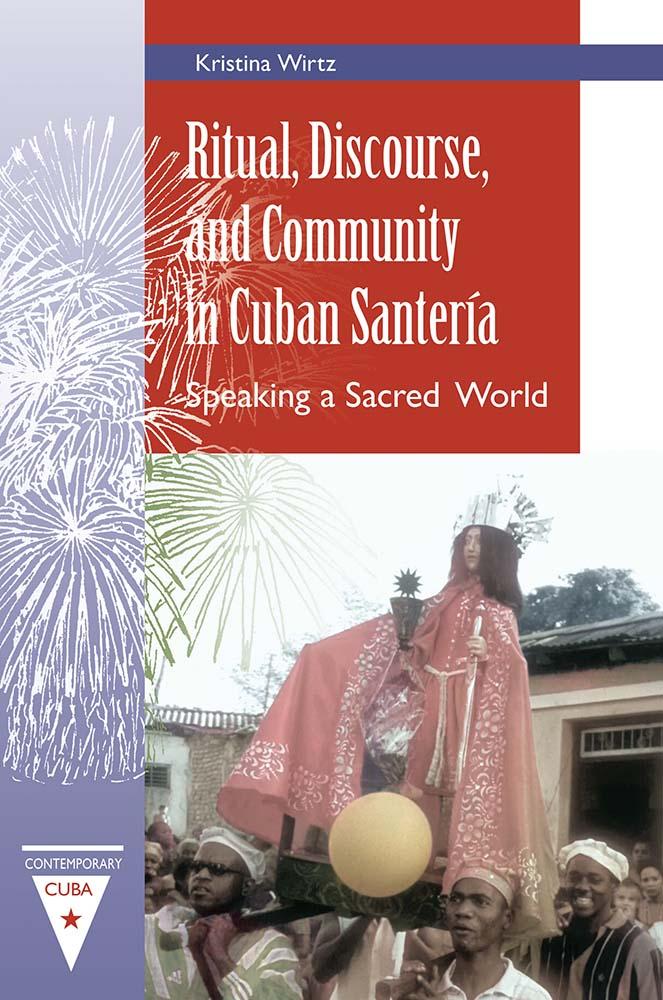
An insightful ethnographic account of the lives of Santería practitioners in Cuba
How do Santería practitioners in Cuba create and maintain religious communities amidst tensions, disagreements, and competition among them, and in the absence of centralized institutional authority? What serves as the "glue" that holds practitioners of different backgrounds together in the creation of a moral community? Examining the religious lives of santeros in Santiago de Cuba, Wirtz argues that these communities hold together not because members agree on their interpretations of rituals but because they often disagree.
Religious life is marked by a series of "telling moments"—not only the moments themselves but their narrated representations as they are retold and mined for religious meanings. Long after they occur, spiritually elevated experiences circulate in narratives that may express skepticism or awe and hold the promise of more such experiences. The author finds that these episodes resonate in gossip and other forms of public commentary about the experiences of their fellow Santería practitioners.
Drawing on ethnographic research about Santería beliefs and practices, Wirtz observes that practitioners are constantly engaged in reflection about what they and other practitioners are doing, how the orichas (deities) have responded, and what the consequences of their actions were or will be. By focusing their reflective attention on particular events, santeros re-create, moment to moment, what their religion is. Wirtz also argues that Santeria cannot be considered in isolation from the complex religious landscape of contemporary Cuba, in which African-based traditions are viewed with a mix of fascination, folkloric pride, and suspicion. Interactions among the conflicting discourses about these religions—as sacred practices, folklore, or dangerous superstitions, for example—have played a central role in constituting them as social entities. This book will interest scholars of religion, the African diaspora, the Caribbean, and Latin America, as well as linguistic and cultural anthropologists.
Before Memmo my notes were scattered across PDFs. Now a workspace pulls everything into one place — I see exactly what's still left to study.
Memmo's summaries are gold before exams. I don't have to re-read 800 pages two weeks before — just the important parts.
The AI chat has saved me the night before an exam more than once. I just keep asking until I get it — no waiting on a study group to reply.
The quizzes hit exactly what I need to know. Memmo tracks what I get stuck on — so I only practice what's worth it.
Flashcards with spaced repetition are magic. Memmo knows when I'm about to forget something and brings it back.
The AI podcasts are my favorite. I listen on my way to school and get a recap without sitting at a computer.

Handbok i kvalitativa metoder
281 kr

Hållbar utveckling: en introduktion för ingenjörer och andra problemlösare
334 kr

Brymans Samhällsvetenskapliga metoder
390 kr

Projektledning
491 kr

Den orättvisa hälsan: om socioekonomiska skillnader i hälsa och livslängd
326 kr

Vetenskapsteori för nybörjare
196 kr

Organizational Leadership
429 kr

På väg mot läraryrket
172 kr

Det sociala livet i skolan: Socialpsykologiska perspektiv
253 kr

Betygsättningens didaktik
151 kr

Personality
402 kr

Studying Leadership
404 kr

Managing Innovation
477 kr

Introduktion till samhällsvetenskaplig metod
347 kr

The Psychology of Sex and Gender
698 kr

Evidens och kunskap för socialt arbete
207 kr

Introduction to Leadership
605 kr