
Before Memmo my notes were scattered across PDFs. Now a workspace pulls everything into one place — I see exactly what's still left to study.
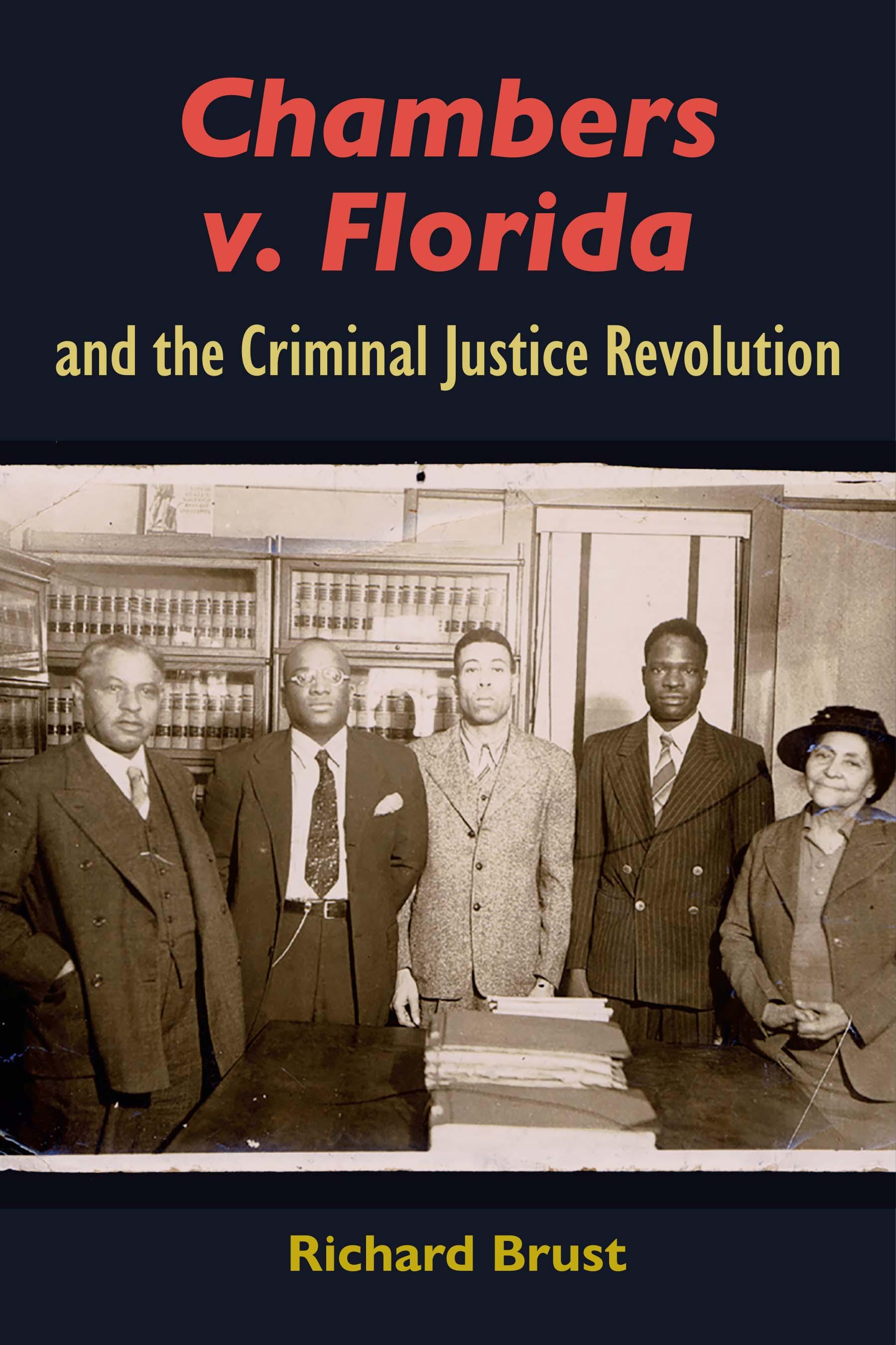
The history and enduring legacy of a breakthrough case in criminal justice reform
Florida Historical Society Rembert Patrick Award
In 1940, the United States Supreme Court decided in Chambers v. Florida to ban confessions obtained through mental or physical coercion in criminal trials. This landmark ruling laid the groundwork for many later protections for those in the custody of law enforcement. This book shows how the case contributed to what is now known as the “criminal procedure revolution,” a series of Supreme Court rulings that found protections in the Bill of Rights applied not only to defendants in federal cases but also to those in state legal systems.
The trial that sparked this chain of events resulted from the robbing and murder of a white fish-market owner in Pompano, Florida, in 1933. Local law enforcement officers extracted confessions from four Black migrant workers after a week of torture and abuse. Simuel McGill, a Black lawyer based in Jacksonville, mounted appeals, kept the accused men safe from lynchings, and eventually took the case to the nation’s highest court, where Justice Hugo Black, among other parts of the ruling, compared justice systems in the Jim Crow South to those of totalitarian nations in 1930s Europe. This book fully explores the case, often overlooked by historians, and its ripple effects—such as the “Miranda rights” formalized in 1966, including the “right to remain silent.”
"Chambers v. Florida" and the Criminal Justice Revolution demonstrates the influence of African American lawyers in early criminal and civil rights cases, as well as the growing public awareness of abuses of power by white sheriffs and law enforcement authorities during this time. It highlights the ever-present need to safeguard protections for minority and impoverished individuals accused of crimes, reminding readers that with perseverance and vigilance, justice can prevail.
Before Memmo my notes were scattered across PDFs. Now a workspace pulls everything into one place — I see exactly what's still left to study.
Memmo's summaries are gold before exams. I don't have to re-read 800 pages two weeks before — just the important parts.
The AI chat has saved me the night before an exam more than once. I just keep asking until I get it — no waiting on a study group to reply.
The quizzes hit exactly what I need to know. Memmo tracks what I get stuck on — so I only practice what's worth it.
Flashcards with spaced repetition are magic. Memmo knows when I'm about to forget something and brings it back.
The AI podcasts are my favorite. I listen on my way to school and get a recap without sitting at a computer.

Handbok i kvalitativa metoder
281 kr

Hållbar utveckling: en introduktion för ingenjörer och andra problemlösare
334 kr

Brymans Samhällsvetenskapliga metoder
390 kr

Projektledning
491 kr

Den orättvisa hälsan: om socioekonomiska skillnader i hälsa och livslängd
326 kr

Vetenskapsteori för nybörjare
196 kr

Organizational Leadership
429 kr

På väg mot läraryrket
172 kr

Det sociala livet i skolan: Socialpsykologiska perspektiv
253 kr

Betygsättningens didaktik
151 kr

Personality
402 kr

Studying Leadership
404 kr

Managing Innovation
477 kr

Introduktion till samhällsvetenskaplig metod
347 kr

The Psychology of Sex and Gender
698 kr

Evidens och kunskap för socialt arbete
207 kr

Introduction to Leadership
605 kr