
Before Memmo my notes were scattered across PDFs. Now a workspace pulls everything into one place — I see exactly what's still left to study.
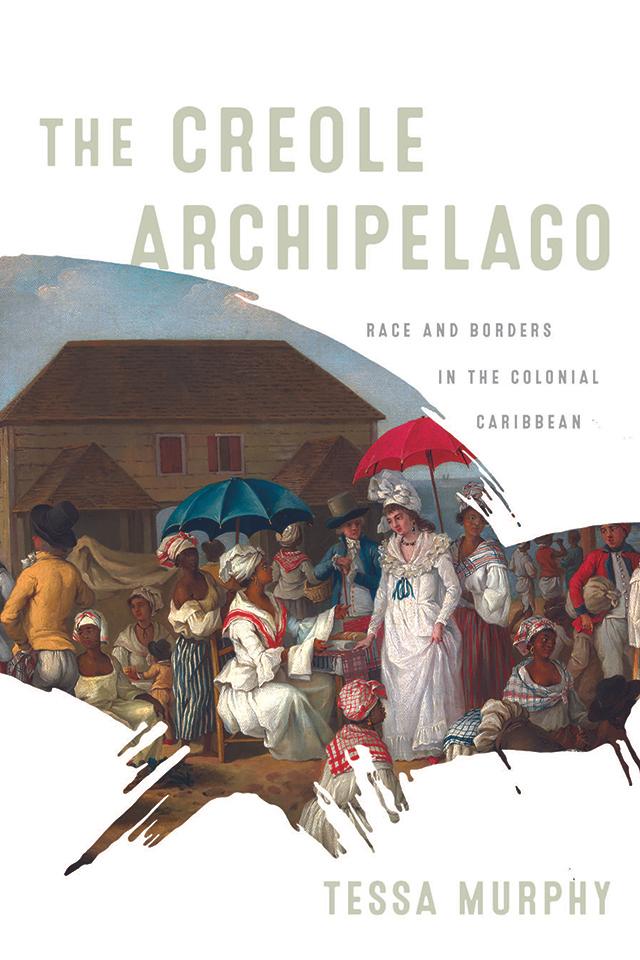
In The Creole Archipelago, Tessa Murphy traces how generations of Indigenous Kalinagos, free and enslaved Africans, and settlers from a variety of European nations used maritime routes to forge social, economic, and informal political connections that spanned the eastern Caribbean. Focusing on a chain of volcanic islands, each one visible from the next, whose societies developed outside the sphere of European rule until the end of the Seven Years' War in 1763, Murphy argues that the imperial frameworks typically used to analyze the early colonial Caribbean are at odds with the geographic realities that shaped daily life in the region.
Through use of wide-ranging sources including historical maps, parish records, an Indigenous-language dictionary, and colonial correspondence housed in the Caribbean, France, England, and the United States, Murphy shows how this watery borderland became a center of broader imperial experimentation, contestation, and reform. British and French officials dispatched to Dominica, Grenada, St. Lucia, St. Vincent, and Tobago after 1763 encountered a creolized society that repeatedly frustrated their attempts to transform the islands into productive plantation colonies. By centering the stories of Kalinagos who asserted continued claims to land, French Catholics who demanded the privileges of British subjects, and free people of African descent who insisted on their right to own land and enslaved people, Murphy offers a vivid counterpoint to larger Caribbean plantation societies like Jamaica and Barbados.
By looking outward from the eastern Caribbean chain, The Creole Archipelago resituates small islands as microcosms of broader historical processes central to understanding early American and Atlantic history, including European usurpation of Indigenous lands, the rise of slavery and plantation production, and the creation and codification of racial difference.
Before Memmo my notes were scattered across PDFs. Now a workspace pulls everything into one place — I see exactly what's still left to study.
Memmo's summaries are gold before exams. I don't have to re-read 800 pages two weeks before — just the important parts.
The AI chat has saved me the night before an exam more than once. I just keep asking until I get it — no waiting on a study group to reply.
The quizzes hit exactly what I need to know. Memmo tracks what I get stuck on — so I only practice what's worth it.
Flashcards with spaced repetition are magic. Memmo knows when I'm about to forget something and brings it back.
The AI podcasts are my favorite. I listen on my way to school and get a recap without sitting at a computer.

Handbok i kvalitativa metoder
281 kr

Hållbar utveckling: en introduktion för ingenjörer och andra problemlösare
334 kr

Brymans Samhällsvetenskapliga metoder
390 kr

Projektledning
491 kr

Den orättvisa hälsan: om socioekonomiska skillnader i hälsa och livslängd
326 kr

Organizational Leadership
429 kr

Vetenskapsteori för nybörjare
196 kr

På väg mot läraryrket
172 kr

Det sociala livet i skolan: Socialpsykologiska perspektiv
253 kr

Betygsättningens didaktik
151 kr

Personality
402 kr

Studying Leadership
404 kr

Managing Innovation
477 kr

Introduktion till samhällsvetenskaplig metod
347 kr

The Psychology of Sex and Gender
698 kr

Evidens och kunskap för socialt arbete
207 kr

Introduction to Leadership
605 kr