
Before Memmo my notes were scattered across PDFs. Now a workspace pulls everything into one place — I see exactly what's still left to study.
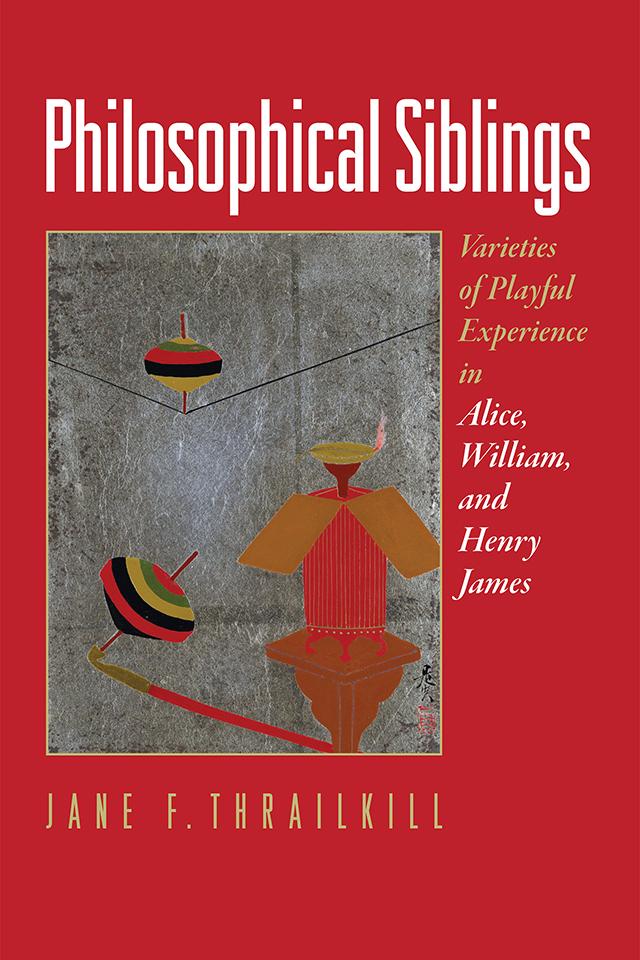
Alice James: an exemplary nineteenth-century neurasthenic and diarist. William James: a foundational figure for American psychology and philosophy. Henry James: a preeminent author and literary critic. These three iconic figures of nineteenth-century American culture and letters were also siblings, children of the storied James family, yet the diarist, the psychologist, and the novelist have seemed to occupy distinct realms of cultural authority and to speak to different audiences (or, in the case of Alice, to no audience at all). Their writings have rarely been considered together.
In Philosophical Siblings Jane F. Thrailkill asks what new story is illuminated when we study their writings collectively. By approaching the Jameses as intimate thinkers operating on a common field of play, Thrailkill reveals the siblings' shared project—part psychological, part philosophical—of showing how minds meet in a world teeming with possibilities and risks. Scientists in nineteenth-century psychology labs were studying isolated individuals, tracking eye movements, and timing reactions to better understand the human machine. In contrast, the Jameses' models for discovery were philosophical toys: ludic devices that light up quirks of perception and are devilishly fun as well. With childlike humor, the siblings' intellectual playfulness is both message and medium, manifested in an expressive style that exploits incongruity, delights in absurdities, and sometimes, teasingly, inflicts the sting of critique.
Most important, the Jameses' writings model how human beings accomplish high-wire acts of perception and creation. Alice, William, and Henry James did not merely present a new, interactive theory of mind; they dramatized it in their writings as a curiosity-based practice. Philosophical Siblings accepts their invitation to mindful play and offers a fresh way of thinking about literary encounters more generally, one that approaches even the weightiest texts with serious lightness.
Before Memmo my notes were scattered across PDFs. Now a workspace pulls everything into one place — I see exactly what's still left to study.
Memmo's summaries are gold before exams. I don't have to re-read 800 pages two weeks before — just the important parts.
The AI chat has saved me the night before an exam more than once. I just keep asking until I get it — no waiting on a study group to reply.
The quizzes hit exactly what I need to know. Memmo tracks what I get stuck on — so I only practice what's worth it.
Flashcards with spaced repetition are magic. Memmo knows when I'm about to forget something and brings it back.
The AI podcasts are my favorite. I listen on my way to school and get a recap without sitting at a computer.

Handbok i kvalitativa metoder
281 kr

Hållbar utveckling: en introduktion för ingenjörer och andra problemlösare
334 kr

Brymans Samhällsvetenskapliga metoder
390 kr

Projektledning
491 kr

Den orättvisa hälsan: om socioekonomiska skillnader i hälsa och livslängd
326 kr

Organizational Leadership
429 kr

Vetenskapsteori för nybörjare
196 kr

På väg mot läraryrket
172 kr

Det sociala livet i skolan: Socialpsykologiska perspektiv
253 kr

Betygsättningens didaktik
151 kr

Personality
402 kr

Studying Leadership
404 kr

Managing Innovation
477 kr

Introduktion till samhällsvetenskaplig metod
347 kr

The Psychology of Sex and Gender
698 kr

Evidens och kunskap för socialt arbete
207 kr

Introduction to Leadership
605 kr