
Before Memmo my notes were scattered across PDFs. Now a workspace pulls everything into one place — I see exactly what's still left to study.
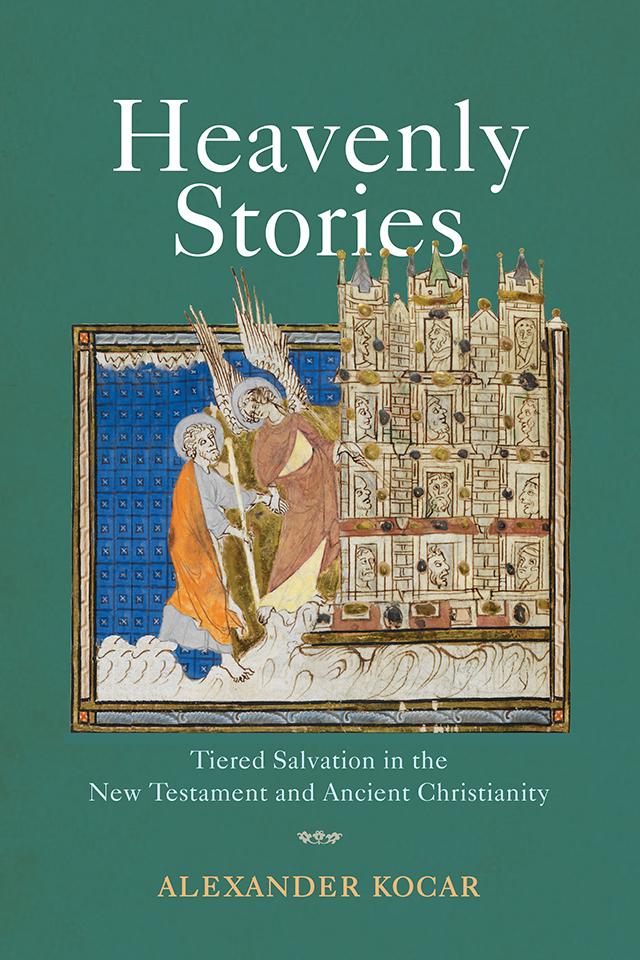
Salvation is often thought to be an all-or-nothing matter: you are either saved or damned. In the ancient world some figures, including Paul the Apostle, John of Patmos, Hermas, the Sethians, and the Valentinians, did not think this way, however. For them, there were multiple levels of salvation. Examining the reasons and implications for why these important thinkers believed that salvation comes in degrees, Heavenly Stories offers a fresh perspective on ancient thinking about responsibility, especially as it intersects with concerns such as genealogy and determinism. It shows why Jews and Christians of various kinds—some eventually declared orthodox, others heretical—correlated ethics and soteriology and argued over how this should be done.
By constructing a difference between a lower and higher level of salvation, ancient authors devised soteriological hierarchies that could account for ethical imperfections and social differentiation between their communities and outsiders, as well as reinforce idealized portrayals of conduct among members of their own groups. Alexander Kocar asks how these thinkers identified and described these ethical and social differences among people; what commitments motivated them to make such distinctions; what were the social effects of different salvific categories and ethical standards; and what impact did hierarchically structured soteriologies have on notions of ethical responsibility? His findings have repercussions for the study of ancient ethics (especially free will and responsibility), our understanding of orthodoxy and heresy, and scholarly debates surrounding the origins of Christianity as a movement that allegedly transcends ethnic boundaries.
Before Memmo my notes were scattered across PDFs. Now a workspace pulls everything into one place — I see exactly what's still left to study.
Memmo's summaries are gold before exams. I don't have to re-read 800 pages two weeks before — just the important parts.
The AI chat has saved me the night before an exam more than once. I just keep asking until I get it — no waiting on a study group to reply.
The quizzes hit exactly what I need to know. Memmo tracks what I get stuck on — so I only practice what's worth it.
Flashcards with spaced repetition are magic. Memmo knows when I'm about to forget something and brings it back.
The AI podcasts are my favorite. I listen on my way to school and get a recap without sitting at a computer.

Handbok i kvalitativa metoder
281 kr

Hållbar utveckling: en introduktion för ingenjörer och andra problemlösare
334 kr

Brymans Samhällsvetenskapliga metoder
390 kr

Projektledning
491 kr

Den orättvisa hälsan: om socioekonomiska skillnader i hälsa och livslängd
326 kr

Vetenskapsteori för nybörjare
196 kr

Organizational Leadership
429 kr

På väg mot läraryrket
172 kr

Det sociala livet i skolan: Socialpsykologiska perspektiv
253 kr

Betygsättningens didaktik
151 kr

Personality
402 kr

Studying Leadership
404 kr

Managing Innovation
477 kr

Introduktion till samhällsvetenskaplig metod
347 kr

The Psychology of Sex and Gender
698 kr

Evidens och kunskap för socialt arbete
207 kr

Introduction to Leadership
605 kr