
Before Memmo my notes were scattered across PDFs. Now a workspace pulls everything into one place — I see exactly what's still left to study.
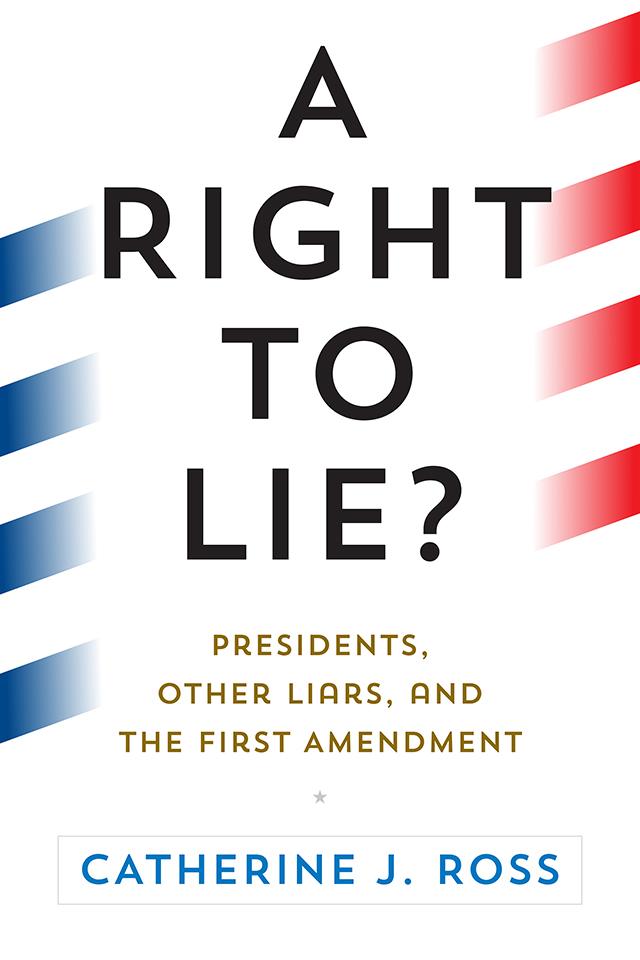
In A Right to Lie?, legal scholar Catherine J. Ross addresses the urgent issue of whether the nation's highest officers, including the president, have a right to lie under the Speech Clause, no matter what damage their falsehoods cause. Does freedom of expression protect even factual falsehoods? If so, are lies by candidates and public officials protected? And is there a constitutional path, without violating the First Amendment, to stop a president whose persistent lies endanger our lives and our democracy?
Perhaps counter-intuitively, the general answer to each question is "yes." Drawing from dramatic court cases about defamers, proponents of birtherism, braggarts, and office holders, Ross reveals the almost insurmountable constitutional and practical obstacles to legal efforts to rein in public deception. She explains the rules that govern the treatment of lies, while also demonstrating the incalculable damage presidential mendacity may lead to, as revealed in President Trump's lies about the COVID-19 pandemic and the legitimacy of the 2020 election.
Falsehoods have been at issue in every presidential impeachment proceeding from Nixon to Trump. But, until now, no one has analyzed why public lies might be impeachable offenses, and whether the First Amendment would provide a defense. Noting that speech by public employees does not receive the same First Amendment protection as the speech of ordinary citizens, Ross proposes the constitutionally viable solution of treating presidents as public employees who work for the people. Charged with oversight of the Executive, Congress may—and should—put future presidents on notice that material lies to the public on substantial matters will be deemed a "high crime and misdemeanor" subject to censure and even impeachment. A Right to Lie? explains how this approach could work if the political will were in place.
Before Memmo my notes were scattered across PDFs. Now a workspace pulls everything into one place — I see exactly what's still left to study.
Memmo's summaries are gold before exams. I don't have to re-read 800 pages two weeks before — just the important parts.
The AI chat has saved me the night before an exam more than once. I just keep asking until I get it — no waiting on a study group to reply.
The quizzes hit exactly what I need to know. Memmo tracks what I get stuck on — so I only practice what's worth it.
Flashcards with spaced repetition are magic. Memmo knows when I'm about to forget something and brings it back.
The AI podcasts are my favorite. I listen on my way to school and get a recap without sitting at a computer.

Handbok i kvalitativa metoder
281 kr

Hållbar utveckling: en introduktion för ingenjörer och andra problemlösare
334 kr

Brymans Samhällsvetenskapliga metoder
390 kr

Projektledning
491 kr

Den orättvisa hälsan: om socioekonomiska skillnader i hälsa och livslängd
326 kr

Vetenskapsteori för nybörjare
196 kr

Organizational Leadership
429 kr

På väg mot läraryrket
172 kr

Det sociala livet i skolan: Socialpsykologiska perspektiv
253 kr

Betygsättningens didaktik
151 kr

Personality
402 kr

Studying Leadership
404 kr

Managing Innovation
477 kr

Introduktion till samhällsvetenskaplig metod
347 kr

The Psychology of Sex and Gender
698 kr

Evidens och kunskap för socialt arbete
207 kr

Introduction to Leadership
605 kr