
Before Memmo my notes were scattered across PDFs. Now a workspace pulls everything into one place — I see exactly what's still left to study.
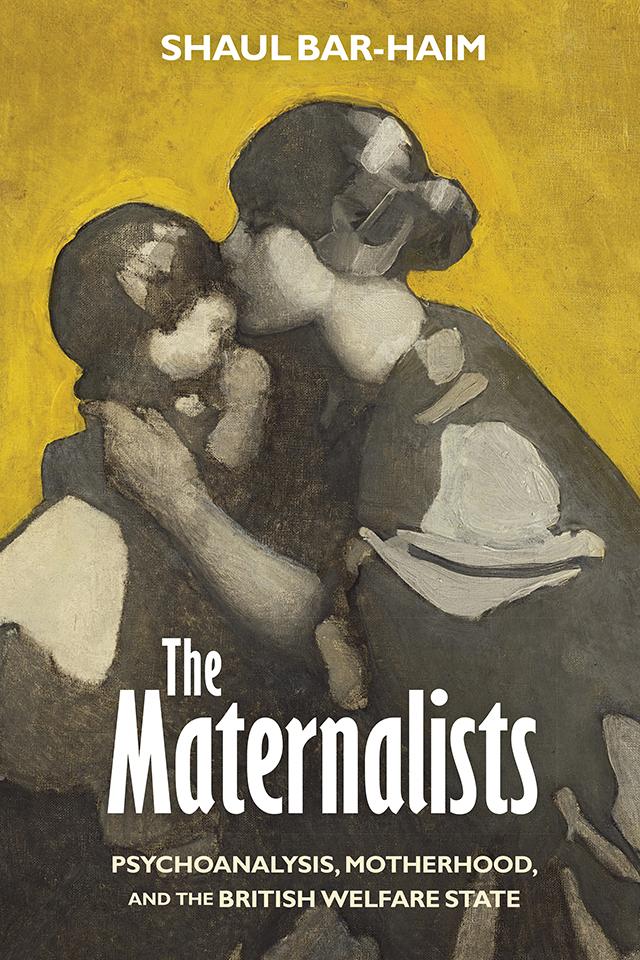
The Maternalists is a study of the hitherto unexplored significance of utopian visions of the state as a maternal entity in mid-twentieth century Britain. Demonstrating the affinities between welfarism, maternalism, and psychoanalysis, Shaul Bar-Haim suggests a new reading of the British welfare state as a political project.
After the First World War, British doctors, social thinkers, educators, and policy makers became increasingly interested in the contemporary turn being made in psychoanalytic theory toward the role of motherhood in child development. These public figures used new notions of the "maternal" to criticize modern European culture, and especially its patriarchal domestic structure. This strand of thought was pioneered by figures who were well placed to disseminate their ideas into the higher echelons of British culture, education, and medical care. Figures such as the anthropologists Bronislaw Malinowski and Geza Róheim, and the psychiatrist Ian Suttie—to mention only a few of the "maternalists" discussed in the book—used psychoanalytic vocabulary to promote both imagined perceptions of motherhood and their idea of the "real" essence of the "maternal." In the 1930s, as European fascism took hold, the "maternal" became a cultural discourse of both collective social anxieties and fantasies, as well as a central concept in many strands of radical, and even utopian, political thinking. During the Second World War, and even more so in the postwar era, psychoanalysts such as D. W. Winnicott and Michael Balint responded to the horrors of the war by drawing on interwar maternalistic thought, making a demand to "maternalize" British society, and providing postwar Britain with a new political idiom for defining the welfare state as a project of collective care.
Before Memmo my notes were scattered across PDFs. Now a workspace pulls everything into one place — I see exactly what's still left to study.
Memmo's summaries are gold before exams. I don't have to re-read 800 pages two weeks before — just the important parts.
The AI chat has saved me the night before an exam more than once. I just keep asking until I get it — no waiting on a study group to reply.
The quizzes hit exactly what I need to know. Memmo tracks what I get stuck on — so I only practice what's worth it.
Flashcards with spaced repetition are magic. Memmo knows when I'm about to forget something and brings it back.
The AI podcasts are my favorite. I listen on my way to school and get a recap without sitting at a computer.

Handbok i kvalitativa metoder
281 kr

Hållbar utveckling: en introduktion för ingenjörer och andra problemlösare
334 kr

Brymans Samhällsvetenskapliga metoder
390 kr

Projektledning
491 kr

Den orättvisa hälsan: om socioekonomiska skillnader i hälsa och livslängd
326 kr

Organizational Leadership
429 kr

Vetenskapsteori för nybörjare
196 kr

På väg mot läraryrket
172 kr

Det sociala livet i skolan: Socialpsykologiska perspektiv
253 kr

Betygsättningens didaktik
151 kr

Personality
402 kr

Studying Leadership
404 kr

Managing Innovation
477 kr

Introduktion till samhällsvetenskaplig metod
347 kr

The Psychology of Sex and Gender
698 kr

Evidens och kunskap för socialt arbete
207 kr

Introduction to Leadership
605 kr