
Before Memmo my notes were scattered across PDFs. Now a workspace pulls everything into one place — I see exactly what's still left to study.
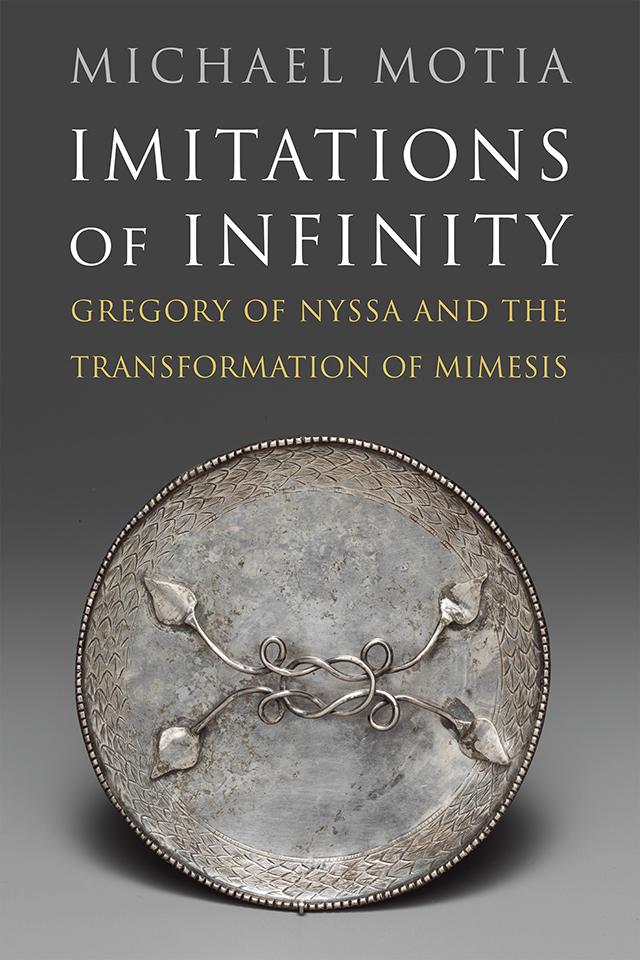
We do not have many definitions of Christianity from late antiquity, but among the few extant is the brief statement of Gregory of Nyssa (335-395 CE) that it is "mimesis of the divine nature." The sentence is both a historical gem and theologically puzzling. Gregory was the first Christian to make the infinity of God central to his theological program, but how could he intend for humans to imitate the infinite? If the aim of the Christian life is "never to stop growing towards what is better and never to place any limit on perfection," how could mimesis function within this endless pursuit?
In Imitations of Infinity, Michael A. Motia situates Gregory among Platonist philosophers, rhetorical teachers, and early Christian leaders to demonstrate how much of late ancient life was governed by notions of imitation. Questions both intimate and immense, of education, childcare, or cosmology, all found form in a relationship of archetype and image. It is no wonder that these debates demanded the attention of people at every level of the Roman Empire, including the Christians looking to form new social habits and norms. Whatever else the late ancient transformation of the empire affected, it changed the names, spaces, and characters that filled the imagination and common sense of its citizens, and it changed how they thought of their imitations.
Like religion, imitation was a way to organize the world and a way to reach toward new possibilities, Motia argues, and two earlier conceptions of mimesis—one centering on ontological participation, the other on aesthetic representation—merged in late antiquity. As philosophers and religious leaders pondered how linking oneself to reality depended on practices of representation, their theoretical debates accompanied practical concerns about what kinds of objects would best guide practitioners toward the divine. Motia places Gregory within a broader landscape of figures who retheorized the role of mimesis in search of perfection. No longer was imitation a marker of inauthenticity or immaturity. Mimesis became a way of life.
Before Memmo my notes were scattered across PDFs. Now a workspace pulls everything into one place — I see exactly what's still left to study.
Memmo's summaries are gold before exams. I don't have to re-read 800 pages two weeks before — just the important parts.
The AI chat has saved me the night before an exam more than once. I just keep asking until I get it — no waiting on a study group to reply.
The quizzes hit exactly what I need to know. Memmo tracks what I get stuck on — so I only practice what's worth it.
Flashcards with spaced repetition are magic. Memmo knows when I'm about to forget something and brings it back.
The AI podcasts are my favorite. I listen on my way to school and get a recap without sitting at a computer.

Handbok i kvalitativa metoder
281 kr

Hållbar utveckling: en introduktion för ingenjörer och andra problemlösare
334 kr

Brymans Samhällsvetenskapliga metoder
390 kr

Projektledning
491 kr

Den orättvisa hälsan: om socioekonomiska skillnader i hälsa och livslängd
326 kr

Vetenskapsteori för nybörjare
196 kr

Organizational Leadership
429 kr

På väg mot läraryrket
172 kr

Det sociala livet i skolan: Socialpsykologiska perspektiv
253 kr

Betygsättningens didaktik
151 kr

Personality
402 kr

Studying Leadership
404 kr

Managing Innovation
477 kr

Introduktion till samhällsvetenskaplig metod
347 kr

The Psychology of Sex and Gender
698 kr

Evidens och kunskap för socialt arbete
207 kr

Introduction to Leadership
605 kr