
Before Memmo my notes were scattered across PDFs. Now a workspace pulls everything into one place — I see exactly what's still left to study.
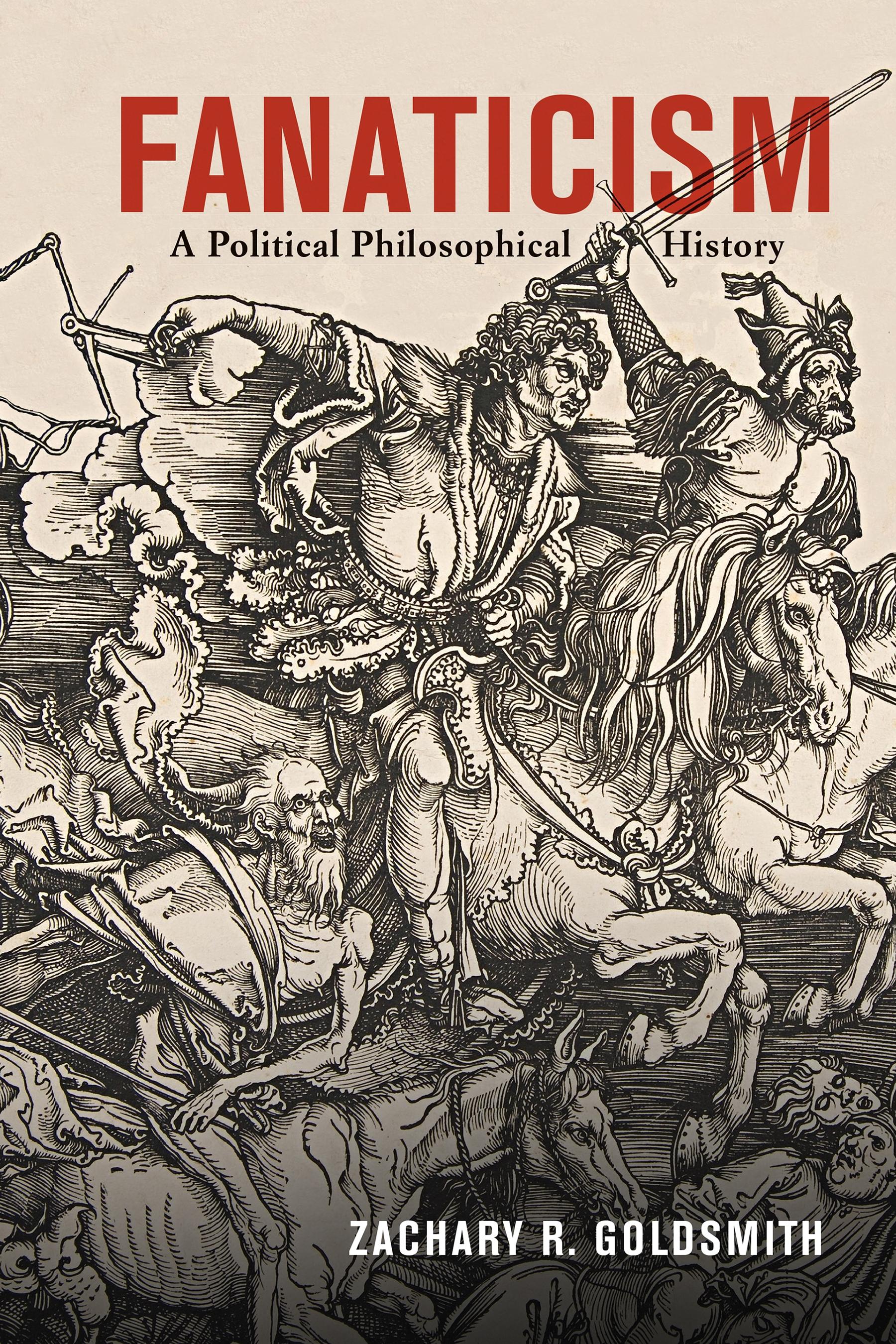
As the post-WWII liberal democratic consensus comes under increasing assault around the globe, Zachary R. Goldsmith investigates a timely topic: the reemergence of fanaticism. His book demonstrates how the concept of fanaticism, so often flippantly invoked with little forethought, actually has a long history stretching back to ancient times. Tracing this history through the Reformation and the Enlightenment to our present moment of political extremism run amok, Goldsmith offers a novel account of fanaticism, detailing its transformation from a primarily religious to a political concept around the time of the French Revolution. He draws on the work of Immanuel Kant, Edmund Burke, and Fyodor Dostoevsky—all keen observers of fanaticism, and especially its political variant—in order to explore this crucial moment in the development of political fanaticism.
Examining conceptualizations of fanaticism from different geographical, political, temporal, and contextual backgrounds, Goldsmith reveals how the concept has changed over time and resists easy definition. Nevertheless, his analysis of the writings of key figures from the tradition of political thought regarding fanaticism yields a complex and nuanced understanding of the concept that allows us to productively identify and observe its most salient characteristics: irrationality, messianism, the embrace of abstraction, the desire for novelty, the pursuit of perfection, a lack of limits in politics, the embrace of violence, certainty, passion, and its perennial attraction to intellectuals. Goldsmith’s political-philosophical history of fanaticism offers us an argument and warning against fanaticism itself, demonstrating that fanaticism is antidemocratic, illiberal, antipolitical, and never necessary.
Before Memmo my notes were scattered across PDFs. Now a workspace pulls everything into one place — I see exactly what's still left to study.
Memmo's summaries are gold before exams. I don't have to re-read 800 pages two weeks before — just the important parts.
The AI chat has saved me the night before an exam more than once. I just keep asking until I get it — no waiting on a study group to reply.
The quizzes hit exactly what I need to know. Memmo tracks what I get stuck on — so I only practice what's worth it.
Flashcards with spaced repetition are magic. Memmo knows when I'm about to forget something and brings it back.
The AI podcasts are my favorite. I listen on my way to school and get a recap without sitting at a computer.

Handbok i kvalitativa metoder
281 kr

Hållbar utveckling: en introduktion för ingenjörer och andra problemlösare
334 kr

Brymans Samhällsvetenskapliga metoder
390 kr

Projektledning
491 kr

Den orättvisa hälsan: om socioekonomiska skillnader i hälsa och livslängd
326 kr

Vetenskapsteori för nybörjare
196 kr

Organizational Leadership
429 kr

På väg mot läraryrket
172 kr

Det sociala livet i skolan: Socialpsykologiska perspektiv
253 kr

Betygsättningens didaktik
151 kr

Personality
402 kr

Studying Leadership
404 kr

Managing Innovation
477 kr

Introduktion till samhällsvetenskaplig metod
347 kr

The Psychology of Sex and Gender
698 kr

Evidens och kunskap för socialt arbete
207 kr

Introduction to Leadership
605 kr