
Before Memmo my notes were scattered across PDFs. Now a workspace pulls everything into one place — I see exactly what's still left to study.
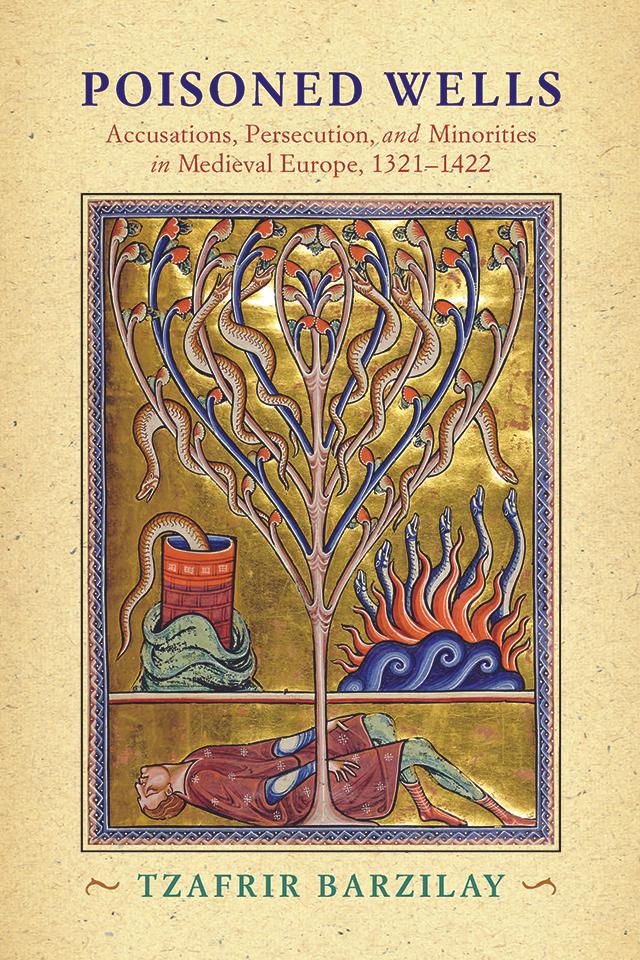
Between 1348 and 1350, Jews throughout Europe were accused of having caused the spread of the Black Death by poisoning the wells from which the entire population drank. Hundreds if not thousands were executed from Aragon and southern France into the eastern regions of the German-speaking lands. But if the well-poisoning accusations against the Jews during these plague years are the most frequently cited of such cases, they were not unique. The first major wave of accusations came in France and Aragon in 1321, and it was lepers, not Jews, who were the initial targets. Local authorities, and especially municipal councils, promoted these charges so as to be able to seize the property of the leprosaria, Tzafrir Barzilay contends. The allegations eventually expanded to describe an international conspiracy organized by Muslims, and only then, after months of persecution of the lepers, did some nobles of central France implicate the Jews, convincing the king to expel them from the realm.
In Poisoned Wells Barzilay explores the origins of these charges of well poisoning, asks how the fear took root and moved across Europe, which groups it targeted, why it held in certain areas and not others, and why it waned in the fifteenth century. He argues that many of the social, political, and environmental factors that fed the rise of the mass poisoning accusations had already appeared during the thirteenth century, a period of increased urbanization, of criminal poisoning charges, and of the proliferation of medical texts on toxins. In studying the narratives that were presented to convince officials that certain groups committed well poisoning and the legal and bureaucratic mechanisms that moved rumors into officially accepted and prosecutable crimes, Barzilay has written a crucial chapter in the long history of the persecution of European minorities.
Before Memmo my notes were scattered across PDFs. Now a workspace pulls everything into one place — I see exactly what's still left to study.
Memmo's summaries are gold before exams. I don't have to re-read 800 pages two weeks before — just the important parts.
The AI chat has saved me the night before an exam more than once. I just keep asking until I get it — no waiting on a study group to reply.
The quizzes hit exactly what I need to know. Memmo tracks what I get stuck on — so I only practice what's worth it.
Flashcards with spaced repetition are magic. Memmo knows when I'm about to forget something and brings it back.
The AI podcasts are my favorite. I listen on my way to school and get a recap without sitting at a computer.

Handbok i kvalitativa metoder
281 kr

Hållbar utveckling: en introduktion för ingenjörer och andra problemlösare
334 kr

Brymans Samhällsvetenskapliga metoder
390 kr

Projektledning
491 kr

Den orättvisa hälsan: om socioekonomiska skillnader i hälsa och livslängd
326 kr

Organizational Leadership
429 kr

Vetenskapsteori för nybörjare
196 kr

På väg mot läraryrket
172 kr

Det sociala livet i skolan: Socialpsykologiska perspektiv
253 kr

Betygsättningens didaktik
151 kr

Personality
402 kr

Studying Leadership
404 kr

Managing Innovation
477 kr

Introduktion till samhällsvetenskaplig metod
347 kr

The Psychology of Sex and Gender
698 kr

Evidens och kunskap för socialt arbete
207 kr

Introduction to Leadership
605 kr