
Before Memmo my notes were scattered across PDFs. Now a workspace pulls everything into one place — I see exactly what's still left to study.
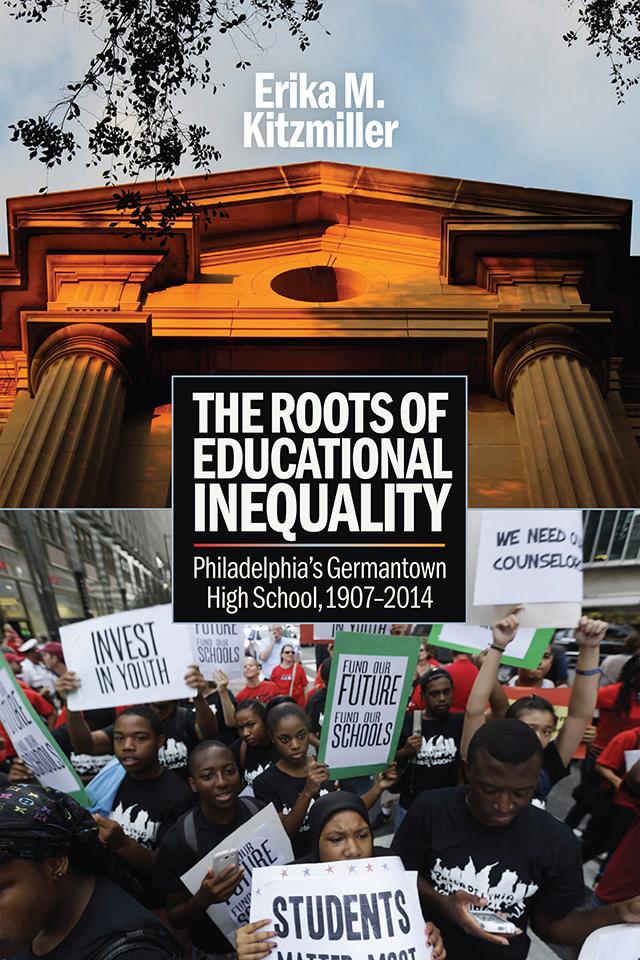
The Roots of Educational Inequality chronicles the transformation of one American high school over the course of the twentieth century to explore the larger political, economic, and social factors that have contributed to the escalation of educational inequality in modern America.
In 1914, when Germantown High School officially opened, Martin G. Brumbaugh, the superintendent of the School District of Philadelphia, told residents that they had one of the finest high schools in the nation. Located in a suburban neighborhood in Philadelphia's northwest corner, the school provided Germantown youth with a first-rate education and the necessary credentials to secure a prosperous future. In 2013, almost a century later, William Hite, the city's superintendent, announced that Germantown High was one of thirty-seven schools slated for closure due to low academic achievement. How is it that the school, like so many others that serve low-income students of color, transformed in this way?
Erika M. Kitzmiller links the saga of a single high school to the history of its local community, its city, and the nation. Through a fresh, longitudinal examination that combines deep archival research and spatial analysis, Kitzmiller challenges conventional declension narratives that suggest American high schools have moved steadily from pillars of success to institutions of failures. Instead, this work demonstrates that educational inequality has been embedded in our nation's urban high schools since their founding. The book argues that urban schools were never funded adequately. Since the beginning of the twentieth century, urban school districts lacked the tax revenues needed to operate their schools. Rather than raising taxes, these school districts relied on private philanthropy from families and communities to subsidize a lack of government aid. Over time, this philanthropy disappeared leaving urban schools with inadequate funds and exacerbating the level of educational inequality.
Before Memmo my notes were scattered across PDFs. Now a workspace pulls everything into one place — I see exactly what's still left to study.
Memmo's summaries are gold before exams. I don't have to re-read 800 pages two weeks before — just the important parts.
The AI chat has saved me the night before an exam more than once. I just keep asking until I get it — no waiting on a study group to reply.
The quizzes hit exactly what I need to know. Memmo tracks what I get stuck on — so I only practice what's worth it.
Flashcards with spaced repetition are magic. Memmo knows when I'm about to forget something and brings it back.
The AI podcasts are my favorite. I listen on my way to school and get a recap without sitting at a computer.

Handbok i kvalitativa metoder
281 kr

Hållbar utveckling: en introduktion för ingenjörer och andra problemlösare
334 kr

Brymans Samhällsvetenskapliga metoder
390 kr

Projektledning
491 kr

Den orättvisa hälsan: om socioekonomiska skillnader i hälsa och livslängd
326 kr

Vetenskapsteori för nybörjare
196 kr

Organizational Leadership
429 kr

På väg mot läraryrket
172 kr

Det sociala livet i skolan: Socialpsykologiska perspektiv
253 kr

Betygsättningens didaktik
151 kr

Personality
402 kr

Studying Leadership
404 kr

Managing Innovation
477 kr

Introduktion till samhällsvetenskaplig metod
347 kr

The Psychology of Sex and Gender
698 kr

Evidens och kunskap för socialt arbete
207 kr

Introduction to Leadership
605 kr