
Before Memmo my notes were scattered across PDFs. Now a workspace pulls everything into one place — I see exactly what's still left to study.
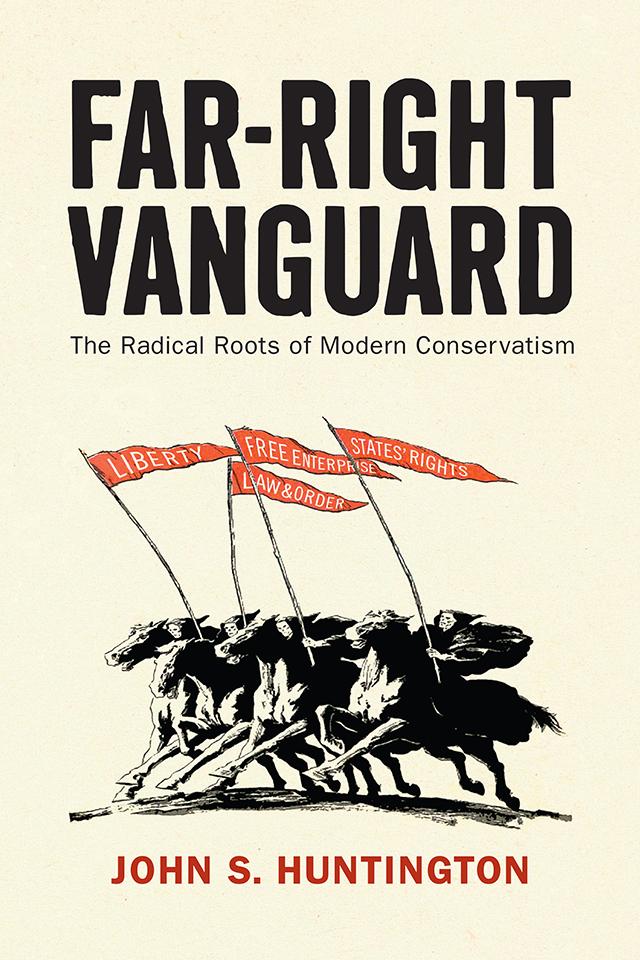
The history of the ultraconservative movement, its national network, and its influence on Republican Party politics
Donald Trump shocked the nation in 2016 by winning the presidency through an ultraconservative, anti-immigrant platform, but, despite the electoral surprise, Trump's far-right views were not an aberration, nor even a recent phenomenon. In Far-Right Vanguard, John Huntington shows how, for almost a century, the far right has forced so-called "respectable" conservatives to grapple with their concerns, thereby intensifying right-wing thought and forecasting the trajectory of American politics. Ultraconservatives of the twentieth century were the vanguard of modern conservatism as it exists in the Republican Party of today.
Far-Right Vanguard chronicles the history of the ultraconservative movement, its national network, its influence on Republican Party politics, and its centrality to America's rightward turn during the second half of the twentieth century. Often marginalized as outliers, the far right grew out of the same ideological seedbed that nourished mainstream conservatism. Ultraconservatives were true reactionaries, dissenters seeking to peel back the advance of the liberal state, hoping to turn one of the major parties, if not a third party, into a bastion of true conservatism.
In the process, ultraconservatives left a deep imprint upon the cultural and philosophical bedrock of American politics. Far-right leaders built their movement through grassroots institutions, like the John Birch Society and Christian Crusade, each one a critical node in the ultraconservative network, a point of convergence for activists, politicians, and businessmen. This vibrant, interconnected web formed the movement's connective tissue and pushed far-right ideas into the political mainstream. Conspiracy theories, nativism, white supremacy, and radical libertarianism permeated far-right organizations, producing an uncompromising mindset and a hyper-partisanship that consumed conservatism and, eventually, the Republican Party.
Ultimately, the far right's politics of dissent—against racial progress, federal power, and political moderation—laid the groundwork for the aggrieved, vitriolic conservatism of the twenty-first century.
Before Memmo my notes were scattered across PDFs. Now a workspace pulls everything into one place — I see exactly what's still left to study.
Memmo's summaries are gold before exams. I don't have to re-read 800 pages two weeks before — just the important parts.
The AI chat has saved me the night before an exam more than once. I just keep asking until I get it — no waiting on a study group to reply.
The quizzes hit exactly what I need to know. Memmo tracks what I get stuck on — so I only practice what's worth it.
Flashcards with spaced repetition are magic. Memmo knows when I'm about to forget something and brings it back.
The AI podcasts are my favorite. I listen on my way to school and get a recap without sitting at a computer.

Handbok i kvalitativa metoder
281 kr

Hållbar utveckling: en introduktion för ingenjörer och andra problemlösare
334 kr

Brymans Samhällsvetenskapliga metoder
390 kr

Projektledning
491 kr

Den orättvisa hälsan: om socioekonomiska skillnader i hälsa och livslängd
326 kr

Vetenskapsteori för nybörjare
196 kr

Organizational Leadership
429 kr

På väg mot läraryrket
172 kr

Det sociala livet i skolan: Socialpsykologiska perspektiv
253 kr

Betygsättningens didaktik
151 kr

Personality
402 kr

Studying Leadership
404 kr

Managing Innovation
477 kr

Introduktion till samhällsvetenskaplig metod
347 kr

The Psychology of Sex and Gender
698 kr

Evidens och kunskap för socialt arbete
207 kr

Introduction to Leadership
605 kr