
Before Memmo my notes were scattered across PDFs. Now a workspace pulls everything into one place — I see exactly what's still left to study.
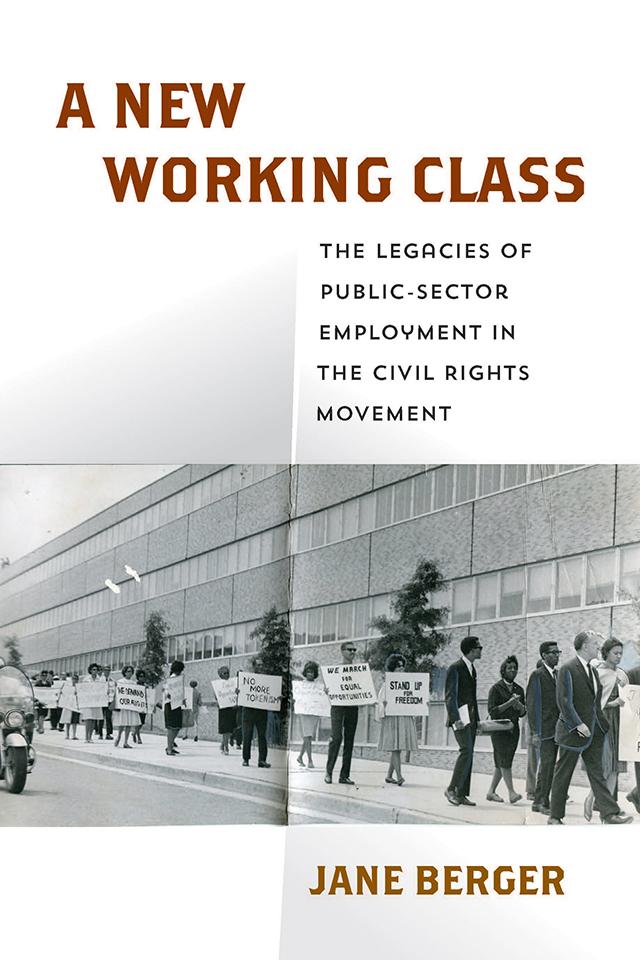
For decades, civil rights activists fought against employment discrimination and for a greater role for African Americans in municipal decision-making. As their influence in city halls across the country increased, activists took advantage of the Great Society—and the government jobs it created on the local level—to advance their goals.
A New Working Class traces efforts by Black public-sector workers and their unions to fight for racial and economic justice in Baltimore. The public sector became a critical job niche for Black workers, especially women, a largely unheralded achievement of the civil rights movement. A vocal contingent of Black public-sector workers pursued the activists' goals from their government posts and sought to increase and improve public services. They also fought for their rights as workers and won union representation. During an era often associated with deindustrialization and union decline, Black government workers and their unions were just getting started.
During the 1970s and 1980s, presidents from both political parties pursued policies that imperiled these gains. Fighting funding reductions, public-sector workers and their unions defended the principle that the government has a responsibility to provide for the well-being of its residents. Federal officials justified their austerity policies, the weakening of the welfare state and strengthening of the carceral state, by criminalizing Black urban residents—including government workers and their unions. Meanwhile, workers and their unions also faced off against predominately white local officials, who responded to austerity pressures by cutting government jobs and services while simultaneously offering tax incentives to businesses and investing in low-wage, service-sector jobs. The combination of federal and local policies increased insecurity in hyper-segregated and increasingly over-policed low-income Black neighborhoods, leaving residents, particularly women, to provide themselves or do without services that public-sector workers had fought to provide.
Before Memmo my notes were scattered across PDFs. Now a workspace pulls everything into one place — I see exactly what's still left to study.
Memmo's summaries are gold before exams. I don't have to re-read 800 pages two weeks before — just the important parts.
The AI chat has saved me the night before an exam more than once. I just keep asking until I get it — no waiting on a study group to reply.
The quizzes hit exactly what I need to know. Memmo tracks what I get stuck on — so I only practice what's worth it.
Flashcards with spaced repetition are magic. Memmo knows when I'm about to forget something and brings it back.
The AI podcasts are my favorite. I listen on my way to school and get a recap without sitting at a computer.

Handbok i kvalitativa metoder
281 kr

Hållbar utveckling: en introduktion för ingenjörer och andra problemlösare
334 kr

Brymans Samhällsvetenskapliga metoder
390 kr

Projektledning
491 kr

Den orättvisa hälsan: om socioekonomiska skillnader i hälsa och livslängd
326 kr

Vetenskapsteori för nybörjare
196 kr

Organizational Leadership
429 kr

På väg mot läraryrket
172 kr

Det sociala livet i skolan: Socialpsykologiska perspektiv
253 kr

Betygsättningens didaktik
151 kr

Personality
402 kr

Studying Leadership
404 kr

Managing Innovation
477 kr

Introduktion till samhällsvetenskaplig metod
347 kr

The Psychology of Sex and Gender
698 kr

Evidens och kunskap för socialt arbete
207 kr

Introduction to Leadership
605 kr