
Before Memmo my notes were scattered across PDFs. Now a workspace pulls everything into one place — I see exactly what's still left to study.
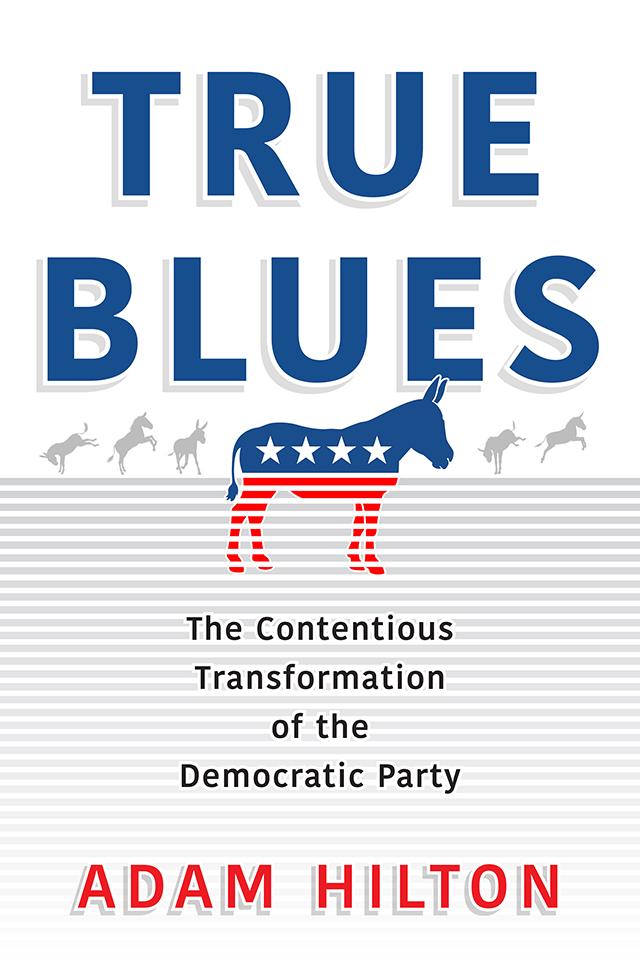
An examination of the transformation of the Democratic Party since the late 1960s
Who governs political parties? Recent insurgent campaigns, such as those of Donald Trump and Bernie Sanders, have thrust this critical question to the center of political debate for casual observers and scholars alike. Yet the dynamics of modern party politics remain poorly understood. Assertions of either elite control or interest group dominance both fail to explain the Trump victory and the surprise of the Sanders insurgency and their subsequent reverberations through the American political landscape.
In True Blues, Adam Hilton tackles the question of who governs parties by examining the transformation of the Democratic Party since the late 1960s. Reconceiving parties as "contentious institutions," Hilton argues that Democratic Party change was driven by recurrent conflicts between groups and officeholders to define and control party identity, program, and policy. The outcome of this prolonged struggle was a wholly new kind of party—an advocacy party—which institutionalized greater party dependence on outside groups for legitimacy and organizational support, while also, in turn, fostering greater group dependency on the presidency for the satisfaction of its symbolic and substantive demands. Consequently, while the long conflict between party reformers and counter-reformers successfully opened the Democratic Party to new voices and identities, it also facilitated the growth of presidential power, rising inequality, and deepening partisan polarization.
Tracing the rise of the advocacy party from the fall of the New Deal order through the presidency of Barack Obama, True Blues explains how and why the Democratic Party has come to its current crossroads and suggests a bold new perspective for comprehending the dynamics driving American party politics more broadly.
Before Memmo my notes were scattered across PDFs. Now a workspace pulls everything into one place — I see exactly what's still left to study.
Memmo's summaries are gold before exams. I don't have to re-read 800 pages two weeks before — just the important parts.
The AI chat has saved me the night before an exam more than once. I just keep asking until I get it — no waiting on a study group to reply.
The quizzes hit exactly what I need to know. Memmo tracks what I get stuck on — so I only practice what's worth it.
Flashcards with spaced repetition are magic. Memmo knows when I'm about to forget something and brings it back.
The AI podcasts are my favorite. I listen on my way to school and get a recap without sitting at a computer.

Handbok i kvalitativa metoder
281 kr

Hållbar utveckling: en introduktion för ingenjörer och andra problemlösare
334 kr

Brymans Samhällsvetenskapliga metoder
390 kr

Projektledning
491 kr

Den orättvisa hälsan: om socioekonomiska skillnader i hälsa och livslängd
326 kr

Organizational Leadership
429 kr

Vetenskapsteori för nybörjare
196 kr

På väg mot läraryrket
172 kr

Det sociala livet i skolan: Socialpsykologiska perspektiv
253 kr

Betygsättningens didaktik
151 kr

Personality
402 kr

Studying Leadership
404 kr

Managing Innovation
477 kr

Introduktion till samhällsvetenskaplig metod
347 kr

The Psychology of Sex and Gender
698 kr

Evidens och kunskap för socialt arbete
207 kr

Introduction to Leadership
605 kr