
Before Memmo my notes were scattered across PDFs. Now a workspace pulls everything into one place — I see exactly what's still left to study.
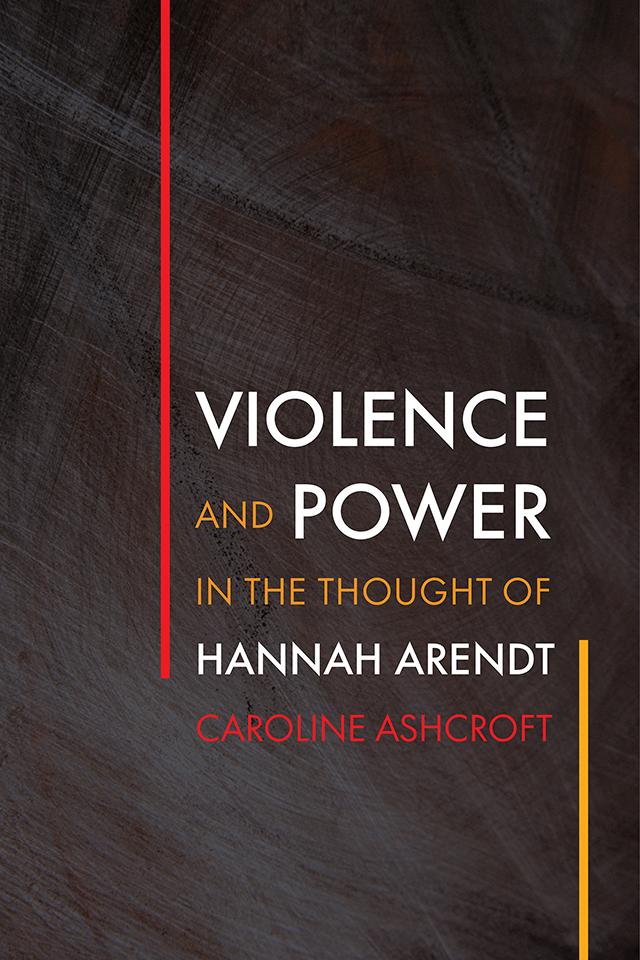
Hannah Arendt was one of the foremost political theorists of the twentieth century to wrestle with the role of violence in public life. Yet remarkably, despite the fact that it was perhaps the most pressing issue of her era, this theme in her work has rarely been explored. In Violence and Power in the Thought of Hannah Arendt, Caroline Ashcroft deepens our understanding of Arendt's conception of the role of violence, offering a critical reading of her work and using it as a provocation to think about how we might engage with contemporary ideas.
Arendt has generally been thought to exclude acts of violence from "the political," based on her supposed idealization of ancient democratic politics. Ashcroft argues that Arendt has been widely misunderstood by both critics and advocates on this. By examining Arendt's thought on violence in key examples of political practice such as modern Jewish politics, the politics of Greece and Rome, and the French and American revolutions, Ashcroft reveals a more pragmatic notion of the place of violence in the political. She argues that what Arendt opposes in political violence is the use of force to determine politics, an idea central to modern sovereignty. What Arendt criticizes is not violence as such, but the misuse of violence and misunderstandings of politics which exclude participatory power altogether.
This work also engages with a wider set of concerns in political theory by obliging us to rethink the relations between violence and politics. Arendt's work offers a way to bridge the gulf between sovereign or realist politics and nonhierarchical, nonviolent participatory politics, and thus offers valuable resources for contemporary political theory.
Before Memmo my notes were scattered across PDFs. Now a workspace pulls everything into one place — I see exactly what's still left to study.
Memmo's summaries are gold before exams. I don't have to re-read 800 pages two weeks before — just the important parts.
The AI chat has saved me the night before an exam more than once. I just keep asking until I get it — no waiting on a study group to reply.
The quizzes hit exactly what I need to know. Memmo tracks what I get stuck on — so I only practice what's worth it.
Flashcards with spaced repetition are magic. Memmo knows when I'm about to forget something and brings it back.
The AI podcasts are my favorite. I listen on my way to school and get a recap without sitting at a computer.

Handbok i kvalitativa metoder
281 kr

Hållbar utveckling: en introduktion för ingenjörer och andra problemlösare
334 kr

Brymans Samhällsvetenskapliga metoder
390 kr

Projektledning
491 kr

Den orättvisa hälsan: om socioekonomiska skillnader i hälsa och livslängd
326 kr

Vetenskapsteori för nybörjare
196 kr

Organizational Leadership
429 kr

På väg mot läraryrket
172 kr

Det sociala livet i skolan: Socialpsykologiska perspektiv
253 kr

Betygsättningens didaktik
151 kr

Personality
402 kr

Studying Leadership
404 kr

Managing Innovation
477 kr

Introduktion till samhällsvetenskaplig metod
347 kr

The Psychology of Sex and Gender
698 kr

Evidens och kunskap för socialt arbete
207 kr

Introduction to Leadership
605 kr