
Before Memmo my notes were scattered across PDFs. Now a workspace pulls everything into one place — I see exactly what's still left to study.
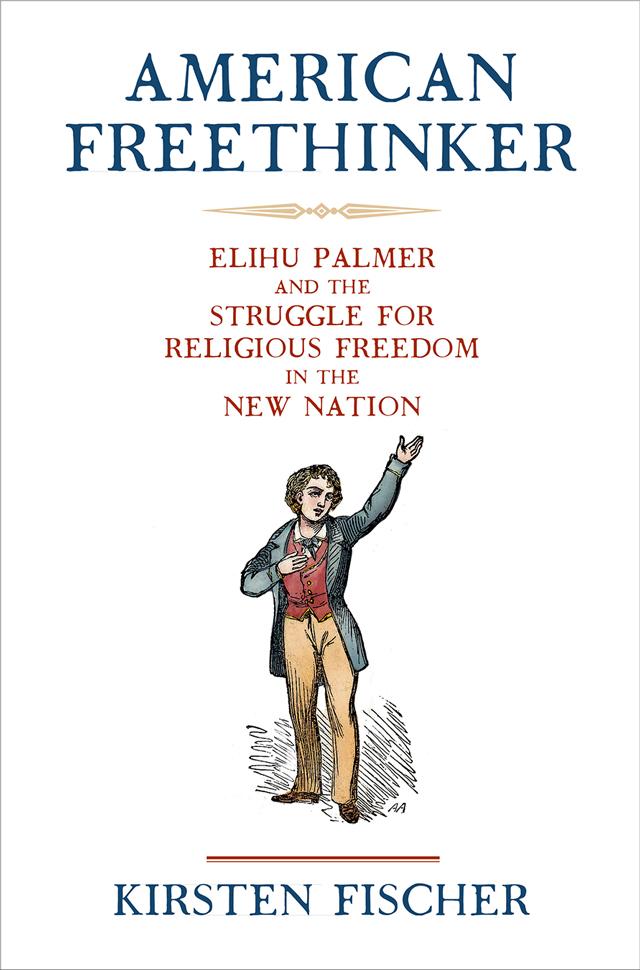
The first comprehensive biography of Elihu Palmer, who was at the heart of the early United States' protracted contest over religious freedom and free speech
When the United States was new, a lapsed minister named Elihu Palmer shared with his fellow Americans the radical idea that virtue required no religious foundation. A better source for morality, he said, could be found in the natural world: the interconnected web of life that inspired compassion for all living things. Religions that deny these universal connections should be discarded, he insisted. For this, his Christian critics denounced him as a heretic whose ideas endangered the country.
Although his publications and speaking tours made him one of the most infamous American freethinkers in his day, Elihu Palmer has been largely forgotten. No cache of his personal papers exists and his book has been long out of print. Yet his story merits telling, Kirsten Fischer argues, and not only for the dramatic account of a man who lost his eyesight before the age of thirty and still became a book author, newspaper editor, and itinerant public speaker. Even more intriguing is his encounter with a cosmology that envisioned the universe as interconnected, alive with sensation, and everywhere infused with a divine life force.
Palmer's "heresy" tested the nation's recently proclaimed commitment to freedom of religion and of speech. In this he was not alone. Fischer reveals that Palmer engaged in person and in print with an array of freethinkers—some famous, others now obscure. The flourishing of diverse religious opinion struck some of his contemporaries as foundational to a healthy democracy while others believed that only a strong Christian faith could support democratic self-governance. This first comprehensive biography of Palmer draws on extensive archival research to tell the life story of a freethinker who was at the heart of the new nation's protracted contest over religious freedom and free speech—a debate that continues to resonate today.
Before Memmo my notes were scattered across PDFs. Now a workspace pulls everything into one place — I see exactly what's still left to study.
Memmo's summaries are gold before exams. I don't have to re-read 800 pages two weeks before — just the important parts.
The AI chat has saved me the night before an exam more than once. I just keep asking until I get it — no waiting on a study group to reply.
The quizzes hit exactly what I need to know. Memmo tracks what I get stuck on — so I only practice what's worth it.
Flashcards with spaced repetition are magic. Memmo knows when I'm about to forget something and brings it back.
The AI podcasts are my favorite. I listen on my way to school and get a recap without sitting at a computer.

Handbok i kvalitativa metoder
281 kr

Hållbar utveckling: en introduktion för ingenjörer och andra problemlösare
334 kr

Brymans Samhällsvetenskapliga metoder
390 kr

Projektledning
491 kr

Den orättvisa hälsan: om socioekonomiska skillnader i hälsa och livslängd
326 kr

Vetenskapsteori för nybörjare
196 kr

Organizational Leadership
429 kr

På väg mot läraryrket
172 kr

Det sociala livet i skolan: Socialpsykologiska perspektiv
253 kr

Betygsättningens didaktik
151 kr

Personality
402 kr

Studying Leadership
404 kr

Managing Innovation
477 kr

Introduktion till samhällsvetenskaplig metod
347 kr

The Psychology of Sex and Gender
698 kr

Evidens och kunskap för socialt arbete
207 kr

Introduction to Leadership
605 kr