
Before Memmo my notes were scattered across PDFs. Now a workspace pulls everything into one place — I see exactly what's still left to study.
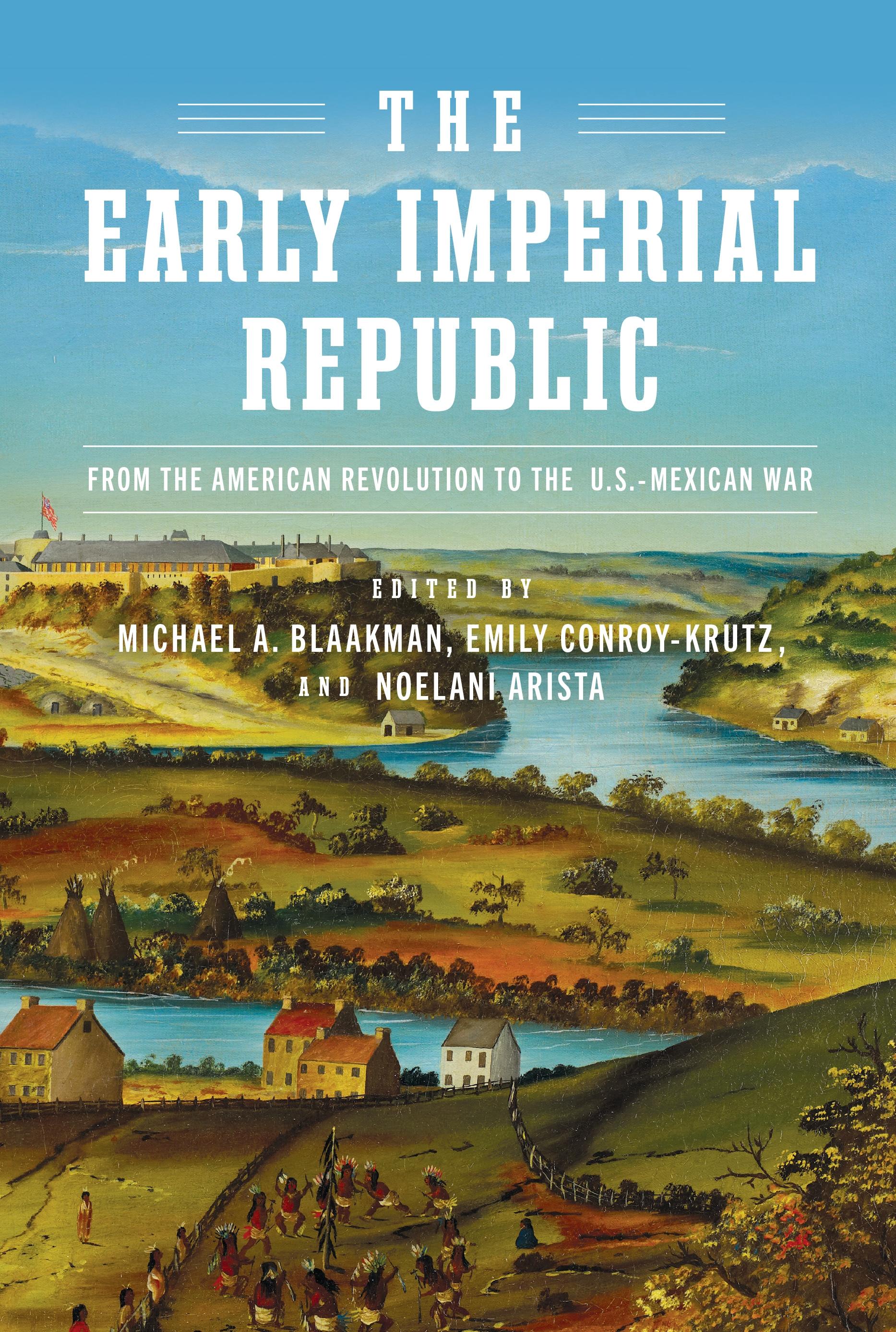
Created in a world of empires, the United States was to be something new: an expansive republic proclaiming commitments to liberty and equality but eager to extend its territory and influence. Yet from the beginning, Native powers, free and enslaved Black people, and foreign subjects perceived, interacted with, and resisted the young republic as if it was merely another empire under the sun. Such perspectives have driven scholars to reevaluate the early United States, as the parameters of early American history have expanded in Atlantic, continental, and global directions. If the nation’s acquisition of Puerto Rico, Guam, and the Philippine Islands in 1898 traditionally marked its turn toward imperialism, new scholarship suggests the United States was an empire from the moment of its creation.
The essays gathered in The Early Imperial Republic move beyond the question of whether the new republic was an empire, investigating instead where, how, and why it was one. They use the category of empire to situate the early United States in the global context its contemporaries understood, drawing important connections between territorial conquests on the continent and American incursions around the globe. They reveal an early U.S. empire with many different faces, from merchants who sought to profit from the republic’s imperial expansion to Native Americans who opposed or leveraged it, from free Black colonizationists and globe-trotting missionaries to illegal slave traders and anti-imperial social reformers. In tracing these stories, the volume’s contributors bring the study of early U.S. imperialism down to earth, encouraging us to see the exertion of U.S. power on the ground as a process that both drew upon the example of its imperial predecessors and was forced to grapple with their legacies. Taken together, they argue that American empire was never confined to one era but is instead a thread throughout U.S. history.
Contributors:Brooke Bauer, Michael A. Blaakman, Eric Burin, Emily Conroy-Krutz, Kathleen DuVal, Susan Gaunt Stearns, Nicholas Guyatt, Amy S. Greenberg, M. Scott Heerman, Robert Lee, Julia Lewandoski, Margot Minardi, Ousmane Power-Greene, Nakia D. Parker, Tom Smith
Before Memmo my notes were scattered across PDFs. Now a workspace pulls everything into one place — I see exactly what's still left to study.
Memmo's summaries are gold before exams. I don't have to re-read 800 pages two weeks before — just the important parts.
The AI chat has saved me the night before an exam more than once. I just keep asking until I get it — no waiting on a study group to reply.
The quizzes hit exactly what I need to know. Memmo tracks what I get stuck on — so I only practice what's worth it.
Flashcards with spaced repetition are magic. Memmo knows when I'm about to forget something and brings it back.
The AI podcasts are my favorite. I listen on my way to school and get a recap without sitting at a computer.

Handbok i kvalitativa metoder
281 kr

Hållbar utveckling: en introduktion för ingenjörer och andra problemlösare
334 kr

Brymans Samhällsvetenskapliga metoder
390 kr

Projektledning
491 kr

Den orättvisa hälsan: om socioekonomiska skillnader i hälsa och livslängd
326 kr

Vetenskapsteori för nybörjare
196 kr

Organizational Leadership
429 kr

På väg mot läraryrket
172 kr

Det sociala livet i skolan: Socialpsykologiska perspektiv
253 kr

Betygsättningens didaktik
151 kr

Personality
402 kr

Studying Leadership
404 kr

Managing Innovation
477 kr

Introduktion till samhällsvetenskaplig metod
347 kr

The Psychology of Sex and Gender
698 kr

Evidens och kunskap för socialt arbete
207 kr

Introduction to Leadership
605 kr