
Before Memmo my notes were scattered across PDFs. Now a workspace pulls everything into one place — I see exactly what's still left to study.
Was it the Titanic of its age?
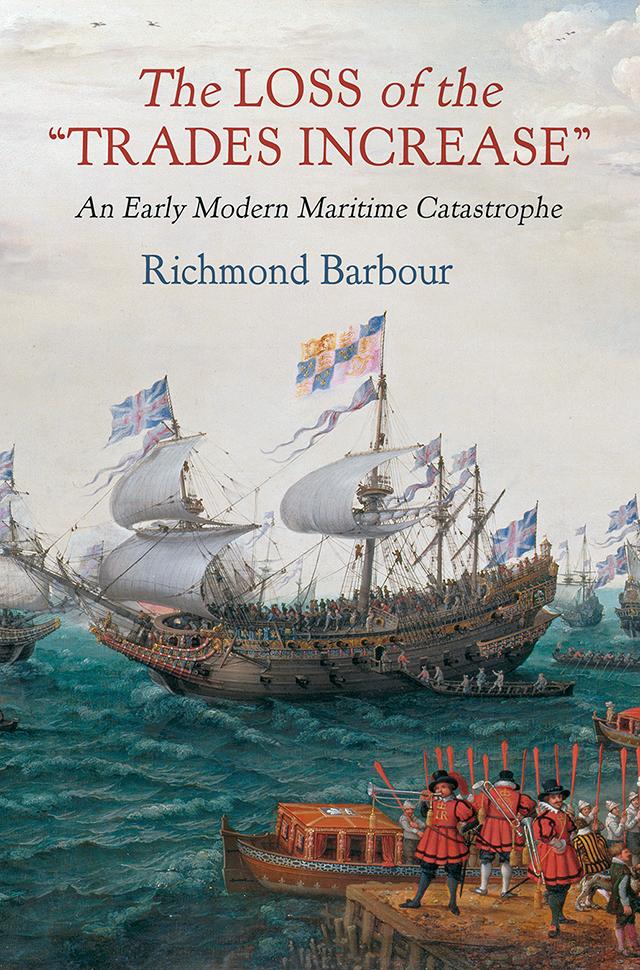
Christened by an optimistic King James I in December 1609, the Trades Increase was the greatest English merchant vessel of the Jacobean era—a magnificent ship embodying the hopes of the nascent East India Company to claim a commanding share of the Eastern trade. But the ship's launch failed when it proved too large to exit from its dock, an ill-fated start to an expedition that would end some three years later, when a dangerously leaking Trades Increase at last reached the shores of Java. While its smaller companion vessel would sail home with handsome profits for investors, the rotting hull of the great ship itself was beyond repair. The Trades Increase and nearly all who sailed it perished wretchedly on the far side of the world.
The terrible pattern proven by this voyage, with profits to an elite few in London stained by catastrophic losses in equipment and personnel abroad, ignited rancorous controversy in England over the human, moral, and economic costs of such commerce. In The Loss of the "Trades Increase" Richmond Barbour has written an engrossing account of the tragic expedition and of global capitalism at its hour of emergence.
Its sources fragmented among journals, minutes, and letters in the archives of the East India Company, the full story of the Trades Increase is told here for the first time. Earlier writers minimized the loss as a temporary setback and necessary sacrifice on the road to empire. In a work informed by corporate history and postcolonial theory, Barbour sees the saga of the voyage, and all that produced and justified it, differently: as an expression of the structural conflicts, operational risks, and material incapacities that haunted and ultimately unraveled the British Empire—and that destabilize multinational corporations, global markets, and our common biosphere to this day.
Before Memmo my notes were scattered across PDFs. Now a workspace pulls everything into one place — I see exactly what's still left to study.
Memmo's summaries are gold before exams. I don't have to re-read 800 pages two weeks before — just the important parts.
The AI chat has saved me the night before an exam more than once. I just keep asking until I get it — no waiting on a study group to reply.
The quizzes hit exactly what I need to know. Memmo tracks what I get stuck on — so I only practice what's worth it.
Flashcards with spaced repetition are magic. Memmo knows when I'm about to forget something and brings it back.
The AI podcasts are my favorite. I listen on my way to school and get a recap without sitting at a computer.

Handbok i kvalitativa metoder
281 kr

Hållbar utveckling: en introduktion för ingenjörer och andra problemlösare
334 kr

Brymans Samhällsvetenskapliga metoder
390 kr

Projektledning
491 kr

Den orättvisa hälsan: om socioekonomiska skillnader i hälsa och livslängd
326 kr

Vetenskapsteori för nybörjare
196 kr

Organizational Leadership
429 kr

På väg mot läraryrket
172 kr

Det sociala livet i skolan: Socialpsykologiska perspektiv
253 kr

Betygsättningens didaktik
151 kr

Personality
402 kr

Studying Leadership
404 kr

Managing Innovation
477 kr

Introduktion till samhällsvetenskaplig metod
347 kr

The Psychology of Sex and Gender
698 kr

Evidens och kunskap för socialt arbete
207 kr

Introduction to Leadership
605 kr