
Before Memmo my notes were scattered across PDFs. Now a workspace pulls everything into one place — I see exactly what's still left to study.
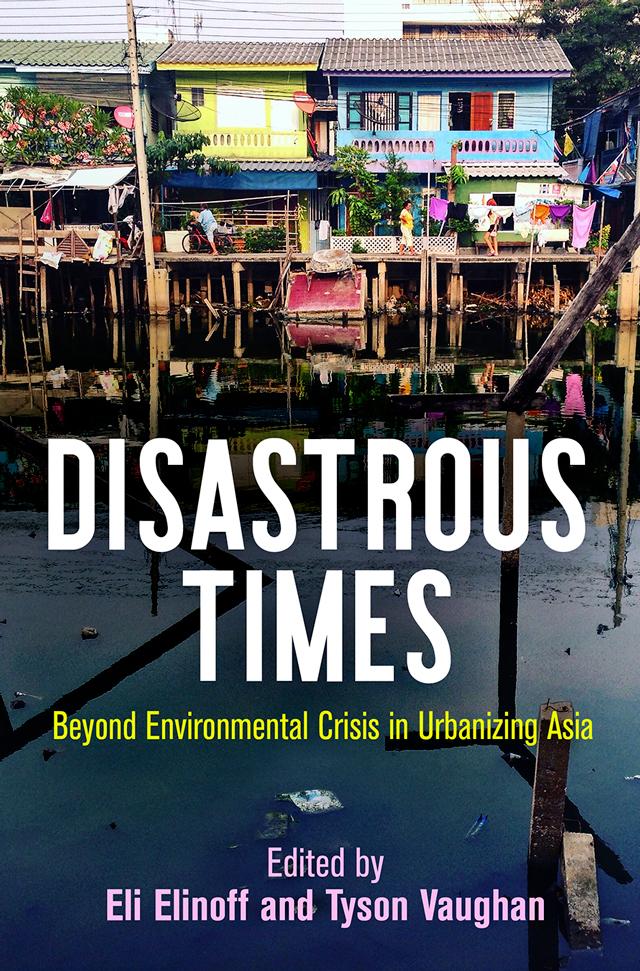
Across contemporary Asia, each day dawns with a new story about living in an era of profound environmental change. Rapid transformations in the landscape, society, and technology produce new conflicts that are experienced at nearly every scale of life in the region. Environmental change is marked in square kilometers or micrometers, in cities or in households, within national boundaries and beyond. These changes appear in the form of radical ruptures wrought both by spectacular catastrophes like massive floods or tsunamis and by slow tragedies like the widening epidemic of asthma or the grinding processes of land dispossession. Each of these scales and phenomena reveals what it is to live in disastrous times.
This book explores how people across Asia live through and make sense of the environmental ruptures that now shape the region and asks how we might analyze this moment of disruption and risk. Global environmental shifts such as climate change are usually linked to large-scale practices such as industrialization, urbanization, and global capitalism. Here, in contrast, contributors illustrate how understanding the practical, political, and ethical consequences of living in a moment of planetary change—or intervening in its course—requires engaging with the human-scale actions and specific policies that both shape and respond to such transformations at an everyday level. Coastal residents of routinely flooded Semarang, eco-conscious retirees in a Chinese suburb, and cyclists navigating air pollution in Kolkata each experience environmental risk and change in highly situated and specific ways; yet attending to their lived, quotidian experiences enables us to apprehend the complex processes that are profoundly changing the planet.
Contributors: Nikolaj Blichfeldt, Vivian Choi, Eli Elinoff, Jenny Elaine Goldstein, Andrew Alan Johnson, Samuel Kay, Lukas Ley, Edmund Joo Vin Oh, Malini Sur, Tyson Vaughan.
Before Memmo my notes were scattered across PDFs. Now a workspace pulls everything into one place — I see exactly what's still left to study.
Memmo's summaries are gold before exams. I don't have to re-read 800 pages two weeks before — just the important parts.
The AI chat has saved me the night before an exam more than once. I just keep asking until I get it — no waiting on a study group to reply.
The quizzes hit exactly what I need to know. Memmo tracks what I get stuck on — so I only practice what's worth it.
Flashcards with spaced repetition are magic. Memmo knows when I'm about to forget something and brings it back.
The AI podcasts are my favorite. I listen on my way to school and get a recap without sitting at a computer.

Handbok i kvalitativa metoder
281 kr

Hållbar utveckling: en introduktion för ingenjörer och andra problemlösare
334 kr

Brymans Samhällsvetenskapliga metoder
390 kr

Projektledning
491 kr

Den orättvisa hälsan: om socioekonomiska skillnader i hälsa och livslängd
326 kr

Vetenskapsteori för nybörjare
196 kr

Organizational Leadership
429 kr

På väg mot läraryrket
172 kr

Det sociala livet i skolan: Socialpsykologiska perspektiv
253 kr

Betygsättningens didaktik
151 kr

Personality
402 kr

Studying Leadership
404 kr

Managing Innovation
477 kr

Introduktion till samhällsvetenskaplig metod
347 kr

The Psychology of Sex and Gender
698 kr

Evidens och kunskap för socialt arbete
207 kr

Introduction to Leadership
605 kr