
Before Memmo my notes were scattered across PDFs. Now a workspace pulls everything into one place — I see exactly what's still left to study.
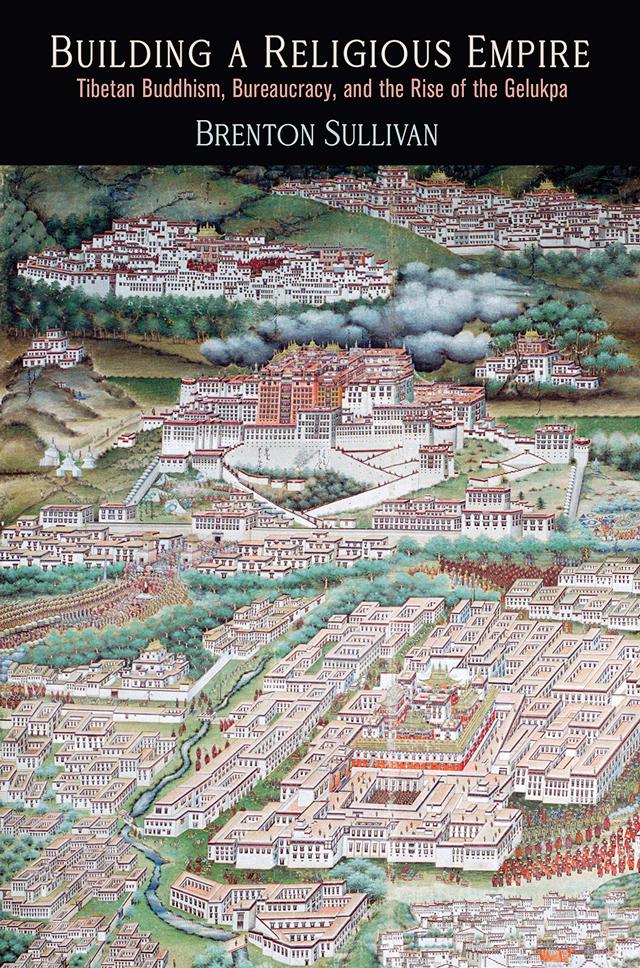
The vast majority of monasteries in Tibet and nearly all of the monasteries in Mongolia belong to the Geluk school of Tibetan Buddhism, best known through its symbolic head, the Dalai Lama. Historically, these monasteries were some of the largest in the world, and even today some Geluk monasteries house thousands of monks, both in Tibet and in exile in India. In Building a Religious Empire, Brenton Sullivan examines the school's expansion and consolidation of power along the frontier with China and Mongolia from the mid-seventeenth through the mid-eighteenth centuries to chart how its rise to dominance took shape.
In contrast to the practice in other schools of Tibetan Buddhism, Geluk lamas devoted an extraordinary amount of effort to establishing the institutional frameworks within which everyday aspects of monastic life, such as philosophizing, meditating, or conducting rituals, took place. In doing so, the lamas drew on administrative techniques usually associated with state-making—standardization, record-keeping, the conscription of young males, and the concentration of manpower in central cores, among others—thereby earning the moniker "lama official," or "Buddhist bureaucrat."
The deployment of these bureaucratic techniques to extend the Geluk "liberating umbrella" over increasing numbers of lands and peoples leads Sullivan to describe the result of this Geluk project as a "religious empire." The Geluk lamas' privileging of the monastic institution, Sullivan argues, fostered a common religious identity that insulated it from factionalism and provided legitimacy to the Geluk project of conversion, conquest, and expansion. Ultimately, this system succeeded in establishing a relatively uniform and resilient network of thousands of monasteries stretching from Nepal to Lake Baikal, from Beijing to the Caspian Sea.
Before Memmo my notes were scattered across PDFs. Now a workspace pulls everything into one place — I see exactly what's still left to study.
Memmo's summaries are gold before exams. I don't have to re-read 800 pages two weeks before — just the important parts.
The AI chat has saved me the night before an exam more than once. I just keep asking until I get it — no waiting on a study group to reply.
The quizzes hit exactly what I need to know. Memmo tracks what I get stuck on — so I only practice what's worth it.
Flashcards with spaced repetition are magic. Memmo knows when I'm about to forget something and brings it back.
The AI podcasts are my favorite. I listen on my way to school and get a recap without sitting at a computer.

Handbok i kvalitativa metoder
281 kr

Hållbar utveckling: en introduktion för ingenjörer och andra problemlösare
334 kr

Brymans Samhällsvetenskapliga metoder
390 kr

Projektledning
491 kr

Den orättvisa hälsan: om socioekonomiska skillnader i hälsa och livslängd
326 kr

Vetenskapsteori för nybörjare
196 kr

Organizational Leadership
429 kr

På väg mot läraryrket
172 kr

Det sociala livet i skolan: Socialpsykologiska perspektiv
253 kr

Betygsättningens didaktik
151 kr

Personality
402 kr

Studying Leadership
404 kr

Managing Innovation
477 kr

Introduktion till samhällsvetenskaplig metod
347 kr

The Psychology of Sex and Gender
698 kr

Evidens och kunskap för socialt arbete
207 kr

Introduction to Leadership
605 kr