
Before Memmo my notes were scattered across PDFs. Now a workspace pulls everything into one place — I see exactly what's still left to study.
Just as the Reformation was a movement of intertwined theological and political aims, many individual authors of the time shifted back and forth between biblical interpretation and political writing. Two foundational figures in the history of the Renaissance Bible, Desiderius Erasmus and William Tyndale, are cases in point, one writing in Latin, the other in the vernacular. Erasmus undertook the project of retranslating and annotating the New Testament at the same time that he developed rhetorical approaches for addressing princes in his Education of a Christian Prince (1516); Tyndale was occupied with biblically inflected works such as his Obedience of a Christian Man (1528) while translating and annotating the first printed English Bibles.
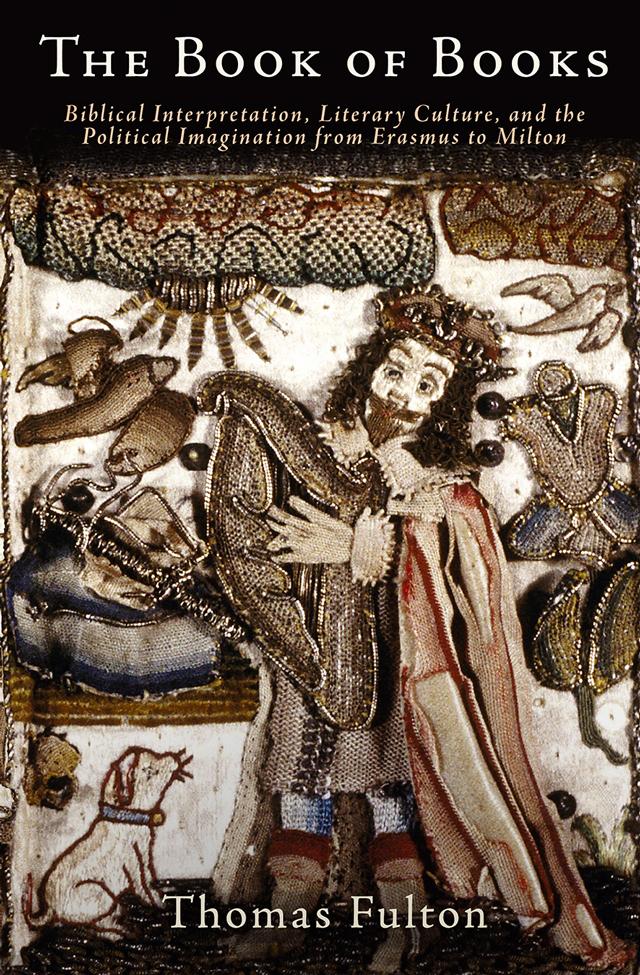
In The Book of Books, Thomas Fulton charts the process of recovery, interpretation, and reuse of scripture in early modern England, exploring the uses of the Bible as a supremely authoritative text that was continually transformed for political purposes. In a series of case studies linked to biblical translation, polemical tracts, and works of imaginative literature produced during the reigns of successive English rulers, he investigates the commerce between biblical interpretation, readership, and literary culture. Whereas scholars have often drawn exclusively on modern editions of the King James Version, Fulton turns our attention toward the specific Bibles that writers used and the specific manner in which they used them. In doing so, he argues that Spenser, Shakespeare, Milton, and others were in conversation not just with the biblical text itself, but with the rich interpretive and paratextual structures that accompanied it, revolving around sites of social controversy as well as the larger, often dynastically oriented conditions under which particular Bibles were created.
Before Memmo my notes were scattered across PDFs. Now a workspace pulls everything into one place — I see exactly what's still left to study.
Memmo's summaries are gold before exams. I don't have to re-read 800 pages two weeks before — just the important parts.
The AI chat has saved me the night before an exam more than once. I just keep asking until I get it — no waiting on a study group to reply.
The quizzes hit exactly what I need to know. Memmo tracks what I get stuck on — so I only practice what's worth it.
Flashcards with spaced repetition are magic. Memmo knows when I'm about to forget something and brings it back.
The AI podcasts are my favorite. I listen on my way to school and get a recap without sitting at a computer.

Handbok i kvalitativa metoder
281 kr

Hållbar utveckling: en introduktion för ingenjörer och andra problemlösare
334 kr

Brymans Samhällsvetenskapliga metoder
390 kr

Projektledning
491 kr

Den orättvisa hälsan: om socioekonomiska skillnader i hälsa och livslängd
326 kr

Vetenskapsteori för nybörjare
196 kr

Organizational Leadership
429 kr

På väg mot läraryrket
172 kr

Det sociala livet i skolan: Socialpsykologiska perspektiv
253 kr

Betygsättningens didaktik
151 kr

Personality
402 kr

Studying Leadership
404 kr

Managing Innovation
477 kr

Introduktion till samhällsvetenskaplig metod
347 kr

The Psychology of Sex and Gender
698 kr

Evidens och kunskap för socialt arbete
207 kr

Introduction to Leadership
605 kr