
Before Memmo my notes were scattered across PDFs. Now a workspace pulls everything into one place — I see exactly what's still left to study.
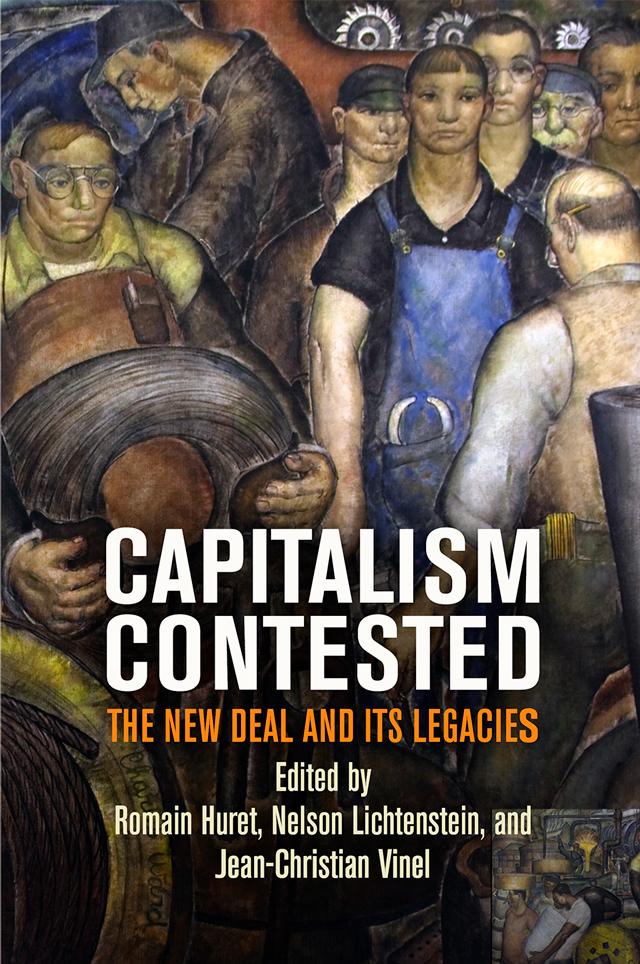
In the historical narrative that prevails today, the New Deal years are positioned between two equally despised Gilded Ages—the first in the late nineteenth century and the second characterized by the world of Walmart, globalization, and right-wing populism in which we currently live. What defines these two ages is an increasing level of inequality legitimized by powerful ideologies, namely, Social Darwinism at the end of the nineteenth century and neoliberalism today. In stark contrast, the era of the New Deal was first and foremost an attempt to put an end to inequality in American society. In the historical longue durée, it appears today as a kind of golden age when policymakers and citizens sought to devise solutions to the two major "questions"—labor on one side, social on the other—that were at the heart of the American political economy during the twentieth century.
Capitalism Contested argues that the New Deal order remains an effective framework to make sense of the transformation of American political economy over the last hundred years. Contributors offer an historicized analysis of the degree to which that political, economic, and ideological order persists and the ways in which it has been transcended or even overthrown. The essays pay attention not only to those ideas and social forces hostile to the New Deal, but to the contradictions and debilities that were present at the inauguration or became inherent within this liberal impulse during the last half of the twentieth century. The unifying thematic among the essays consists not in their subject matter—politics, political economy, social thought, and legal scholarship are represented—but in a historical quest to assess the transformation and fate of an economic and policy order nearly a century after its creation.
Contributors: Kate Andrias, Romain Huret, William P. Jones, Nelson Lichtenstein, Nancy MacLean, Isaac William Martin, Margaret O'Mara, K. Sabeel Rahman, Timothy Shenk, Elizabeth Tandy Shermer, Jason Scott Smith, Samir Sonti, Karen M. Tani, Jean-Christian Vinel.
Before Memmo my notes were scattered across PDFs. Now a workspace pulls everything into one place — I see exactly what's still left to study.
Memmo's summaries are gold before exams. I don't have to re-read 800 pages two weeks before — just the important parts.
The AI chat has saved me the night before an exam more than once. I just keep asking until I get it — no waiting on a study group to reply.
The quizzes hit exactly what I need to know. Memmo tracks what I get stuck on — so I only practice what's worth it.
Flashcards with spaced repetition are magic. Memmo knows when I'm about to forget something and brings it back.
The AI podcasts are my favorite. I listen on my way to school and get a recap without sitting at a computer.

Handbok i kvalitativa metoder
281 kr

Hållbar utveckling: en introduktion för ingenjörer och andra problemlösare
334 kr

Brymans Samhällsvetenskapliga metoder
390 kr

Projektledning
491 kr

Den orättvisa hälsan: om socioekonomiska skillnader i hälsa och livslängd
326 kr

Vetenskapsteori för nybörjare
196 kr

Organizational Leadership
429 kr

På väg mot läraryrket
172 kr

Det sociala livet i skolan: Socialpsykologiska perspektiv
253 kr

Betygsättningens didaktik
151 kr

Personality
402 kr

Studying Leadership
404 kr

Managing Innovation
477 kr

Introduktion till samhällsvetenskaplig metod
347 kr

The Psychology of Sex and Gender
698 kr

Evidens och kunskap för socialt arbete
207 kr

Introduction to Leadership
605 kr