
Before Memmo my notes were scattered across PDFs. Now a workspace pulls everything into one place — I see exactly what's still left to study.
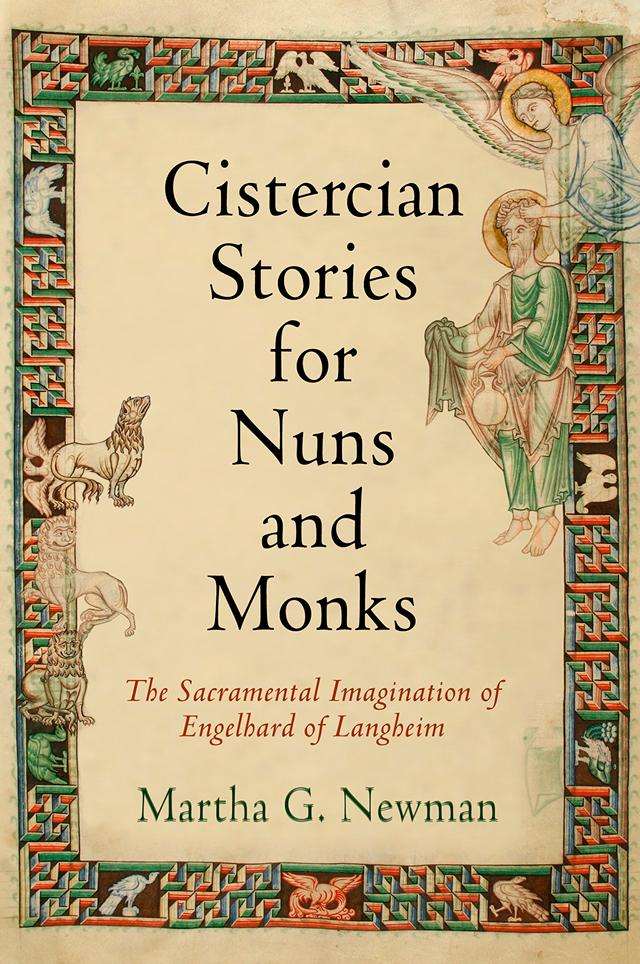
Around the year 1200, the Cistercian Engelhard of Langheim dedicated a collection of monastic stories to a community of religious women. Martha G. Newman explores how this largely unedited collection of tales about Cistercian monks illuminates the religiosity of Cistercian nuns. As did other Cistercian storytellers, Engelhard recorded the miracles and visions of the order's illustrious figures, but he wrote from Franconia, in modern Germany, rather than the Cistercian heartland. His extant texts reflect his interactions with non-Cistercian monasteries and with Langheim's patrons rather than celebrating Bernard of Clairvaux. Engelhard was conservative, interested in maintaining traditional Cistercian patterns of thought. Nonetheless, by offering to women a collection of narratives that explore the oral qualities of texts, the nature of sight, and the efficacy of sacraments, Engelhard articulated a distinctive response to the social and intellectual changes of his period.
In analyzing Engelhard's stories, Newman uncovers an understudied monastic culture that resisted the growing emphasis on the priestly administration of the sacraments and the hardening of gender distinctions. Engelhard assumed that monks and nuns shared similar interests and concerns, and he addressed his audiences as if they occupied a space neither fully sacerdotal nor completely lay, neither scholastic nor unlearned, and neither solely male nor only female. His exemplary narratives depict the sacramental value of everyday objects and behaviors whose efficacy relied more on individual spiritual formation than on sacerdotal action. By encouraging nuns and monks to imagine connections between heaven and earth, Engelhard taught faith as a learned disposition. Newman's study demonstrates that scholastic questions about signs, sacraments, and sight emerged in a narrative form within late twelfth-century monastic communities.
Before Memmo my notes were scattered across PDFs. Now a workspace pulls everything into one place — I see exactly what's still left to study.
Memmo's summaries are gold before exams. I don't have to re-read 800 pages two weeks before — just the important parts.
The AI chat has saved me the night before an exam more than once. I just keep asking until I get it — no waiting on a study group to reply.
The quizzes hit exactly what I need to know. Memmo tracks what I get stuck on — so I only practice what's worth it.
Flashcards with spaced repetition are magic. Memmo knows when I'm about to forget something and brings it back.
The AI podcasts are my favorite. I listen on my way to school and get a recap without sitting at a computer.

Handbok i kvalitativa metoder
281 kr

Hållbar utveckling: en introduktion för ingenjörer och andra problemlösare
334 kr

Brymans Samhällsvetenskapliga metoder
390 kr

Projektledning
491 kr

Den orättvisa hälsan: om socioekonomiska skillnader i hälsa och livslängd
326 kr

Vetenskapsteori för nybörjare
196 kr

Organizational Leadership
429 kr

På väg mot läraryrket
172 kr

Det sociala livet i skolan: Socialpsykologiska perspektiv
253 kr

Betygsättningens didaktik
151 kr

Personality
402 kr

Studying Leadership
404 kr

Managing Innovation
477 kr

Introduktion till samhällsvetenskaplig metod
347 kr

The Psychology of Sex and Gender
698 kr

Evidens och kunskap för socialt arbete
207 kr

Introduction to Leadership
605 kr