
Before Memmo my notes were scattered across PDFs. Now a workspace pulls everything into one place — I see exactly what's still left to study.
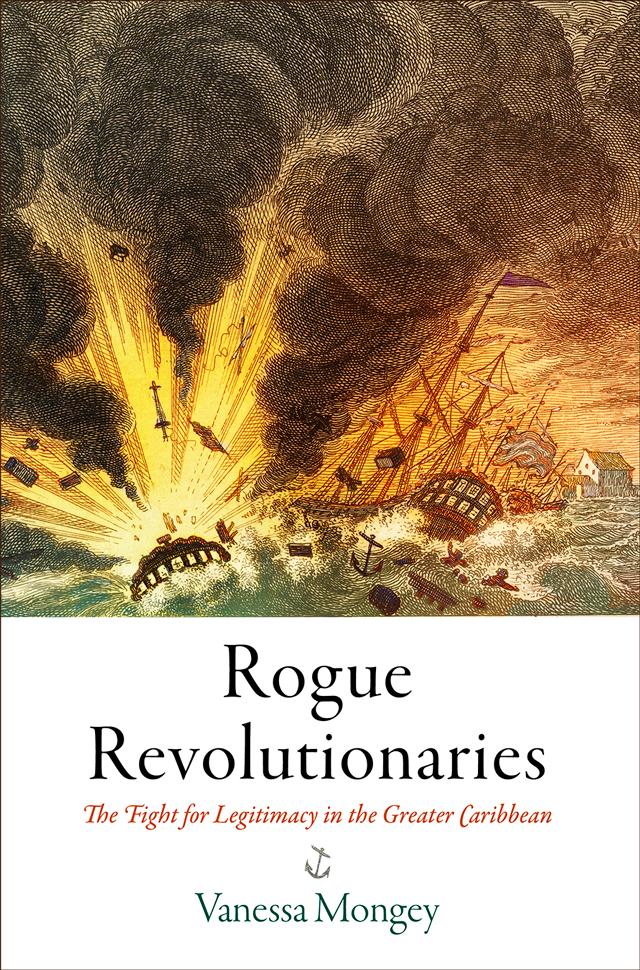
In 1822, the Mary departed Philadelphia and sailed in the direction of the Spanish colony of Puerto Rico. Like most vessels that navigated the Caribbean, the Mary brought together men who had served under a dozen different flags over the years. Unlike most crews, those aboard the Mary were in a different line of commerce: they exported revolution. In addition to rifles and pistols, the Mary transported a box filled with proclamations announcing the creation of the "Republic of Boricua." This imagined republic rested on one principle: equal rights for all, regardless of birthplace, race, or religion. The leaders of the expedition had never set foot in Puerto Rico. And they never would.
When we think of the Age of Revolutions, George Washington, Robespierre, Toussaint Louverture, or Simón Bolívar might come to mind. But Rogue Revolutionaries recovers the interconnected stories of now-forgotten "foreigners of desperate fortune" who dreamt of overthrowing colonial monarchy and creating their own countries. They were not members of the political and economic elite; rather, they were ship captains, military veterans, and enslaved soldiers. As a history of ideas and geopolitics grounded in the narratives of extraordinary lives, Rogue Revolutionaries shows how these men of different nationalities and ethnicities claimed revolution as a universal right and reimagined notions of sovereignty, liberty, and decolonization.
In the midst of wars and upheavals, the question of who had the legitimacy to launch a revolution and to start a new country was open to debate. Behind the growing power of nation-states, Mongey uncovers a lost world of radical cosmopolitanism grounded in the pursuit of material interests and personal prestige. In demonstrating that these would-be revolutionaries and their fleeting republics were critical to the creation of a new international order, Mongey reminds us of the importance of attending to failures, dead ends, and the unpredictable nature of history.
Before Memmo my notes were scattered across PDFs. Now a workspace pulls everything into one place — I see exactly what's still left to study.
Memmo's summaries are gold before exams. I don't have to re-read 800 pages two weeks before — just the important parts.
The AI chat has saved me the night before an exam more than once. I just keep asking until I get it — no waiting on a study group to reply.
The quizzes hit exactly what I need to know. Memmo tracks what I get stuck on — so I only practice what's worth it.
Flashcards with spaced repetition are magic. Memmo knows when I'm about to forget something and brings it back.
The AI podcasts are my favorite. I listen on my way to school and get a recap without sitting at a computer.

Handbok i kvalitativa metoder
281 kr

Hållbar utveckling: en introduktion för ingenjörer och andra problemlösare
334 kr

Brymans Samhällsvetenskapliga metoder
390 kr

Projektledning
491 kr

Den orättvisa hälsan: om socioekonomiska skillnader i hälsa och livslängd
326 kr

Vetenskapsteori för nybörjare
196 kr

Organizational Leadership
429 kr

På väg mot läraryrket
172 kr

Det sociala livet i skolan: Socialpsykologiska perspektiv
253 kr

Betygsättningens didaktik
151 kr

Personality
402 kr

Studying Leadership
404 kr

Managing Innovation
477 kr

Introduktion till samhällsvetenskaplig metod
347 kr

The Psychology of Sex and Gender
698 kr

Evidens och kunskap för socialt arbete
207 kr

Introduction to Leadership
605 kr