
Before Memmo my notes were scattered across PDFs. Now a workspace pulls everything into one place — I see exactly what's still left to study.
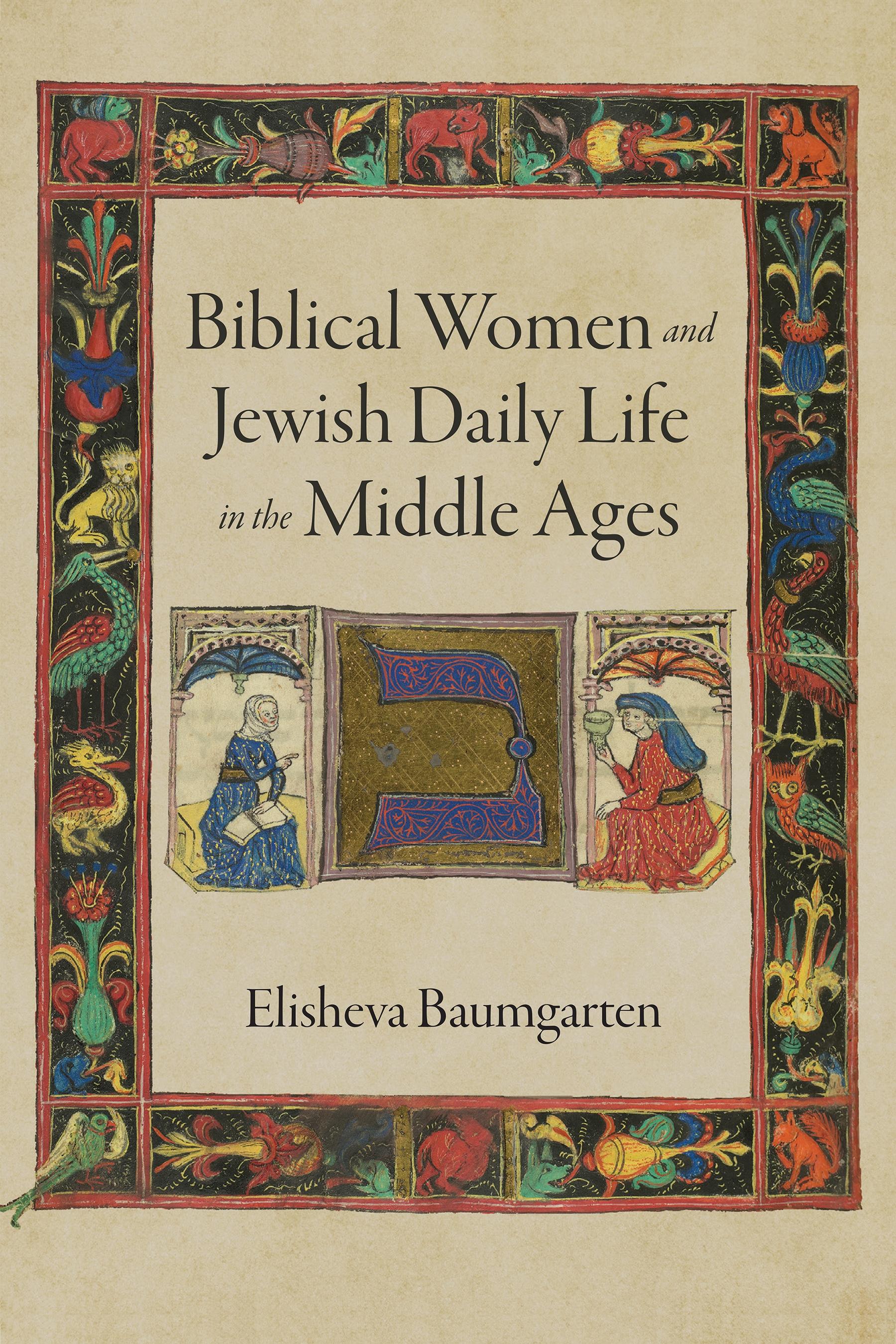
In Biblical Women and Jewish Daily Life in the Middle Ages, Elisheva Baumgarten seeks a point of entry into the everyday existence of people who did not belong to the learned elite, and who therefore left no written records of their lives. She does so by turning to the Bible as it was read, reinterpreted, and seen by the Jews of medieval Ashkenaz. In the tellings, retellings, and illustrations of biblical stories, and especially of those centered around women, Baumgarten writes, we can find explanations and validations for the practices that structured birth, marriage, and death; women's inclusion in the liturgy and synagogue; and the roles of women as community leaders, givers of charity, and keepers of the household.
Each of the book's chapters concentrates on a single figure or a cluster of biblical women—Eve, the Matriarchs, Deborah, Yael, Abigail, and Jephthah's daughter—to explore aspects of the domestic and communal lives of Northern French and German Jews living among Christians in urban settings. Throughout the book more than forty vivid medieval illuminations, most reproduced in color, help convey to modern readers what medieval people could have known visually about these biblical stories. "I do not claim that the genres I analyze here—literature, art, exegesis—mirror social practice," Baumgarten writes. "Rather, my goal is to examine how medieval Jewish engagement with the Bible offers a window onto aspects of the daily lives and cultural mentalités of Ashkenazic Jews in the High Middle Ages."
In a final chapter, Baumgarten turns to the historical figure of Dulcia, a late twelfth-century woman, to ponder how our understanding of those people about whom we know relatively more can be enriched by considering the lives of those who have remained anonymous. The biblical stories through which Baumgarten reads contributed to shaping a world that is largely lost to us, and can help us, in turn, to gain access to lives of people of the past who left no written accounts of their beliefs and practices.
Before Memmo my notes were scattered across PDFs. Now a workspace pulls everything into one place — I see exactly what's still left to study.
Memmo's summaries are gold before exams. I don't have to re-read 800 pages two weeks before — just the important parts.
The AI chat has saved me the night before an exam more than once. I just keep asking until I get it — no waiting on a study group to reply.
The quizzes hit exactly what I need to know. Memmo tracks what I get stuck on — so I only practice what's worth it.
Flashcards with spaced repetition are magic. Memmo knows when I'm about to forget something and brings it back.
The AI podcasts are my favorite. I listen on my way to school and get a recap without sitting at a computer.

Handbok i kvalitativa metoder
281 kr

Hållbar utveckling: en introduktion för ingenjörer och andra problemlösare
334 kr

Brymans Samhällsvetenskapliga metoder
390 kr

Projektledning
491 kr

Den orättvisa hälsan: om socioekonomiska skillnader i hälsa och livslängd
326 kr

Vetenskapsteori för nybörjare
196 kr

Organizational Leadership
429 kr

På väg mot läraryrket
172 kr

Det sociala livet i skolan: Socialpsykologiska perspektiv
253 kr

Betygsättningens didaktik
151 kr

Personality
402 kr

Studying Leadership
404 kr

Managing Innovation
477 kr

Introduktion till samhällsvetenskaplig metod
347 kr

The Psychology of Sex and Gender
698 kr

Evidens och kunskap för socialt arbete
207 kr

Introduction to Leadership
605 kr