
Before Memmo my notes were scattered across PDFs. Now a workspace pulls everything into one place — I see exactly what's still left to study.
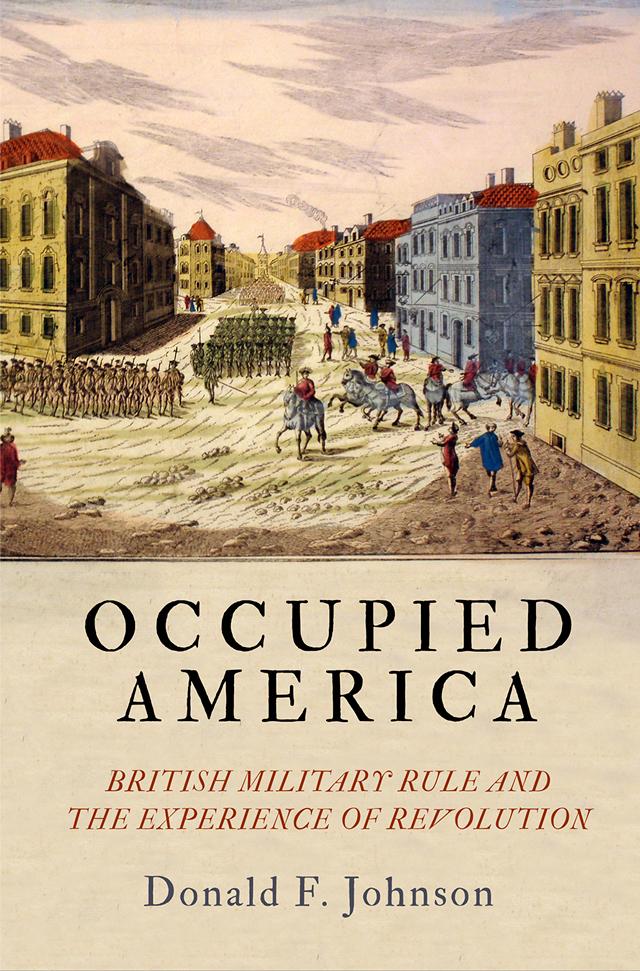
Occupied America chronicles the everyday experience of ordinary people living under military occupation during the American Revolution.
In Occupied America, Donald F. Johnson chronicles the everyday experience of ordinary people living under military occupation during the American Revolution. Focusing on day-to-day life in port cities held by the British Army, Johnson recounts how men and women from a variety of backgrounds navigated harsh conditions, mitigated threats to their families and livelihoods, took advantage of new opportunities, and balanced precariously between revolutionary and royal attempts to secure their allegiance.
Between 1775 and 1783, every large port city along the Eastern seaboard fell under British rule at one time or another. As centers of population and commerce, these cities—Boston, New York, Newport, Philadelphia, Savannah, Charleston—should have been bastions from which the empire could restore order and inspire loyalty. Military rule's exceptional social atmosphere initially did provide opportunities for many people—especially women and the enslaved, but also free men both rich and poor—to reinvent their lives, and while these opportunities came with risks, the hope of social betterment inspired thousands to embrace military rule. Nevertheless, as Johnson demonstrates, occupation failed to bring about a restoration of imperial authority, as harsh material circumstances forced even the most loyal subjects to turn to illicit means to feed and shelter themselves, while many maintained ties to rebel camps for the same reasons. As occupations dragged on, most residents no longer viewed restored royal rule as a viable option.
As Johnson argues, the experiences of these citizens reveal that the process of political change during the Revolution occurred not in a single instant but gradually, over the course of years of hardship under military rule that forced Americans to grapple with their allegiance in intensely personal and highly contingent ways. Thus, according to Johnson, the quotidian experience of military occupation directly affected the outcome of the American Revolution.
Before Memmo my notes were scattered across PDFs. Now a workspace pulls everything into one place — I see exactly what's still left to study.
Memmo's summaries are gold before exams. I don't have to re-read 800 pages two weeks before — just the important parts.
The AI chat has saved me the night before an exam more than once. I just keep asking until I get it — no waiting on a study group to reply.
The quizzes hit exactly what I need to know. Memmo tracks what I get stuck on — so I only practice what's worth it.
Flashcards with spaced repetition are magic. Memmo knows when I'm about to forget something and brings it back.
The AI podcasts are my favorite. I listen on my way to school and get a recap without sitting at a computer.

Handbok i kvalitativa metoder
281 kr

Hållbar utveckling: en introduktion för ingenjörer och andra problemlösare
334 kr

Brymans Samhällsvetenskapliga metoder
390 kr

Projektledning
491 kr

Den orättvisa hälsan: om socioekonomiska skillnader i hälsa och livslängd
326 kr

Vetenskapsteori för nybörjare
196 kr

Organizational Leadership
429 kr

På väg mot läraryrket
172 kr

Det sociala livet i skolan: Socialpsykologiska perspektiv
253 kr

Betygsättningens didaktik
151 kr

Personality
402 kr

Studying Leadership
404 kr

Managing Innovation
477 kr

Introduktion till samhällsvetenskaplig metod
347 kr

The Psychology of Sex and Gender
698 kr

Evidens och kunskap för socialt arbete
207 kr

Introduction to Leadership
605 kr