
Before Memmo my notes were scattered across PDFs. Now a workspace pulls everything into one place — I see exactly what's still left to study.
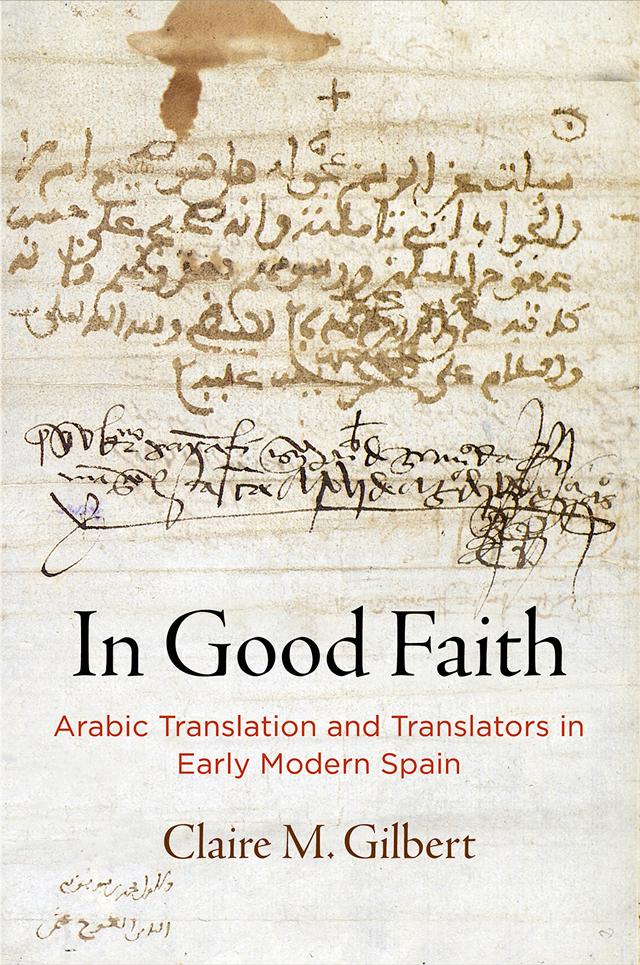
The century that followed the fall of Granada at the end of 1491 and the subsequent consolidation of Christian power over the Iberian Peninsula was marked by the introduction of anti-Arabic legislation and the development of hostile cultural norms affecting Arabic speakers. Yet as Spanish institutions of power first restricted and then eliminated Arabic language use, marginalizing Arabic-speaking communities, officially sanctioned translation to and from Arabic played an increasingly crucial role in brokering the administration of the growing Spanish empire and its overseas territories. The move on the peninsula from a regime of legal pluralism to one of religious and legal orthodoxy created new needs and institutions for Arabic translation, which simultaneously reflected, subverted, and ultimately reaffirmed the normative anti-Arabic language politics.
In Good Faith examines the administrative functions and practices of the individual translators who walked the knife's edge, as the task of the Arabic-Spanish translator became both more perilous and more coveted during a volatile historical period. Despite the myriad personal and political risks run by Arabic speakers, Claire M. Gilbert argues that Arabic translation was at the core of early modern Spanish culture and society and that translators played pivotal roles in the administrative, institutional, and ideological development of Spain and its relationships, both domestic and international. Using materials from state, local, and religious archives, Gilbert develops the notion of "fiduciary translation" and uses it to paint a vivid picture of the techniques by which translators attempted to demonstrate their expertise and trustworthiness—thereby to help protect themselves, their families, and even their communities from the Inquisition and other authorities. By emphasizing the practices and networks of the individual translators themselves, Gilbert's social history of Arabic translation deepens our understanding of religious minorities, international relations, and statecraft in early modern Spain.
Before Memmo my notes were scattered across PDFs. Now a workspace pulls everything into one place — I see exactly what's still left to study.
Memmo's summaries are gold before exams. I don't have to re-read 800 pages two weeks before — just the important parts.
The AI chat has saved me the night before an exam more than once. I just keep asking until I get it — no waiting on a study group to reply.
The quizzes hit exactly what I need to know. Memmo tracks what I get stuck on — so I only practice what's worth it.
Flashcards with spaced repetition are magic. Memmo knows when I'm about to forget something and brings it back.
The AI podcasts are my favorite. I listen on my way to school and get a recap without sitting at a computer.

Handbok i kvalitativa metoder
281 kr

Hållbar utveckling: en introduktion för ingenjörer och andra problemlösare
334 kr

Brymans Samhällsvetenskapliga metoder
390 kr

Projektledning
491 kr

Den orättvisa hälsan: om socioekonomiska skillnader i hälsa och livslängd
326 kr

Vetenskapsteori för nybörjare
196 kr

Organizational Leadership
429 kr

På väg mot läraryrket
172 kr

Det sociala livet i skolan: Socialpsykologiska perspektiv
253 kr

Betygsättningens didaktik
151 kr

Personality
402 kr

Studying Leadership
404 kr

Managing Innovation
477 kr

Introduktion till samhällsvetenskaplig metod
347 kr

The Psychology of Sex and Gender
698 kr

Evidens och kunskap för socialt arbete
207 kr

Introduction to Leadership
605 kr