
Before Memmo my notes were scattered across PDFs. Now a workspace pulls everything into one place — I see exactly what's still left to study.
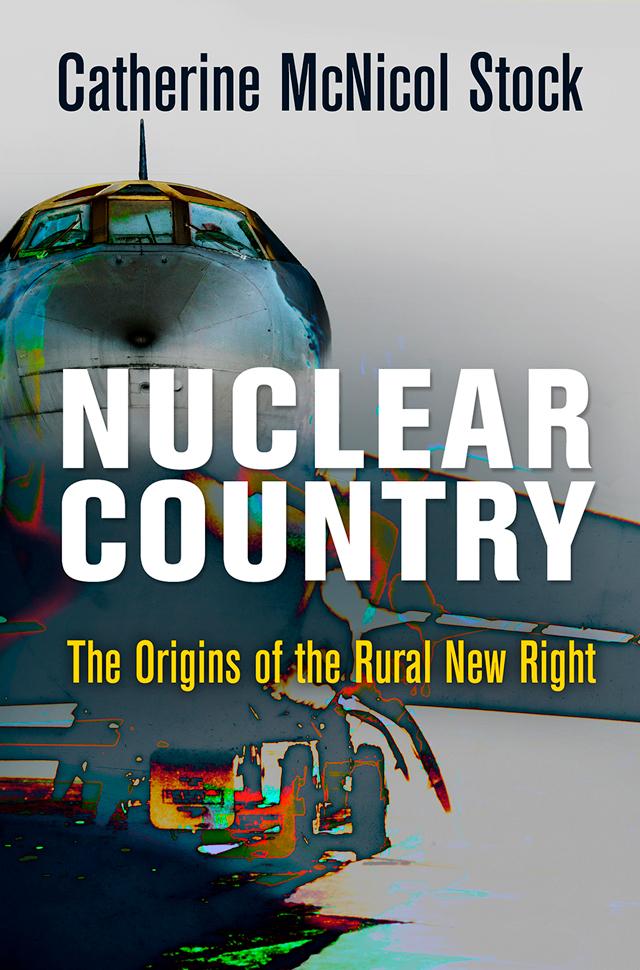
Militarization and nuclearization were the historical developments most essential to the creation of the rural New Right.
Both North Dakota and South Dakota have long been among the most reliably Republican states in the nation: in the past century, voters have only chosen two Democrats, Franklin Roosevelt and Lyndon B. Johnson, and in 2016 both states preferred Donald Trump by over thirty points. Yet in the decades before World War II, the people of the Northern Plains were not universally politically conservative. Instead, many Dakotans, including Republicans, supported experiments in agrarian democracy that incorporated ideas from populism and progressivism to socialism and communism and fought against "bigness" in all its forms, including "bonanza" farms, out-of-state railroads, corporations, banks, corrupt political parties, and distant federal bureaucracies—but also, surprisingly, the culture of militarism and the expansion of American military power abroad.
In Nuclear Country, Catherine McNicol Stock explores the question of why, between 1968 and 1992, most voters in the Dakotas abandoned their distinctive ideological heritage and came to embrace the conservatism of the New Right. Stock focuses on how this transformation coincided with the coming of the military and national security states to the countryside via the placement of military bases and nuclear missile silos on the Northern Plains. This militarization influenced regional political culture by reinforcing or re-contextualizing long-standing local ideas and practices, particularly when the people of the plains found that they shared culturally conservative values with the military. After adopting the first two planks of the New Right—national defense and conservative social ideas—Dakotans endorsed the third plank of New Right ideology, fiscal conservativism. Ultimately, Stock contends that militarization and nuclearization were the historical developments most essential to the creation of the rural New Right throughout the United States, and that their impact can best be seen in this often-overlooked region's history.
Before Memmo my notes were scattered across PDFs. Now a workspace pulls everything into one place — I see exactly what's still left to study.
Memmo's summaries are gold before exams. I don't have to re-read 800 pages two weeks before — just the important parts.
The AI chat has saved me the night before an exam more than once. I just keep asking until I get it — no waiting on a study group to reply.
The quizzes hit exactly what I need to know. Memmo tracks what I get stuck on — so I only practice what's worth it.
Flashcards with spaced repetition are magic. Memmo knows when I'm about to forget something and brings it back.
The AI podcasts are my favorite. I listen on my way to school and get a recap without sitting at a computer.

Handbok i kvalitativa metoder
281 kr

Hållbar utveckling: en introduktion för ingenjörer och andra problemlösare
334 kr

Brymans Samhällsvetenskapliga metoder
390 kr

Projektledning
491 kr

Den orättvisa hälsan: om socioekonomiska skillnader i hälsa och livslängd
326 kr

Organizational Leadership
429 kr

Vetenskapsteori för nybörjare
196 kr

På väg mot läraryrket
172 kr

Det sociala livet i skolan: Socialpsykologiska perspektiv
253 kr

Betygsättningens didaktik
151 kr

Personality
402 kr

Studying Leadership
404 kr

Managing Innovation
477 kr

Introduktion till samhällsvetenskaplig metod
347 kr

The Psychology of Sex and Gender
698 kr

Evidens och kunskap för socialt arbete
207 kr

Introduction to Leadership
605 kr