
Before Memmo my notes were scattered across PDFs. Now a workspace pulls everything into one place — I see exactly what's still left to study.
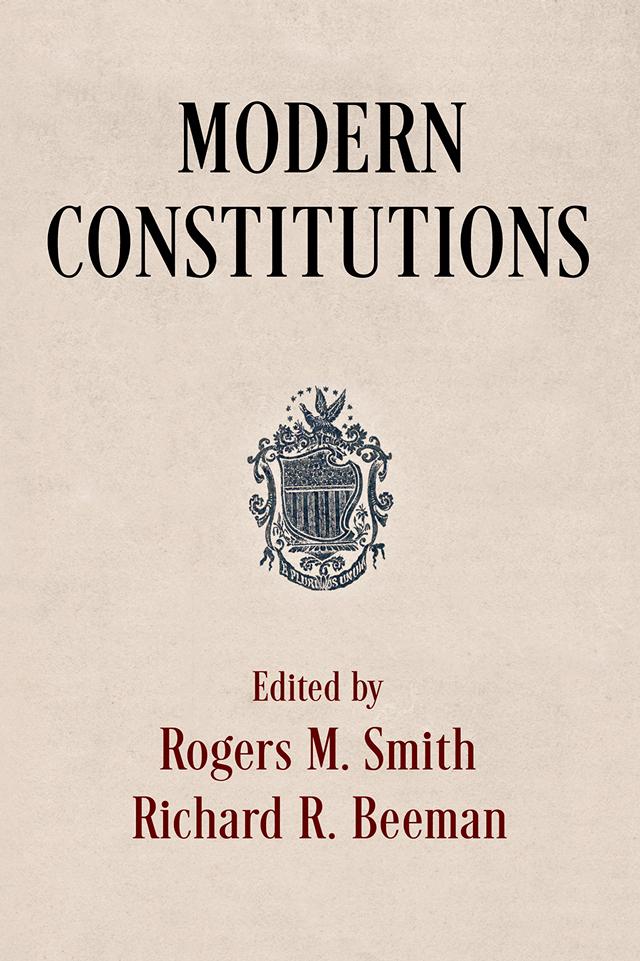
More than two millennia ago, Aristotle is said to have compiled a collection of ancient constitutions that informed his studies of politics. For Aristotle, constitutions largely distilled and described the varied and distinctive patterns of political life established over time. What constitutionalism has come to mean in the modern era, on the other hand, originates chiefly in the late eighteenth century and primarily with the U.S. Constitution—written in 1787 and made effective in 1789—and the various French constitutions that first appeared in 1791.
In the last half century, more than 130 nations have adopted new constitutions, half of those within the last twenty years. These new constitutions are devoted to many of the same goals found in the U.S. Constitution: the rule of law, representative self-government, and protection of rights. But by canvassing constitutional developments at the national and state level in the United States alongside modern constitutions in Eastern and Western Europe, Africa, and Asia, the contributors to Modern Constitutions—all leading scholars of constitutionalism—show that modern constitutions often seek to protect social rights and to establish representative institutions, forms of federalism, and courts charged with constitutional review that depart from or go far beyond the seminal U.S. example. Partly because of their innovations, however, many modern constitutional systems now confront mounting authoritarian pressures that put fundamental commitments to the rule of law in jeopardy.
The contributions in this volume collectively provide a measure of guidance for the challenges and prospects of modern constitutions in the rapidly changing political world of the twenty-first century.
Contributors: Richard R. Beeman, Valerie Bunce, Tom Ginsburg, Heinz Klug, David S. Law, Sanford Levinson, Jaime Lluch, Christopher McCrudden, Kim Lane Scheppele, Rogers M. Smith, Mila Versteeg, Emily Zackin.
Before Memmo my notes were scattered across PDFs. Now a workspace pulls everything into one place — I see exactly what's still left to study.
Memmo's summaries are gold before exams. I don't have to re-read 800 pages two weeks before — just the important parts.
The AI chat has saved me the night before an exam more than once. I just keep asking until I get it — no waiting on a study group to reply.
The quizzes hit exactly what I need to know. Memmo tracks what I get stuck on — so I only practice what's worth it.
Flashcards with spaced repetition are magic. Memmo knows when I'm about to forget something and brings it back.
The AI podcasts are my favorite. I listen on my way to school and get a recap without sitting at a computer.

Handbok i kvalitativa metoder
281 kr

Hållbar utveckling: en introduktion för ingenjörer och andra problemlösare
334 kr

Brymans Samhällsvetenskapliga metoder
390 kr

Projektledning
491 kr

Den orättvisa hälsan: om socioekonomiska skillnader i hälsa och livslängd
326 kr

Organizational Leadership
429 kr

Vetenskapsteori för nybörjare
196 kr

På väg mot läraryrket
172 kr

Det sociala livet i skolan: Socialpsykologiska perspektiv
253 kr

Betygsättningens didaktik
151 kr

Personality
402 kr

Studying Leadership
404 kr

Managing Innovation
477 kr

Introduktion till samhällsvetenskaplig metod
347 kr

The Psychology of Sex and Gender
698 kr

Evidens och kunskap för socialt arbete
207 kr

Introduction to Leadership
605 kr