
Before Memmo my notes were scattered across PDFs. Now a workspace pulls everything into one place — I see exactly what's still left to study.
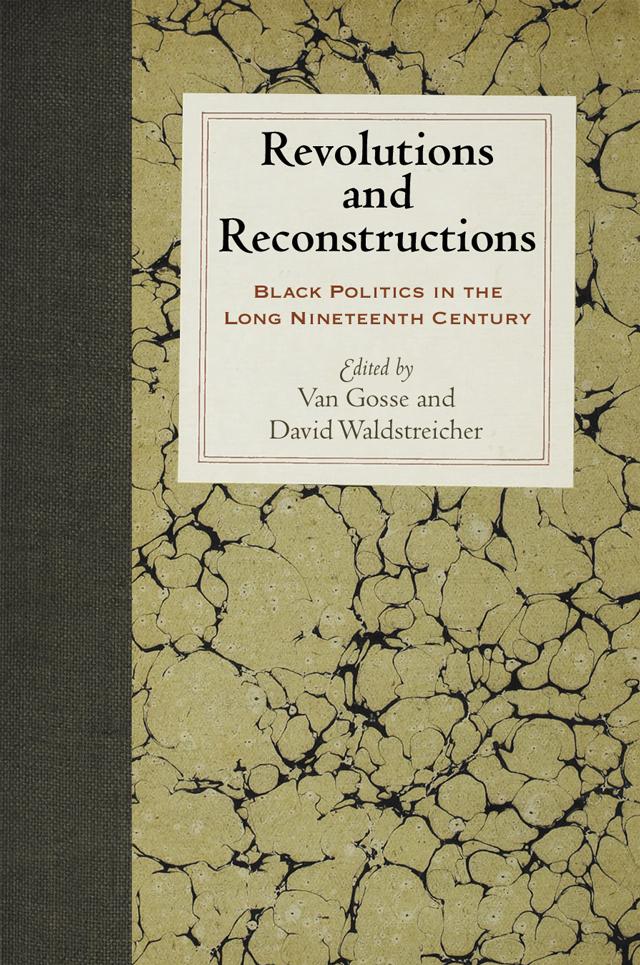
Revolutions and Reconstructions gathers historians of the early republic, the Civil War era, and African American and political history to consider not whether black people participated in the politics of the nineteenth century but how, when, and with what lasting effects. Collectively, its authors insist that historians go beyond questioning how revolutionary the American Revolution was, or whether Reconstruction failed, and focus, instead, on how political change initiated by African Americans and their allies constituted the rule in nineteenth-century American politics, not occasional and cataclysmic exceptions.
The essays in this groundbreaking collection cover the full range of political activity by black northerners after the Revolution, from cultural politics to widespread voting, within a political system shaped by the rising power of slaveholders. Conceptualizing a new black politics, contributors observe, requires reorienting American politics away from black/white and North/South polarities and toward a new focus on migration and local or state structures. Other essays focus on the middle decades of the nineteenth century and demonstrate that free black politics, not merely the politics of slavery, was a disruptive and consequential force in American political development.
From the perspective of the contributors to this volume, formal black politics did not begin in 1865, or with agitation by abolitionists like Frederick Douglass in the 1840s, but rather in the Revolutionary era's antislavery and citizenship activism. As these essays show, revolution, emancipation, and Reconstruction are not separate eras in U.S. history, but rather linked and ongoing processes that began in the 1770s and continued through the nineteenth century.
Contributors: Christopher James Bonner, Kellie Carter Jackson, Andrew Diemer, Laura F. Edwards, Van Gosse, Sarah L. H. Gronningsater, M. Scott Heerman, Dale Kretz, Padraig Riley, Samantha Seeley, James M. Shinn Jr., David Waldstreicher.
Before Memmo my notes were scattered across PDFs. Now a workspace pulls everything into one place — I see exactly what's still left to study.
Memmo's summaries are gold before exams. I don't have to re-read 800 pages two weeks before — just the important parts.
The AI chat has saved me the night before an exam more than once. I just keep asking until I get it — no waiting on a study group to reply.
The quizzes hit exactly what I need to know. Memmo tracks what I get stuck on — so I only practice what's worth it.
Flashcards with spaced repetition are magic. Memmo knows when I'm about to forget something and brings it back.
The AI podcasts are my favorite. I listen on my way to school and get a recap without sitting at a computer.

Handbok i kvalitativa metoder
281 kr

Hållbar utveckling: en introduktion för ingenjörer och andra problemlösare
334 kr

Brymans Samhällsvetenskapliga metoder
390 kr

Projektledning
491 kr

Den orättvisa hälsan: om socioekonomiska skillnader i hälsa och livslängd
326 kr

Vetenskapsteori för nybörjare
196 kr

Organizational Leadership
429 kr

På väg mot läraryrket
172 kr

Det sociala livet i skolan: Socialpsykologiska perspektiv
253 kr

Betygsättningens didaktik
151 kr

Personality
402 kr

Studying Leadership
404 kr

Managing Innovation
477 kr

Introduktion till samhällsvetenskaplig metod
347 kr

The Psychology of Sex and Gender
698 kr

Evidens och kunskap för socialt arbete
207 kr

Introduction to Leadership
605 kr