
Before Memmo my notes were scattered across PDFs. Now a workspace pulls everything into one place — I see exactly what's still left to study.
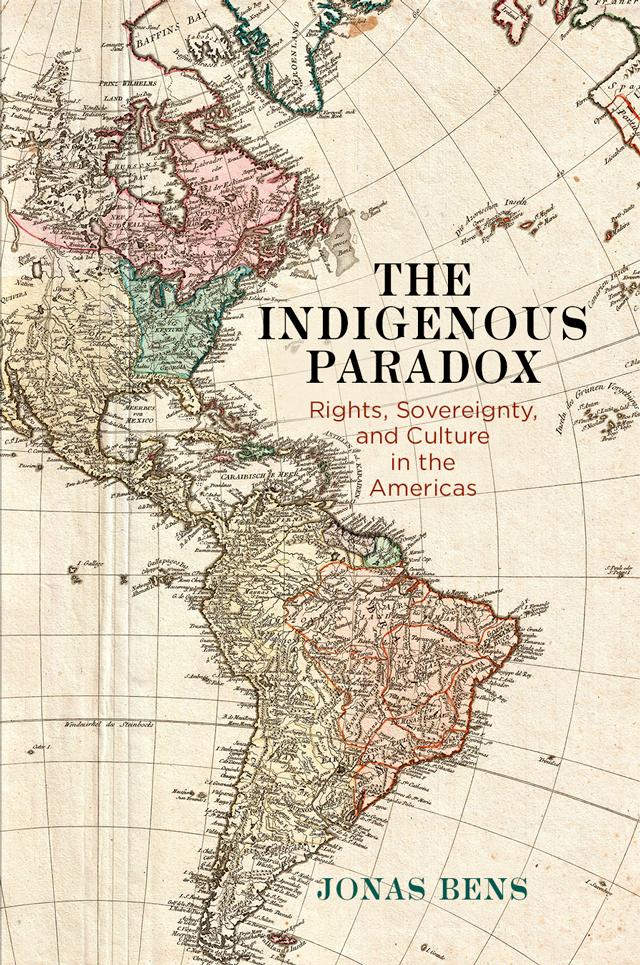
An investigation into how indigenous rights are conceived in legal language and doctrine
In the twenty-first century, it is politically and legally commonplace that indigenous communities go to court to assert their rights against the postcolonial nation-state in which they reside. But upon closer examination, this constellation is far from straightforward. Indigenous communities make their claims as independent entities, governed by their own laws. And yet, they bring a case before the court of another sovereign, subjecting themselves to its foreign rule of law.
According to Jonas Bens, when native communities enter into legal relationships with postcolonial nation-states, they "become indigenous." Indigenous communities define themselves as separated from the settler nation-state and insist that their rights originate from within their own system of laws. At the same time, indigenous communities must argue that they are incorporated in the settler nation-state to be able to use its judiciary to enforce these rights. As such, they are simultaneously included into and excluded from the state.
Tracing how the indigenous paradox is inscribed into the law by investigating several indigenous rights cases in the Americas, from the early nineteenth century to the early twenty-first, Bens illustrates how indigenous communities have managed—and continue to manage—to navigate this paradox by developing lines of legal reasoning that mobilize the concepts of sovereignty and culture. Bens argues that understanding indigeneity as a paradoxical formation sheds light on pressing questions concerning the role of legal pluralism and shared sovereignty in contemporary multicultural societies.
Before Memmo my notes were scattered across PDFs. Now a workspace pulls everything into one place — I see exactly what's still left to study.
Memmo's summaries are gold before exams. I don't have to re-read 800 pages two weeks before — just the important parts.
The AI chat has saved me the night before an exam more than once. I just keep asking until I get it — no waiting on a study group to reply.
The quizzes hit exactly what I need to know. Memmo tracks what I get stuck on — so I only practice what's worth it.
Flashcards with spaced repetition are magic. Memmo knows when I'm about to forget something and brings it back.
The AI podcasts are my favorite. I listen on my way to school and get a recap without sitting at a computer.

Handbok i kvalitativa metoder
281 kr

Hållbar utveckling: en introduktion för ingenjörer och andra problemlösare
334 kr

Brymans Samhällsvetenskapliga metoder
390 kr

Projektledning
491 kr

Den orättvisa hälsan: om socioekonomiska skillnader i hälsa och livslängd
326 kr

Organizational Leadership
429 kr

Vetenskapsteori för nybörjare
196 kr

På väg mot läraryrket
172 kr

Det sociala livet i skolan: Socialpsykologiska perspektiv
253 kr

Betygsättningens didaktik
151 kr

Personality
402 kr

Studying Leadership
404 kr

Managing Innovation
477 kr

Introduktion till samhällsvetenskaplig metod
347 kr

The Psychology of Sex and Gender
698 kr

Evidens och kunskap för socialt arbete
207 kr

Introduction to Leadership
605 kr