
Before Memmo my notes were scattered across PDFs. Now a workspace pulls everything into one place — I see exactly what's still left to study.
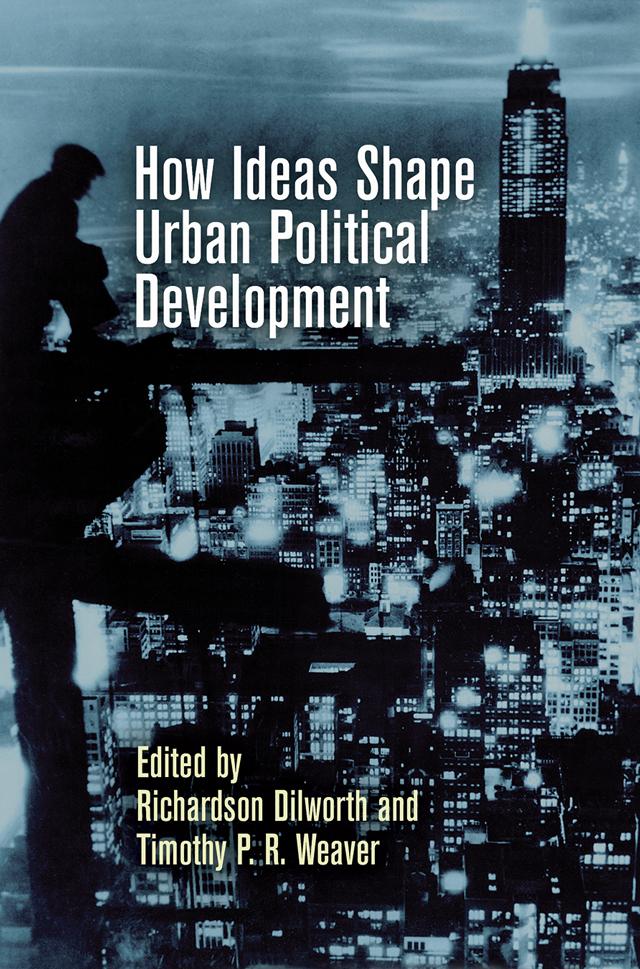
A collection of international case studies that demonstrate the importance of ideas to urban political development
Ideas, interests, and institutions are the "holy trinity" of the study of politics. Of the three, ideas are arguably the hardest with which to grapple and, despite a generally broad agreement concerning their fundamental importance, the most often neglected. Nowhere is this more evident than in the study of urban politics and urban political development.
The essays in How Ideas Shape Urban Political Development argue that ideas have been the real drivers behind urban political development and offer as evidence national and international examples—some unique to specific cities, regions, and countries, and some of global impact. Within the United States, contributors examine the idea of "blight" and how it became a powerful metaphor in city planning; the identification of racially-defined spaces, especially black cities and city neighborhoods, as specific targets of neoliberal disciplinary practices; the paradox of members of Congress who were active supporters of civil rights legislation in the 1950s and 1960s but enjoyed the support of big-city political machines that were hardly liberal when it came to questions of race in their home districts; and the intersection of national education policy, local school politics, and the politics of immigration. Essays compare the ways in which national urban policies have taken different shapes in countries similar to the United States, namely, Canada and the United Kingdom. The volume also presents case studies of city-based political development in Chile, China, India, and Africa—areas of the world that have experienced a more recent form of urbanization that feature deep and intimate ties and similarities to urban political development in the Global North, but which have occurred on a broader scale.
Contributors: Daniel Béland, Debjani Bhattacharyya, Robert Henry Cox, Richardson Dilworth, Jason Hackworth, Marcus Anthony Hunter, William Hurst, Sally Ford Lawton, Thomas Ogorzalek, Eleonora Pasotti, Joel Rast, Douglas S. Reed, Mara Sidney, Lester K. Spence, Vanessa Watson, Timothy P. R. Weaver, Amy Widestrom.
Before Memmo my notes were scattered across PDFs. Now a workspace pulls everything into one place — I see exactly what's still left to study.
Memmo's summaries are gold before exams. I don't have to re-read 800 pages two weeks before — just the important parts.
The AI chat has saved me the night before an exam more than once. I just keep asking until I get it — no waiting on a study group to reply.
The quizzes hit exactly what I need to know. Memmo tracks what I get stuck on — so I only practice what's worth it.
Flashcards with spaced repetition are magic. Memmo knows when I'm about to forget something and brings it back.
The AI podcasts are my favorite. I listen on my way to school and get a recap without sitting at a computer.

Handbok i kvalitativa metoder
281 kr

Hållbar utveckling: en introduktion för ingenjörer och andra problemlösare
334 kr

Brymans Samhällsvetenskapliga metoder
390 kr

Projektledning
491 kr

Den orättvisa hälsan: om socioekonomiska skillnader i hälsa och livslängd
326 kr

Organizational Leadership
429 kr

Vetenskapsteori för nybörjare
196 kr

På väg mot läraryrket
172 kr

Det sociala livet i skolan: Socialpsykologiska perspektiv
253 kr

Betygsättningens didaktik
151 kr

Personality
402 kr

Studying Leadership
404 kr

Managing Innovation
477 kr

Introduktion till samhällsvetenskaplig metod
347 kr

The Psychology of Sex and Gender
698 kr

Evidens och kunskap för socialt arbete
207 kr

Introduction to Leadership
605 kr