
Before Memmo my notes were scattered across PDFs. Now a workspace pulls everything into one place — I see exactly what's still left to study.
An examination of the Farm Security Administration's migrant camp system and the people it served
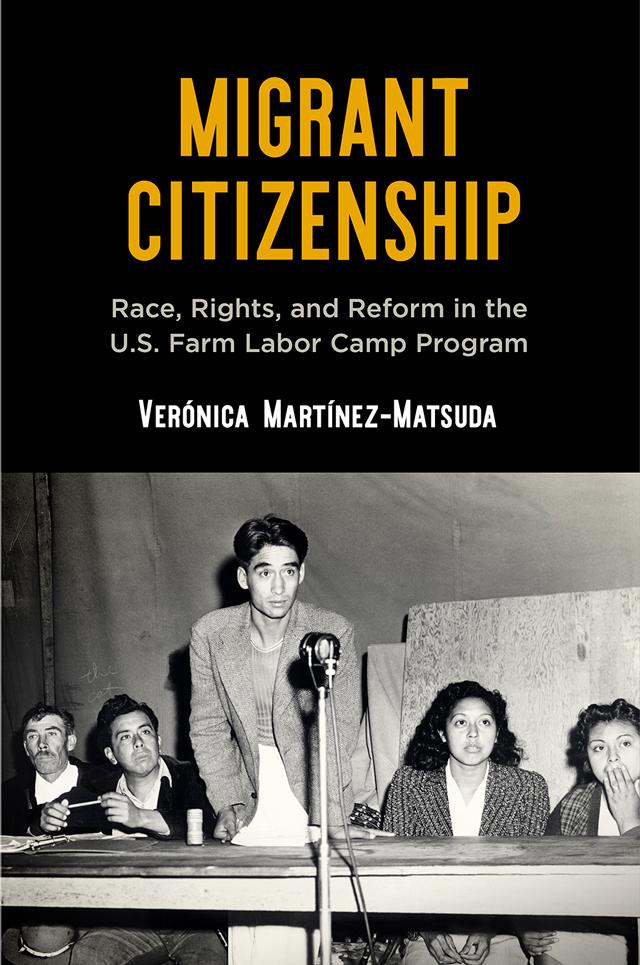
Today's concern for the quality of the produce on our plates has done little to guarantee U.S. farmworkers the necessary protections of sanitary housing, medical attention, and fair labor standards. The political discourse on farmworkers' rights is dominated by the view that migrant workers are not entitled to better protections because they are "noncitizens," as either immigrants or transients. Between 1935 and 1946, however, the Farm Security Administration (FSA) intervened dramatically on behalf of migrant families to expand the principles of American democracy, advance migrants' civil rights, and make farmworkers visible beyond their economic role as temporary laborers. In more than one hundred labor camps across the country, migrant families successfully worked with FSA officials to challenge their exclusion from the basic rights afforded by the New Deal.
In Migrant Citizenship, Verónica Martínez-Matsuda examines the history of the FSA's Migratory Labor Camp Program and its role in the lives of diverse farmworker families across the United States, describing how the camps provided migrants sanitary housing, full on-site medical service, a nursery school program, primary education, home-demonstration instruction, food for a healthy diet, recreational programing, and lessons in participatory democracy through self-governing councils. In these ways, she argues, the camps functioned as more than just labor centers aimed at improving agribusiness efficiency. Instead, they represented a profound "experiment in democracy" seeking to secure migrant farmworkers' full political and social participation in the United States. In recounting this chapter in the FSA's history, Migrant Citizenship provides insights into public policy concerning migrant workers, federal intervention in poor people's lives, and workers' cross-racial movements for social justice and offers a precedent for those seeking to combat the precarity in farm labor relations today.
Before Memmo my notes were scattered across PDFs. Now a workspace pulls everything into one place — I see exactly what's still left to study.
Memmo's summaries are gold before exams. I don't have to re-read 800 pages two weeks before — just the important parts.
The AI chat has saved me the night before an exam more than once. I just keep asking until I get it — no waiting on a study group to reply.
The quizzes hit exactly what I need to know. Memmo tracks what I get stuck on — so I only practice what's worth it.
Flashcards with spaced repetition are magic. Memmo knows when I'm about to forget something and brings it back.
The AI podcasts are my favorite. I listen on my way to school and get a recap without sitting at a computer.

Handbok i kvalitativa metoder
281 kr

Hållbar utveckling: en introduktion för ingenjörer och andra problemlösare
334 kr

Brymans Samhällsvetenskapliga metoder
390 kr

Projektledning
491 kr

Den orättvisa hälsan: om socioekonomiska skillnader i hälsa och livslängd
326 kr

Organizational Leadership
429 kr

Vetenskapsteori för nybörjare
196 kr

På väg mot läraryrket
172 kr

Det sociala livet i skolan: Socialpsykologiska perspektiv
253 kr

Betygsättningens didaktik
151 kr

Personality
402 kr

Studying Leadership
404 kr

Managing Innovation
477 kr

Introduktion till samhällsvetenskaplig metod
347 kr

The Psychology of Sex and Gender
698 kr

Evidens och kunskap för socialt arbete
207 kr

Introduction to Leadership
605 kr