
Before Memmo my notes were scattered across PDFs. Now a workspace pulls everything into one place — I see exactly what's still left to study.
The colorful history of paper money before the Civil War
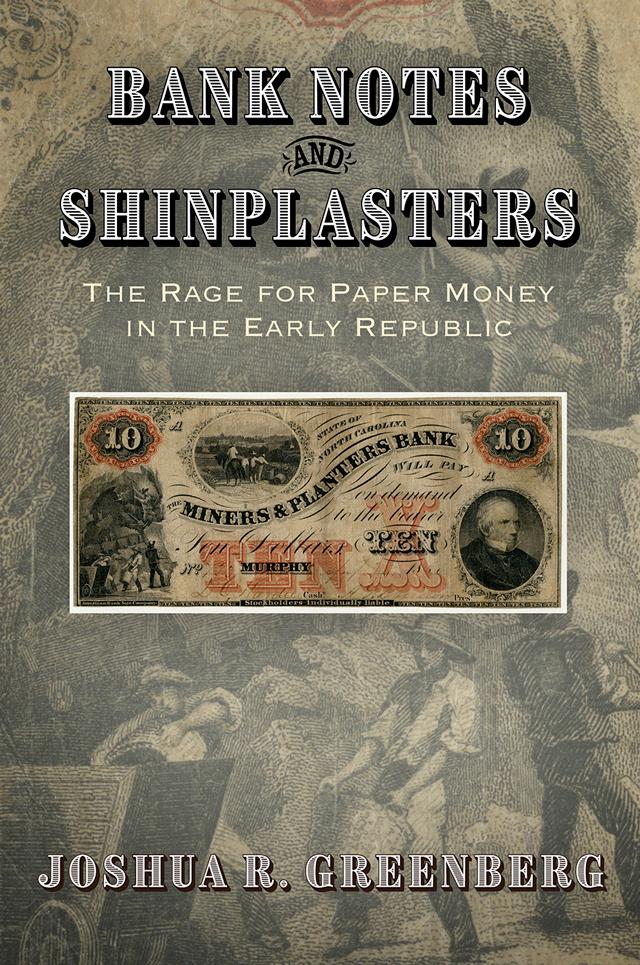
Before Civil War greenbacks and a national bank network established a uniform federal currency in the United States, the proliferation of loosely regulated banks saturated the early American republic with upwards of 10,000 unique and legal bank notes. This number does not even include the plethora of counterfeit bills and the countless shinplasters of questionable legality issued by unregulated merchants, firms, and municipalities. Adding to the chaos was the idiosyncratic method for negotiating their value, an often manipulative face-to-face discussion consciously separated from any haggling over the price of the work, goods, or services for sale. In Bank Notes and Shinplasters, Joshua R. Greenberg shows how ordinary Americans accumulated and wielded the financial knowledge required to navigate interpersonal bank note transactions.
Locating evidence of Americans grappling with their money in fiction, correspondence, newspapers, printed ephemera, government documents, legal cases, and even on the money itself, Greenberg argues Americans, by necessity, developed the ability to analyze the value of paper financial instruments, assess the strength of banking institutions, and even track legislative changes that might alter the rules of currency circulation. In his examination of the doodles, calculations, political screeds, and commercial stamps that ended up on bank bills, he connects the material culture of cash to financial, political, and intellectual history.
The book demonstrates that the shift from state-regulated banks and private shinplaster producers to federally authorized paper money in the Civil War era led to the erasure of the skill, knowledge, and lived experience with banking that informed debates over economic policy. The end result, Greenberg writes, has been a diminished public understanding of how currency and the financial sector operate in our contemporary era, from the 2008 recession to the rise of Bitcoin.
Before Memmo my notes were scattered across PDFs. Now a workspace pulls everything into one place — I see exactly what's still left to study.
Memmo's summaries are gold before exams. I don't have to re-read 800 pages two weeks before — just the important parts.
The AI chat has saved me the night before an exam more than once. I just keep asking until I get it — no waiting on a study group to reply.
The quizzes hit exactly what I need to know. Memmo tracks what I get stuck on — so I only practice what's worth it.
Flashcards with spaced repetition are magic. Memmo knows when I'm about to forget something and brings it back.
The AI podcasts are my favorite. I listen on my way to school and get a recap without sitting at a computer.

Handbok i kvalitativa metoder
281 kr

Hållbar utveckling: en introduktion för ingenjörer och andra problemlösare
334 kr

Brymans Samhällsvetenskapliga metoder
390 kr

Projektledning
491 kr

Den orättvisa hälsan: om socioekonomiska skillnader i hälsa och livslängd
326 kr

Organizational Leadership
429 kr

Vetenskapsteori för nybörjare
196 kr

På väg mot läraryrket
172 kr

Det sociala livet i skolan: Socialpsykologiska perspektiv
253 kr

Betygsättningens didaktik
151 kr

Personality
402 kr

Studying Leadership
404 kr

Managing Innovation
477 kr

Introduktion till samhällsvetenskaplig metod
347 kr

The Psychology of Sex and Gender
698 kr

Evidens och kunskap för socialt arbete
207 kr

Introduction to Leadership
605 kr