
Before Memmo my notes were scattered across PDFs. Now a workspace pulls everything into one place — I see exactly what's still left to study.
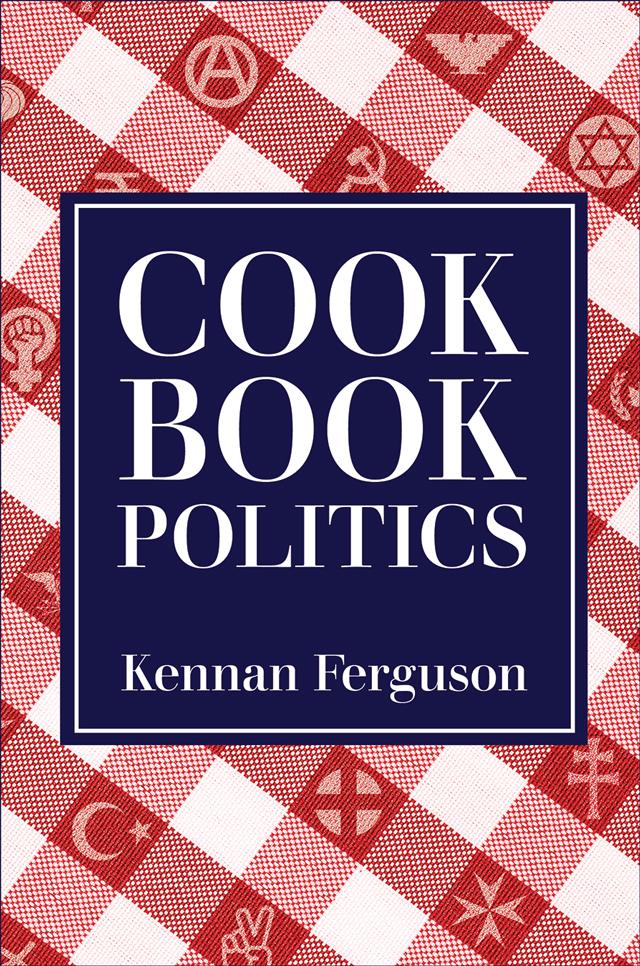
An original and eclectic view of cookbooks as political acts
Cookbooks are not political in conventional ways. They neither proclaim, as do manifestos, nor do they forbid, as do laws. They do not command agreement, as do arguments, and their stipulations often lack specificity — cook "until browned." Yet, as repositories of human taste, cookbooks transmit specific blends of flavor, texture, and nutrition across space and time. Cookbooks both form and reflect who we are. In Cookbook Politics, Kennan Ferguson explores the sensual and political implications of these repositories, demonstrating how they create nations, establish ideologies, shape international relations, and structure communities.
Cookbook Politics argues that cookbooks highlight aspects of our lives we rarely recognize as political—taste, production, domesticity, collectivity, and imagination—and considers the ways in which cookbooks have or do politics, from the most overt to the most subtle. Cookbooks turn regional diversity into national unity, as Pellegrino Artusi's Science in the Kitchen and the Art of Eating Well did for Italy in 1891. Politically affiliated organizations compile and sell cookbooks—for example, the early United Nations published The World's Favorite Recipes. From the First Baptist Church of Midland, Tennessee's community cookbook, to Julia Child's Mastering the Art of French Cooking, to the Italian Futurists' proto-fascist guide to food preparation, Ferguson demonstrates how cookbooks mark desires and reveal social commitments: your table becomes a representation of who you are.
Authoritative, yet flexible; collective, yet individualized; cooperative, yet personal—cookbooks invite participation, editing, and transformation. Created to convey flavor and taste across generations, communities, and nations, they enact the continuities and changes of social lives. Their functioning in the name of creativity and preparation—with readers happily consuming them in similar ways—makes cookbooks an exemplary model for democratic politics.
Before Memmo my notes were scattered across PDFs. Now a workspace pulls everything into one place — I see exactly what's still left to study.
Memmo's summaries are gold before exams. I don't have to re-read 800 pages two weeks before — just the important parts.
The AI chat has saved me the night before an exam more than once. I just keep asking until I get it — no waiting on a study group to reply.
The quizzes hit exactly what I need to know. Memmo tracks what I get stuck on — so I only practice what's worth it.
Flashcards with spaced repetition are magic. Memmo knows when I'm about to forget something and brings it back.
The AI podcasts are my favorite. I listen on my way to school and get a recap without sitting at a computer.

Handbok i kvalitativa metoder
281 kr

Hållbar utveckling: en introduktion för ingenjörer och andra problemlösare
334 kr

Brymans Samhällsvetenskapliga metoder
390 kr

Projektledning
491 kr

Den orättvisa hälsan: om socioekonomiska skillnader i hälsa och livslängd
326 kr

Organizational Leadership
429 kr

Vetenskapsteori för nybörjare
196 kr

På väg mot läraryrket
172 kr

Det sociala livet i skolan: Socialpsykologiska perspektiv
253 kr

Betygsättningens didaktik
151 kr

Personality
402 kr

Studying Leadership
404 kr

Managing Innovation
477 kr

Introduktion till samhällsvetenskaplig metod
347 kr

The Psychology of Sex and Gender
698 kr

Evidens och kunskap för socialt arbete
207 kr

Introduction to Leadership
605 kr