
Before Memmo my notes were scattered across PDFs. Now a workspace pulls everything into one place — I see exactly what's still left to study.
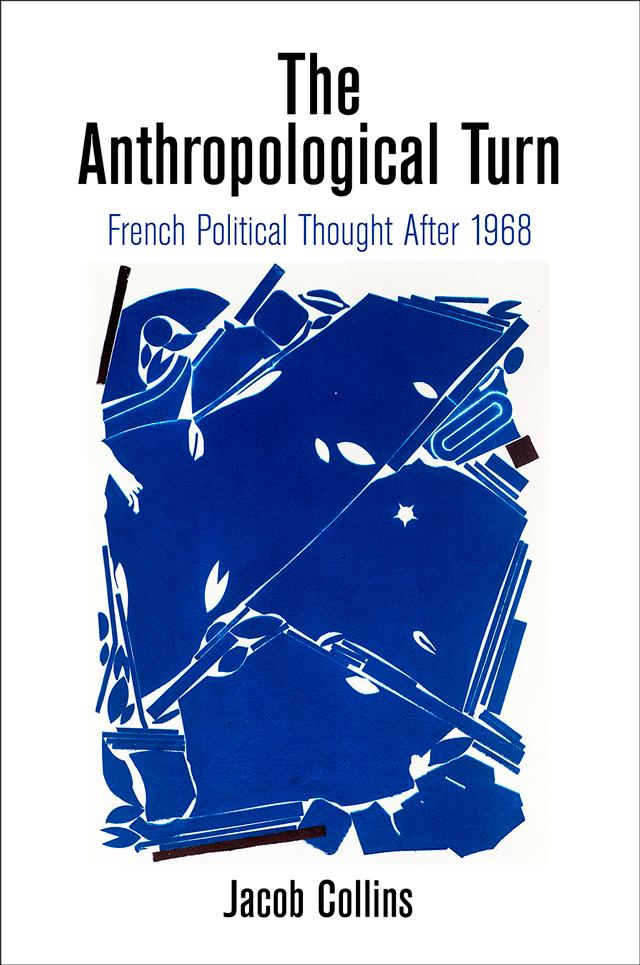
A close look at post-1968 French thinkers Régis Debray, Emmanuel Todd, Marcel Gauchet, and Alain de Benoist
In The Anthropological Turn, Jacob Collins traces the development of what he calls a tradition of "political anthropology" in France over the course of the 1970s. After the social revolution of the 1960s brought new attention to identities and groups that had previously been marginal in French society, the country entered a period of stagnation: the economy slowed, the political system deadlocked, and the ideologies of communism and Catholicism lost their appeal. In this time of political, cultural, and economic indeterminacy, political anthropology, as Collins defines it, offered social theorists grand narratives that could give greater definition to "the social" by anchoring its laws and histories in the deep and sometimes archaic past.
Political anthropologists sought to answer the most basic of questions: what is politics and what constitutes a political community? Collins focuses on four influential, yet typically overlooked, French thinkers—Régis Debray, Emmanuel Todd, Marcel Gauchet, and Alain de Benoist —who, from Left to far Right, represent different political leanings in France. Through a close and comprehensive reading of their work, he explores how key issues of religion, identity, citizenship, and the state have been conceptualized and debated across a wide spectrum of opinion in contemporary France.
Collins argues that the stakes have not changed since the 1970s and rival conceptions of the republic continue to vie for dominance. Political and cultural issues of the moment—the burkini, for example—become magnified and take on the character of an anthropological threat. In this respect, he shows how the anthropological turn, as it figures in the work of Debray, Todd, Gauchet, and Benoist, is a useful lens for viewing the political and social controversies that have shaped French history for the last forty years.
Before Memmo my notes were scattered across PDFs. Now a workspace pulls everything into one place — I see exactly what's still left to study.
Memmo's summaries are gold before exams. I don't have to re-read 800 pages two weeks before — just the important parts.
The AI chat has saved me the night before an exam more than once. I just keep asking until I get it — no waiting on a study group to reply.
The quizzes hit exactly what I need to know. Memmo tracks what I get stuck on — so I only practice what's worth it.
Flashcards with spaced repetition are magic. Memmo knows when I'm about to forget something and brings it back.
The AI podcasts are my favorite. I listen on my way to school and get a recap without sitting at a computer.

Handbok i kvalitativa metoder
281 kr

Hållbar utveckling: en introduktion för ingenjörer och andra problemlösare
334 kr

Brymans Samhällsvetenskapliga metoder
390 kr

Projektledning
491 kr

Den orättvisa hälsan: om socioekonomiska skillnader i hälsa och livslängd
326 kr

Organizational Leadership
429 kr

Vetenskapsteori för nybörjare
196 kr

På väg mot läraryrket
172 kr

Det sociala livet i skolan: Socialpsykologiska perspektiv
253 kr

Betygsättningens didaktik
151 kr

Personality
402 kr

Studying Leadership
404 kr

Managing Innovation
477 kr

Introduktion till samhällsvetenskaplig metod
347 kr

The Psychology of Sex and Gender
698 kr

Evidens och kunskap för socialt arbete
207 kr

Introduction to Leadership
605 kr