
Before Memmo my notes were scattered across PDFs. Now a workspace pulls everything into one place — I see exactly what's still left to study.
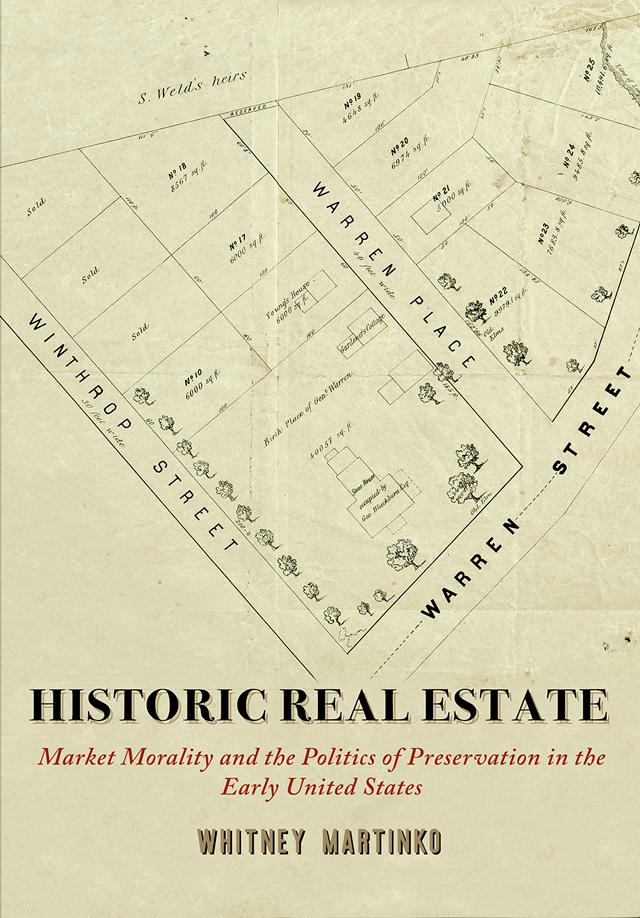
A detailed study of early historical preservation efforts between the 1780s and the 1850s
In Historic Real Estate, Whitney Martinko shows how Americans in the fledgling United States pointed to evidence of the past in the world around them and debated whether, and how, to preserve historic structures as permanent features of the new nation's landscape. From Indigenous mounds in the Ohio Valley to Independence Hall in Philadelphia; from Benjamin Franklin's childhood home in Boston to St. Philip's Episcopal Church in Charleston, South Carolina; from Dutch colonial manors of the Hudson Valley to Henry Clay's Kentucky estate, early advocates of preservation strove not only to place boundaries on competitive real estate markets but also to determine what should not be for sale, how consumers should behave, and how certain types of labor should be valued.
Before historic preservation existed as we know it today, many Americans articulated eclectic and sometimes contradictory definitions of architectural preservation to work out practical strategies for defining the relationship between public good and private profit. In arguing for the preservation of houses of worship and Indigenous earthworks, for example, some invoked the "public interest" of their stewards to strengthen corporate control of these collective spaces. Meanwhile, businessmen and political partisans adopted preservation of commercial sites to create opportunities for, and limits on, individual profit in a growing marketplace of goods. And owners of old houses and ancestral estates developed methods of preservation to reconcile competing demands for the seclusion of, and access to, American homes to shape the ways that capitalism affected family economies. In these ways, individuals harnessed preservation to garner political, economic, and social profit from the performance of public service.
Ultimately, Martinko argues, by portraying the problems of the real estate market as social rather than economic, advocates of preservation affirmed a capitalist system of land development by promising to make it moral.
Before Memmo my notes were scattered across PDFs. Now a workspace pulls everything into one place — I see exactly what's still left to study.
Memmo's summaries are gold before exams. I don't have to re-read 800 pages two weeks before — just the important parts.
The AI chat has saved me the night before an exam more than once. I just keep asking until I get it — no waiting on a study group to reply.
The quizzes hit exactly what I need to know. Memmo tracks what I get stuck on — so I only practice what's worth it.
Flashcards with spaced repetition are magic. Memmo knows when I'm about to forget something and brings it back.
The AI podcasts are my favorite. I listen on my way to school and get a recap without sitting at a computer.

Handbok i kvalitativa metoder
281 kr

Hållbar utveckling: en introduktion för ingenjörer och andra problemlösare
334 kr

Brymans Samhällsvetenskapliga metoder
390 kr

Projektledning
491 kr

Den orättvisa hälsan: om socioekonomiska skillnader i hälsa och livslängd
326 kr

Organizational Leadership
429 kr

Vetenskapsteori för nybörjare
196 kr

På väg mot läraryrket
172 kr

Det sociala livet i skolan: Socialpsykologiska perspektiv
253 kr

Betygsättningens didaktik
151 kr

Personality
402 kr

Studying Leadership
404 kr

Managing Innovation
477 kr

Introduktion till samhällsvetenskaplig metod
347 kr

The Psychology of Sex and Gender
698 kr

Evidens och kunskap för socialt arbete
207 kr

Introduction to Leadership
605 kr